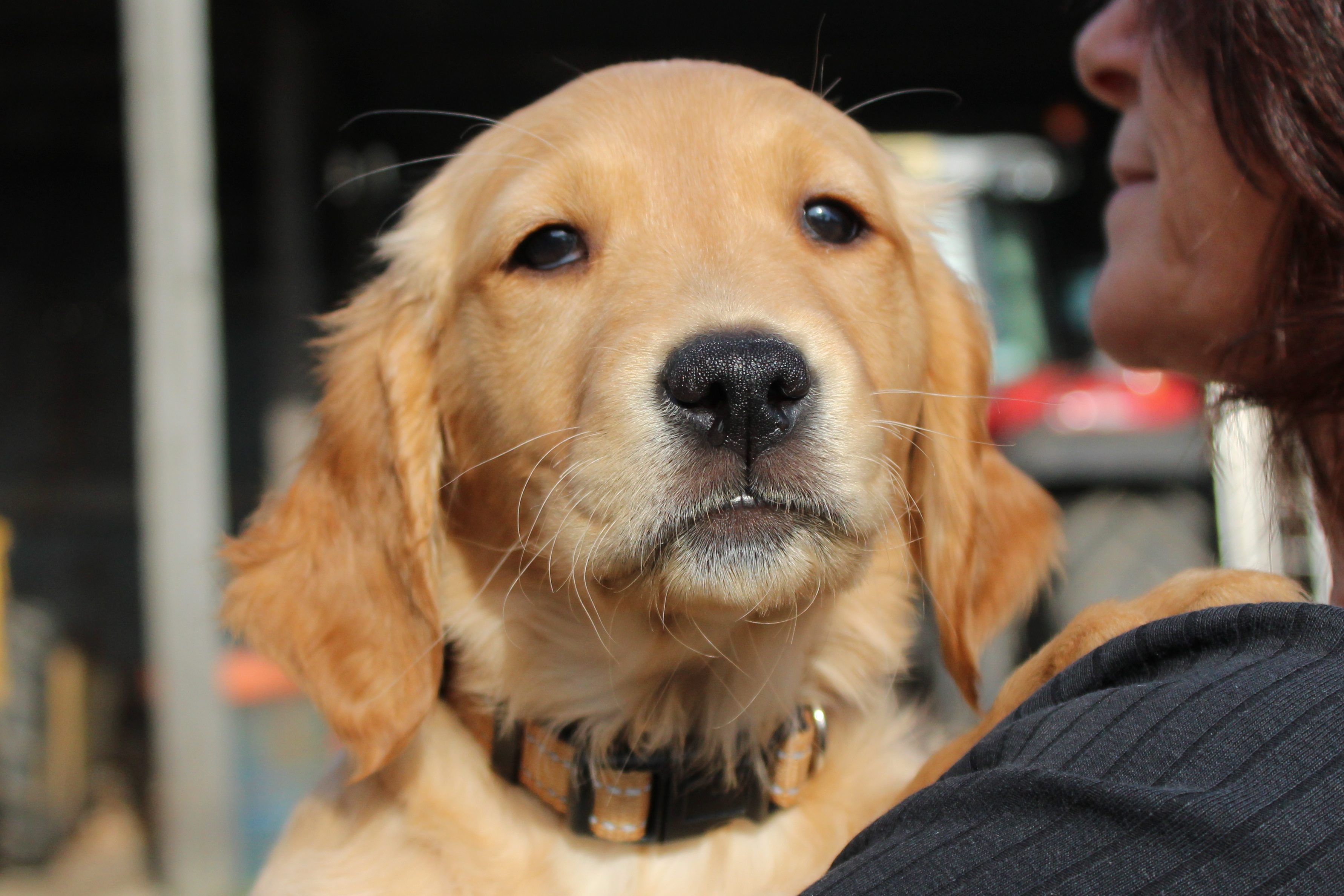
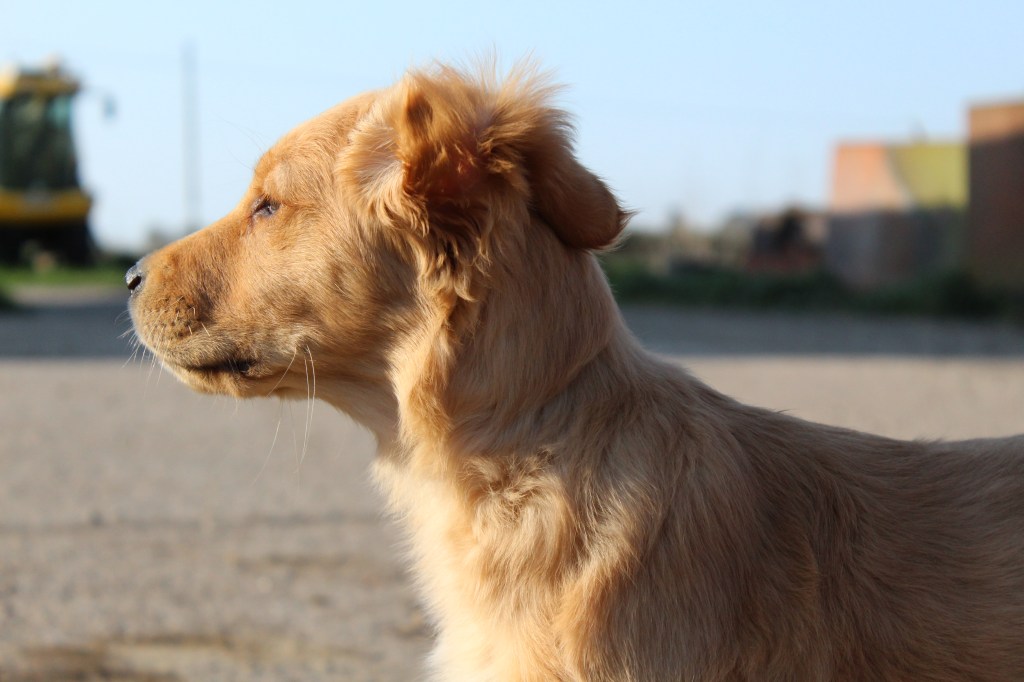
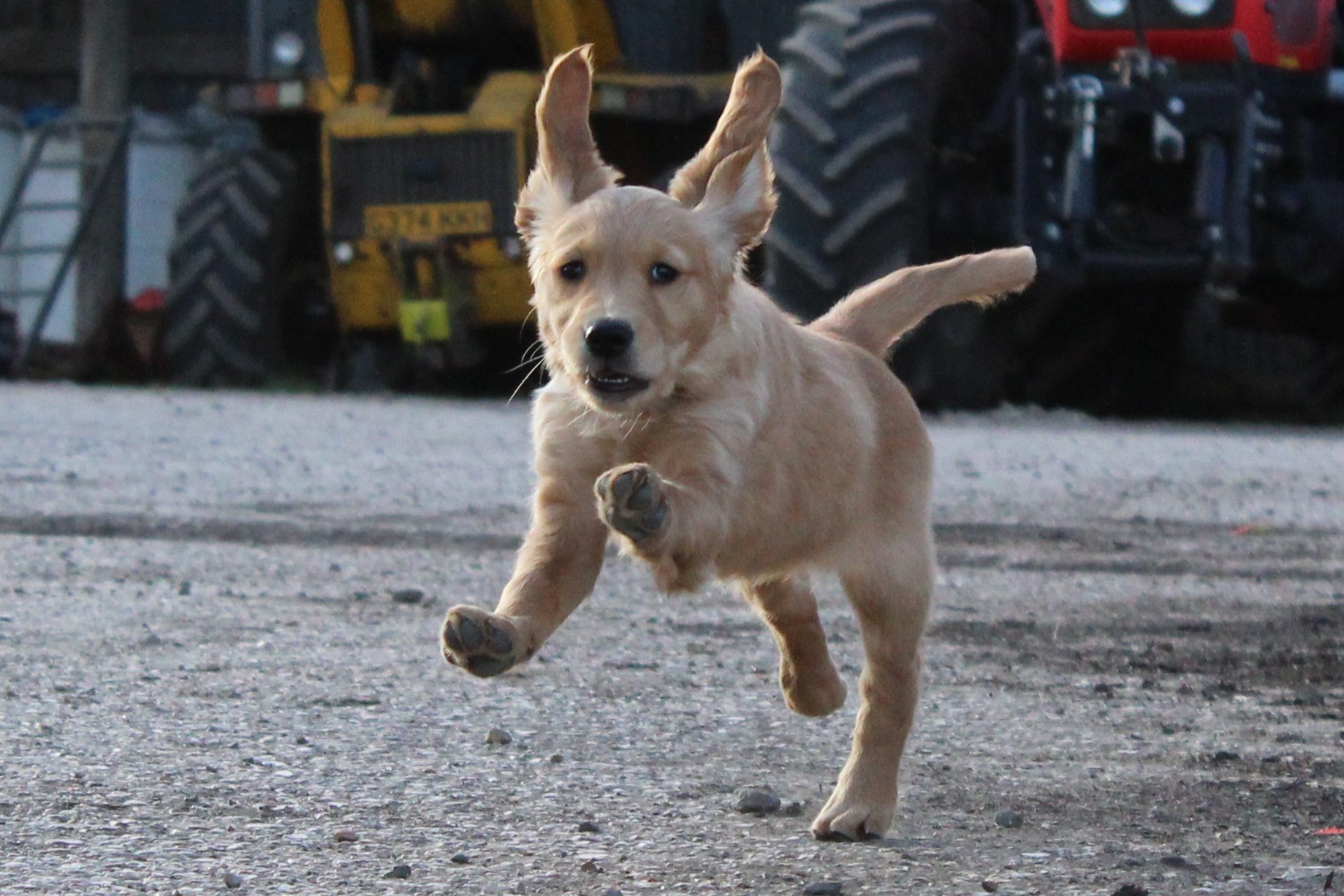
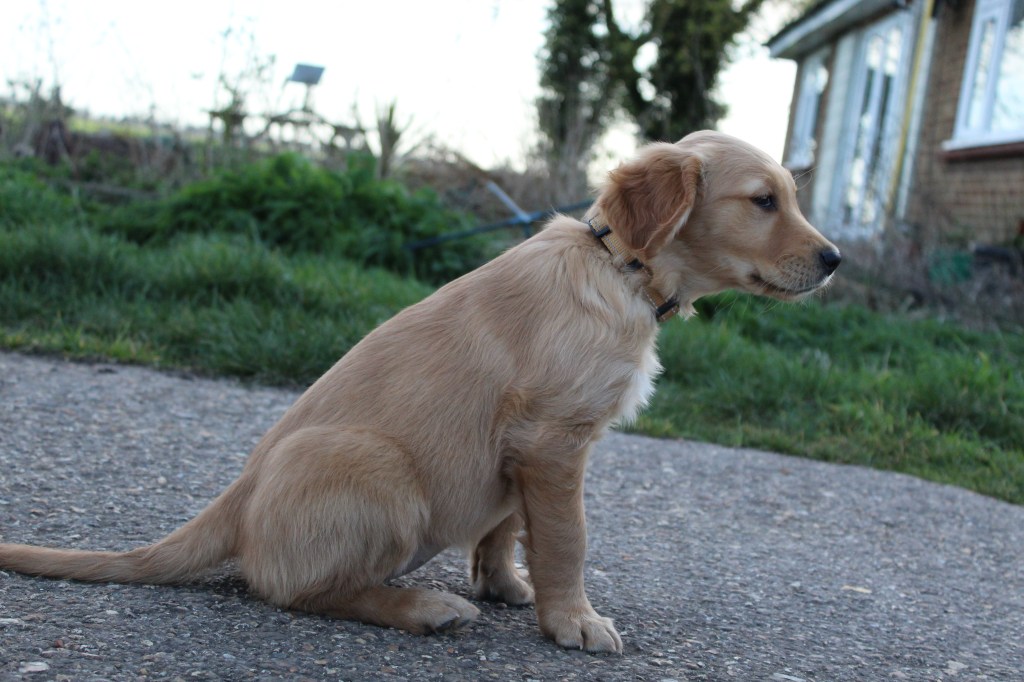
Golden Retriever pups 2026 – Nessie/Woody – Sold
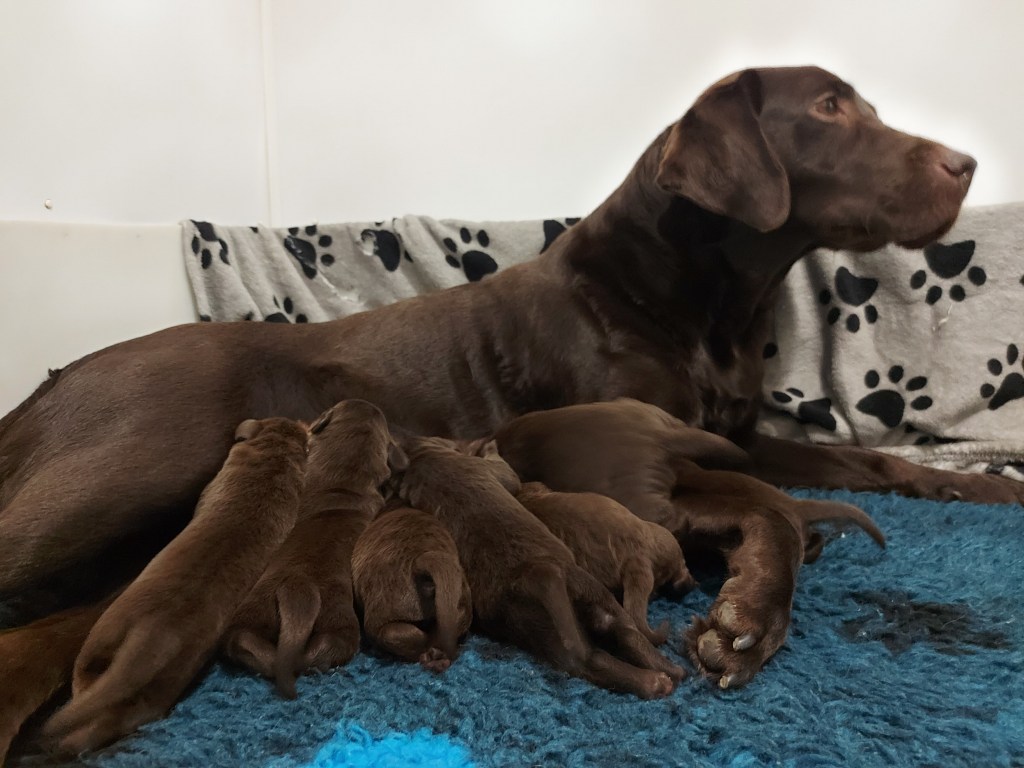
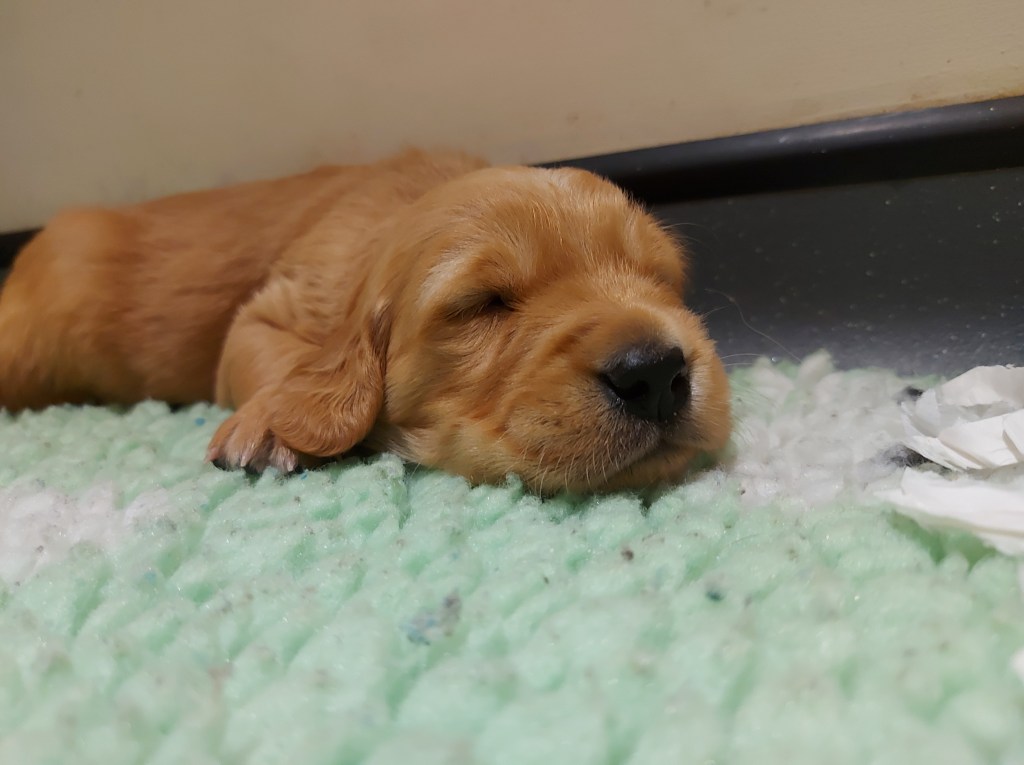
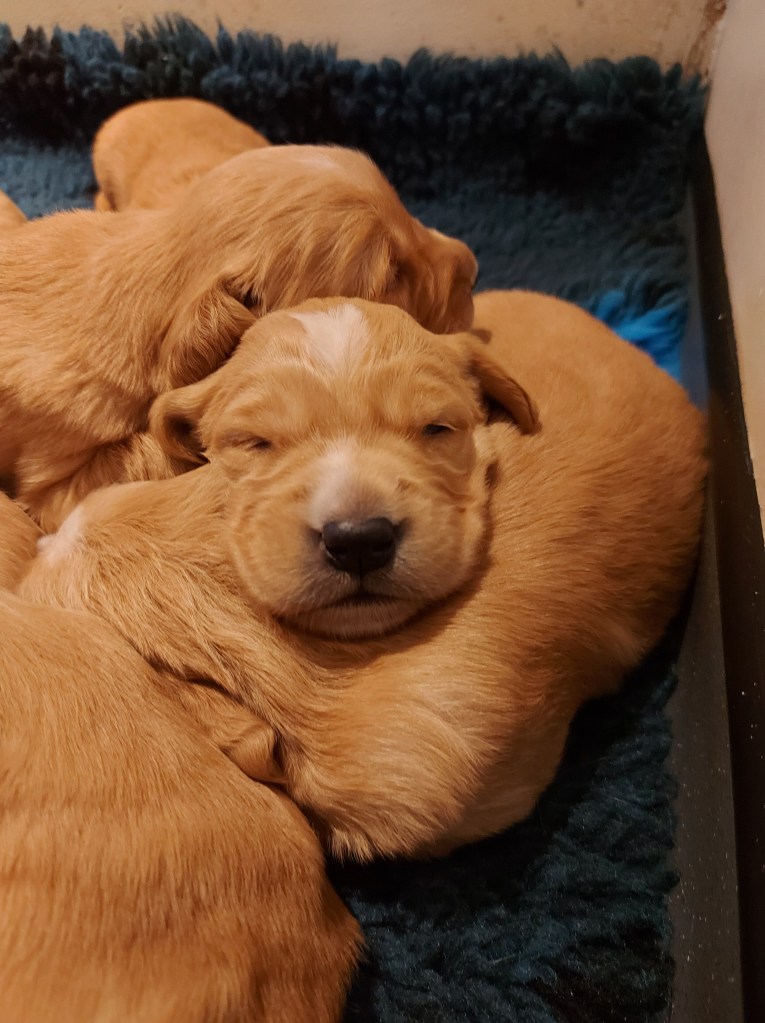
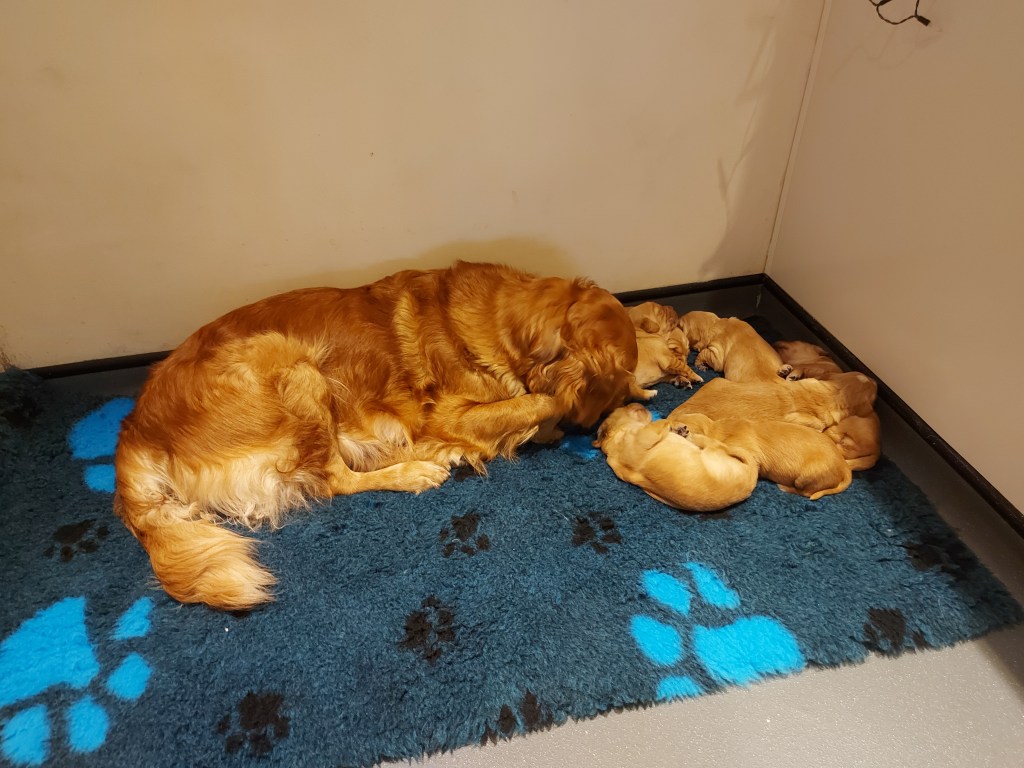
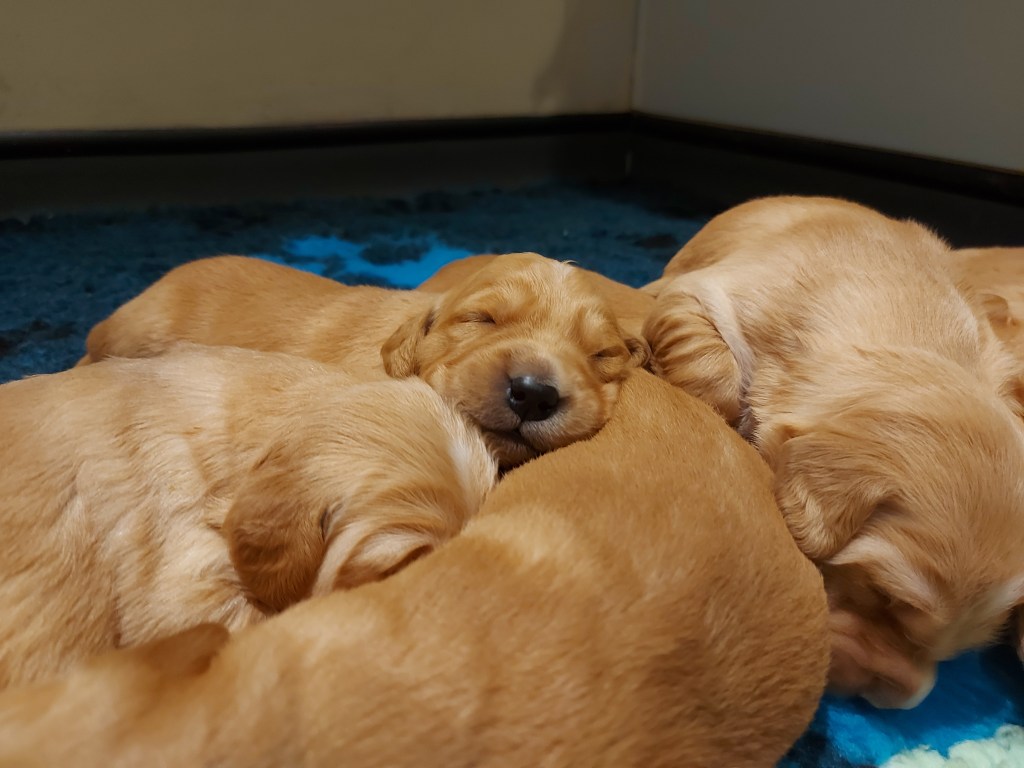
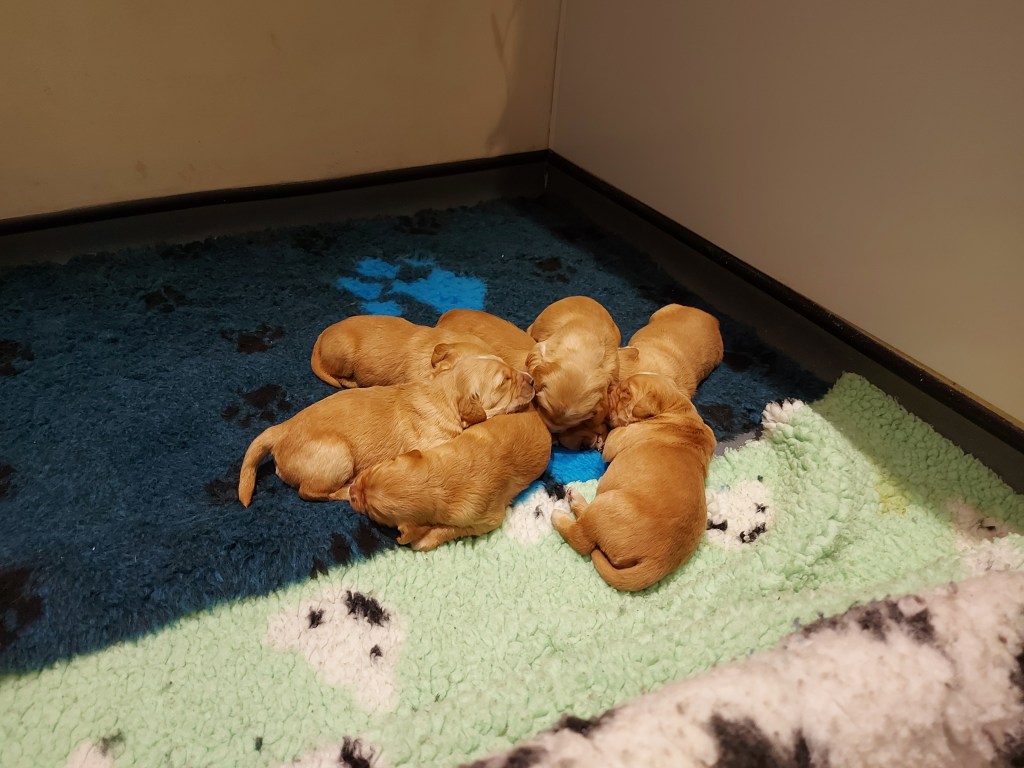
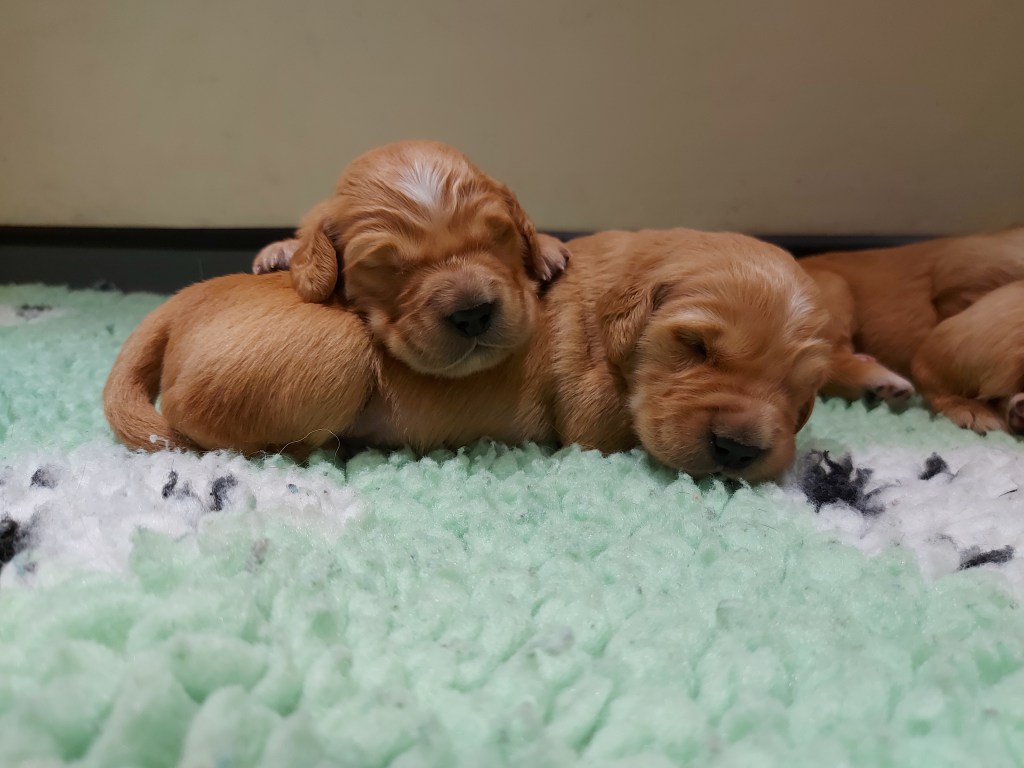
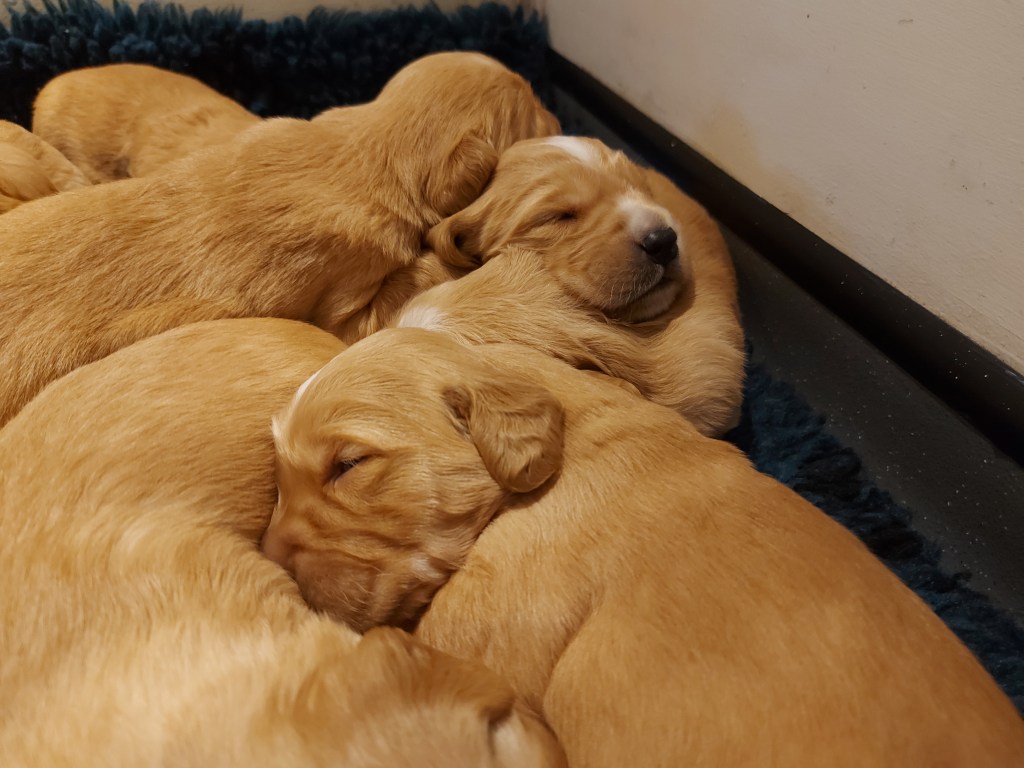
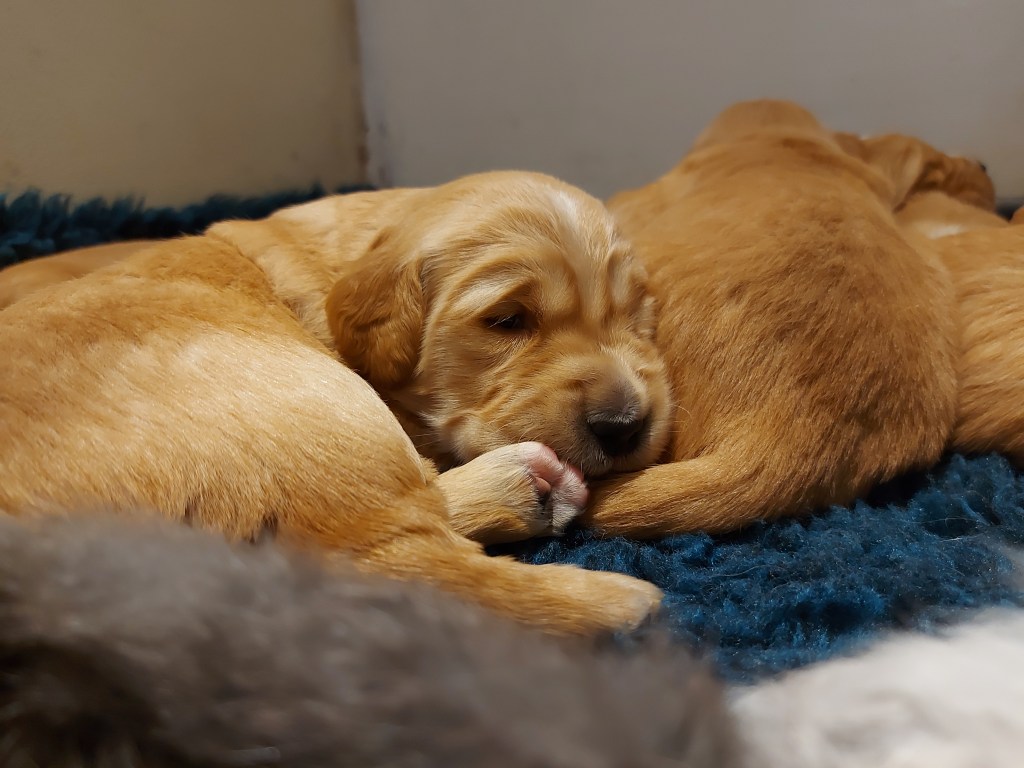
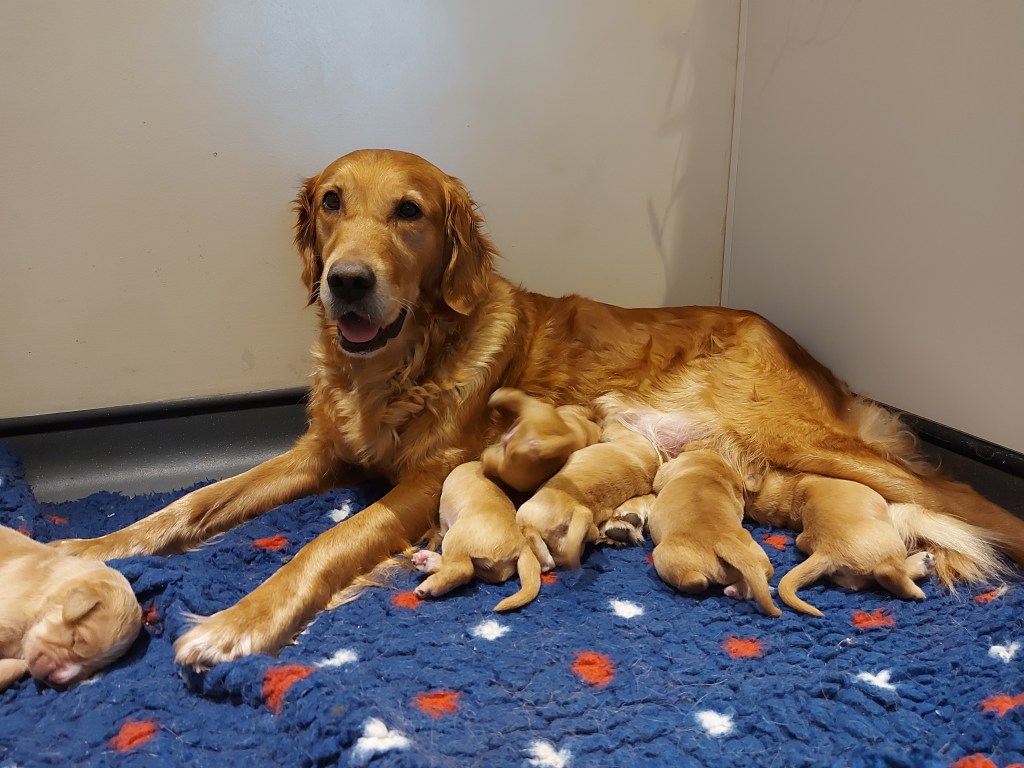
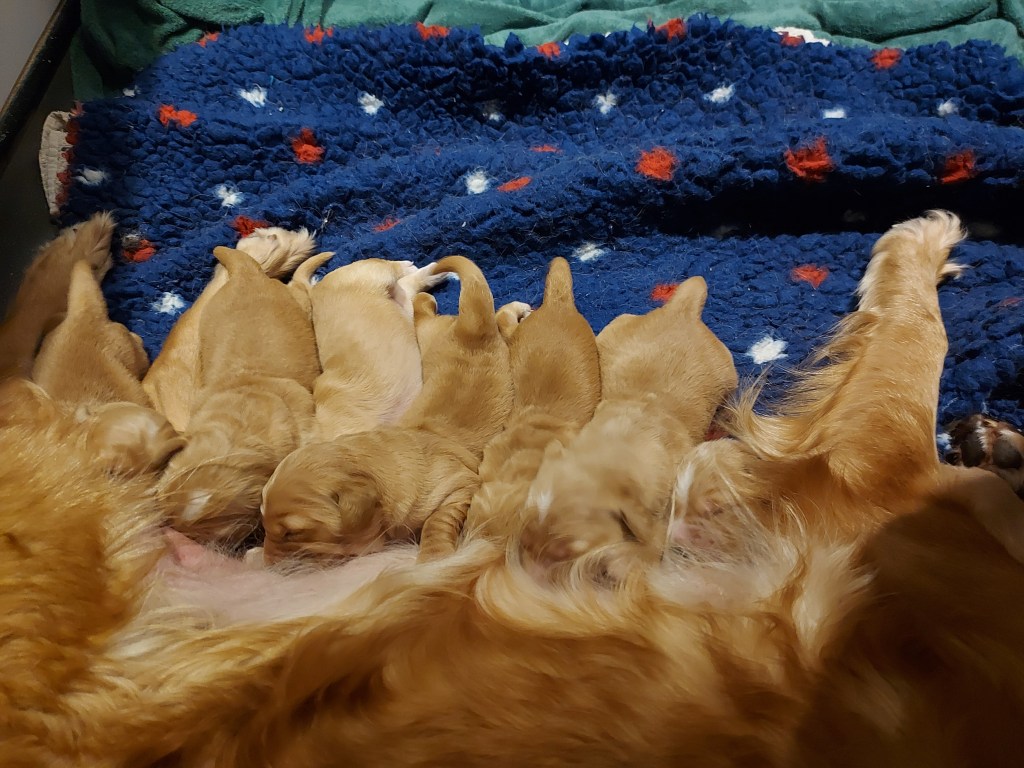
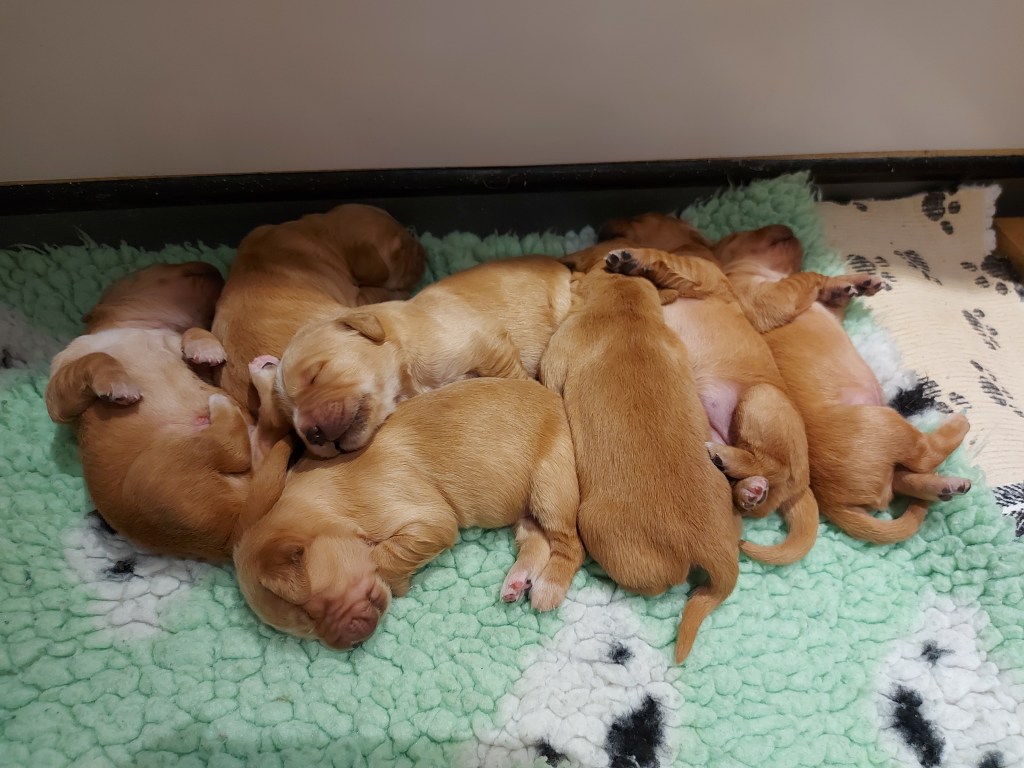
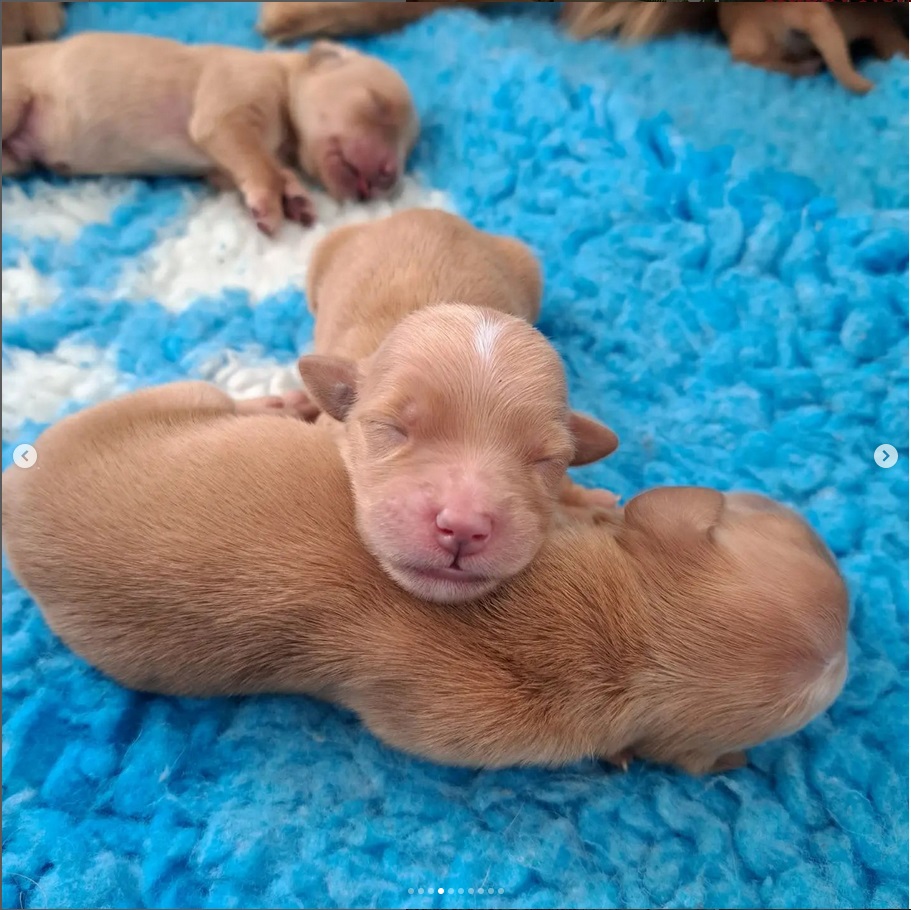
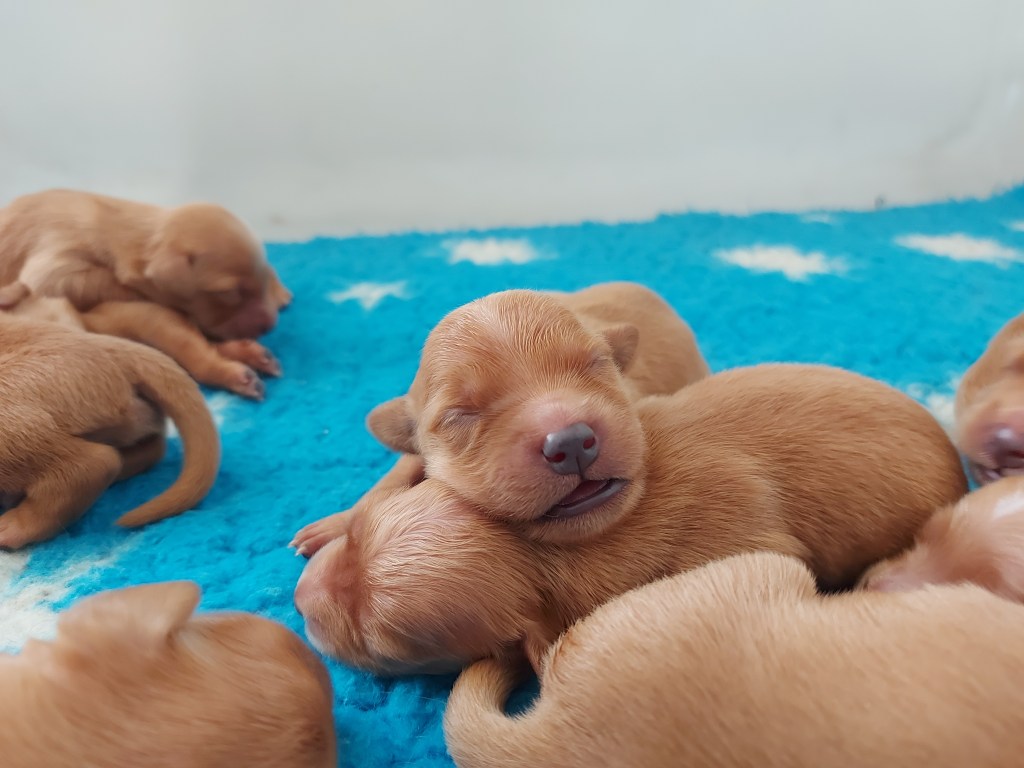
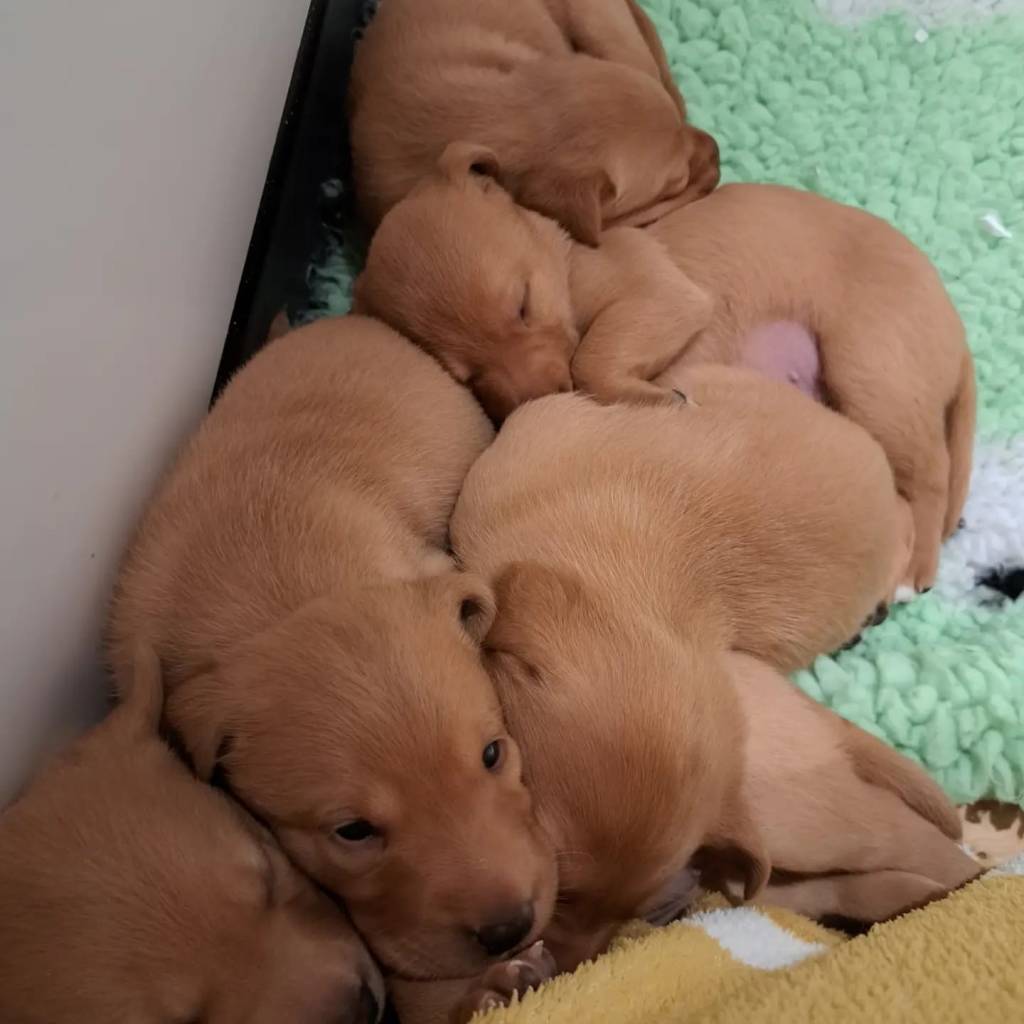
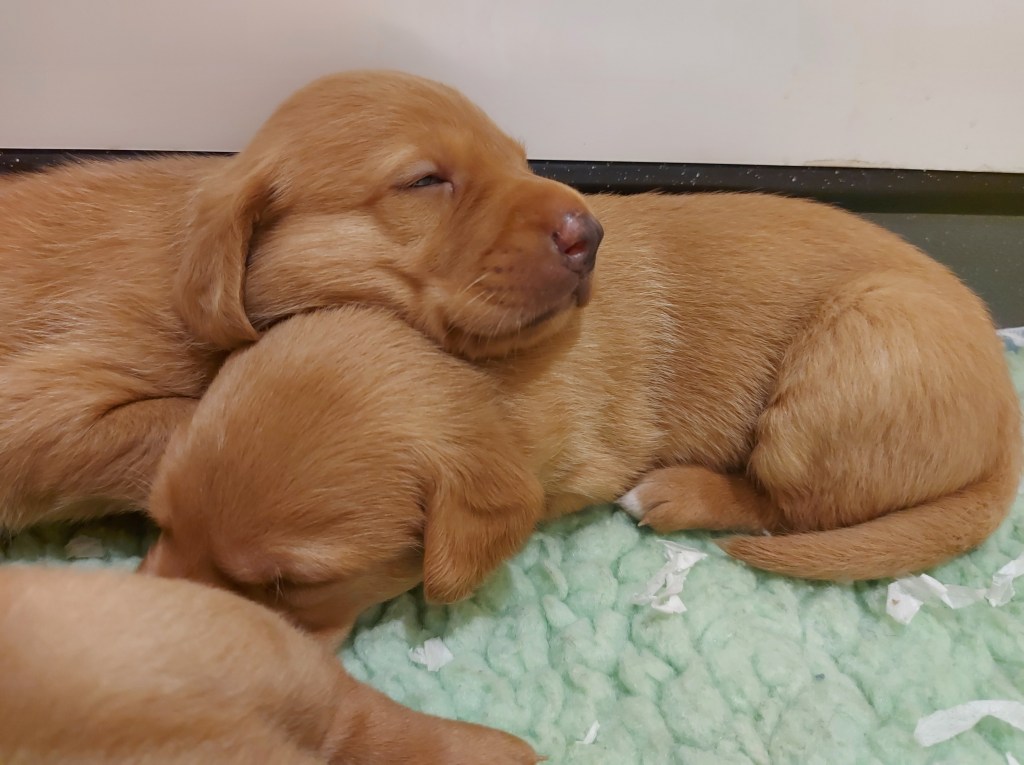
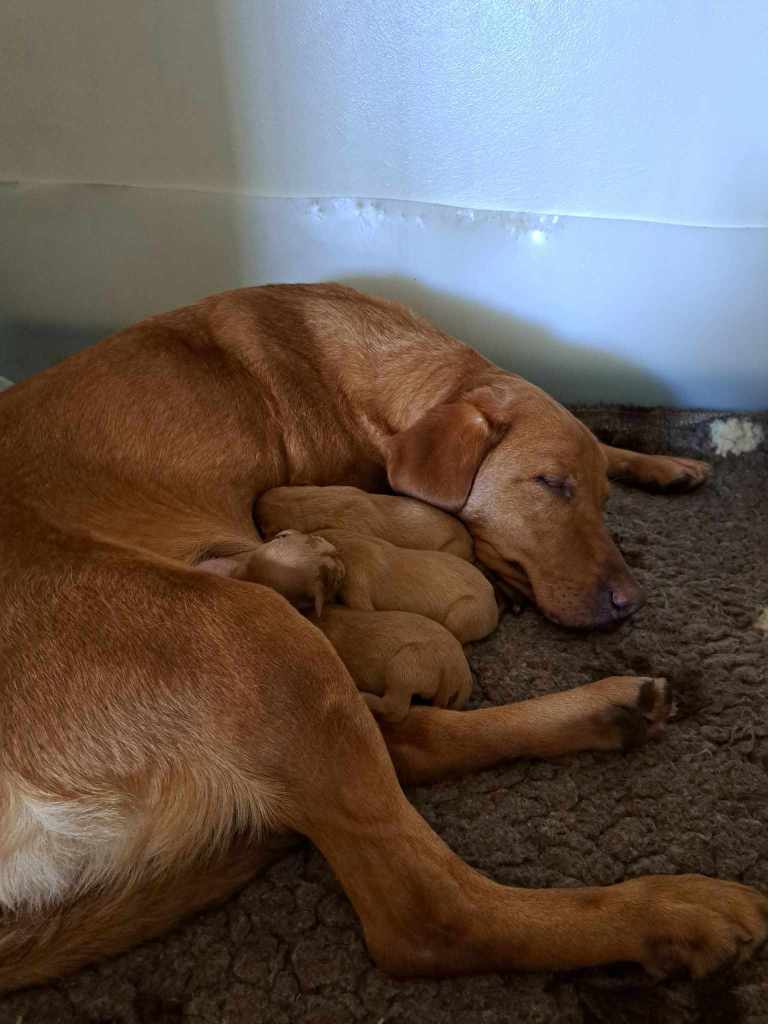
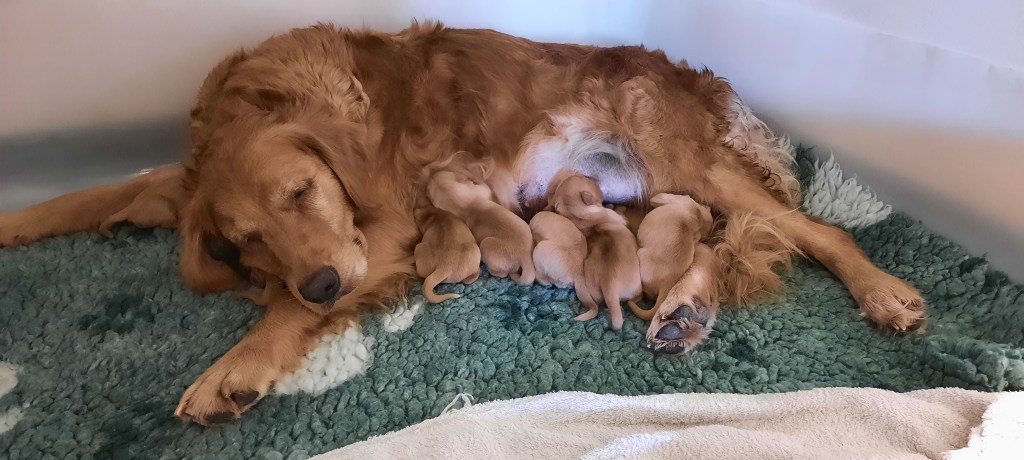
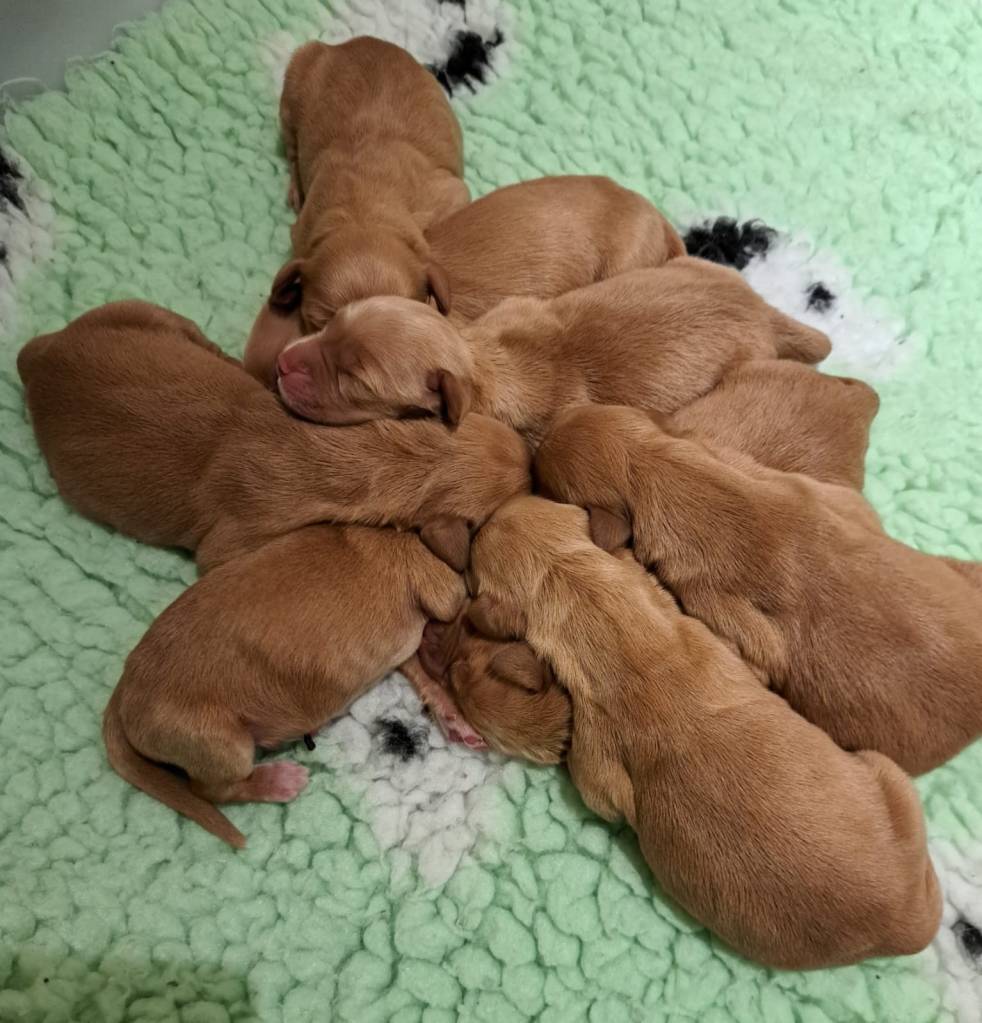
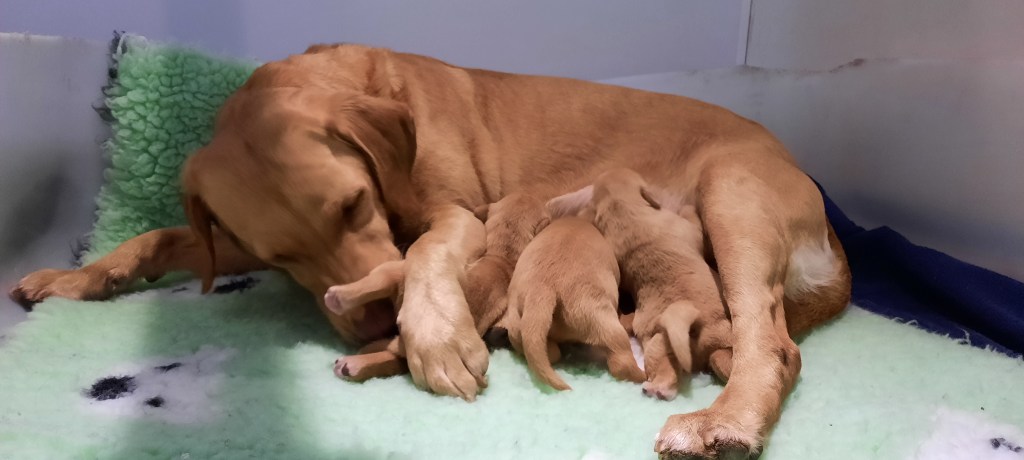
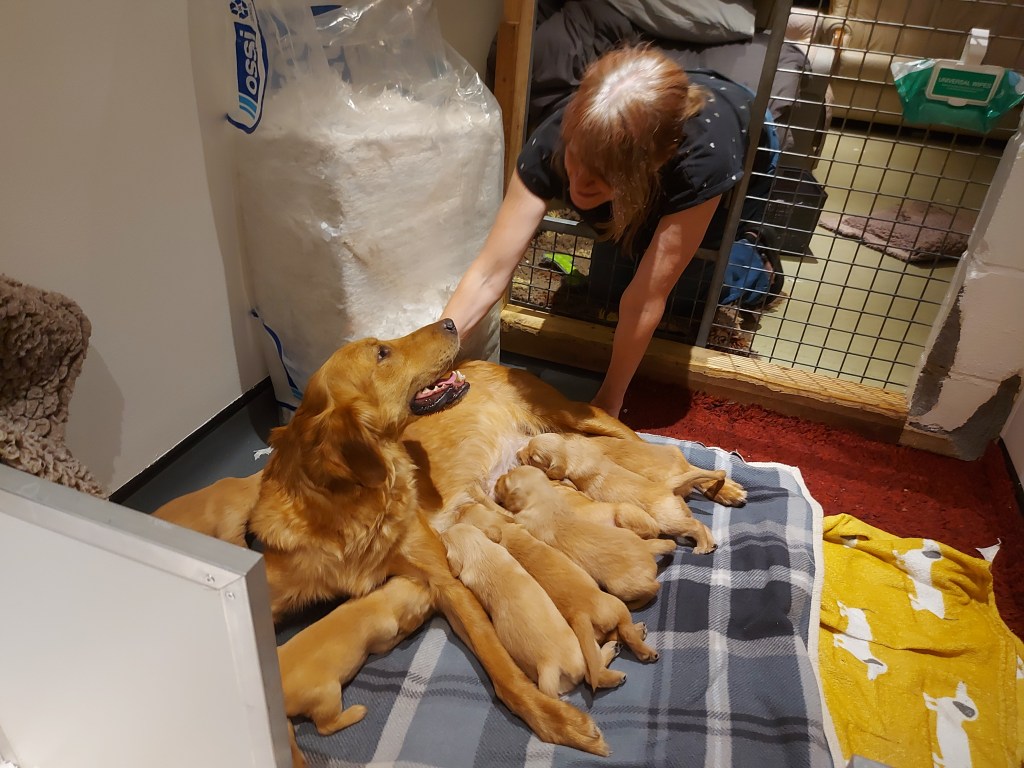
Our wonderful Nessie has whelped a litter of 8 pups, 5 girls and 3 boys, on the 12th of June. This is Nessie’s first litter and she’s took to motherhood well, she’s doing a great job keeping them all clean, well fed and now that they’re mobile she’s starting to gently play with them as well.
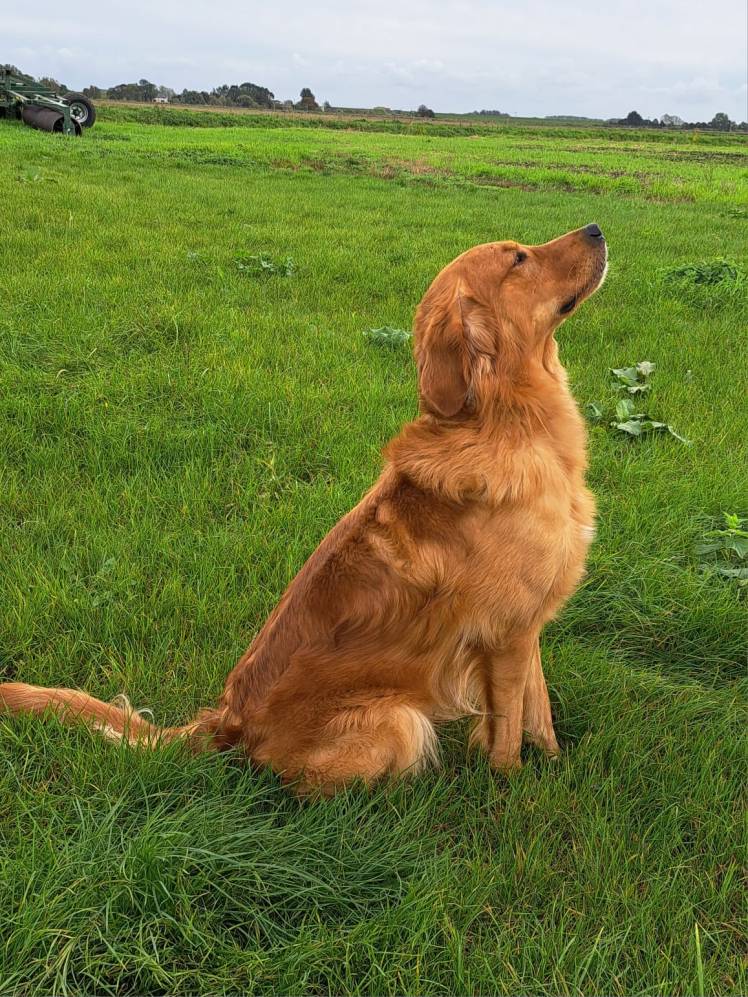
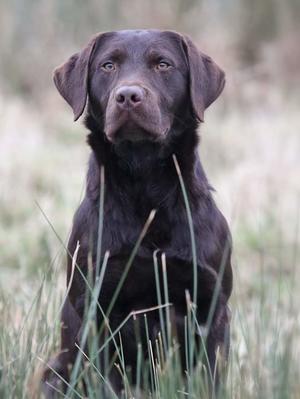
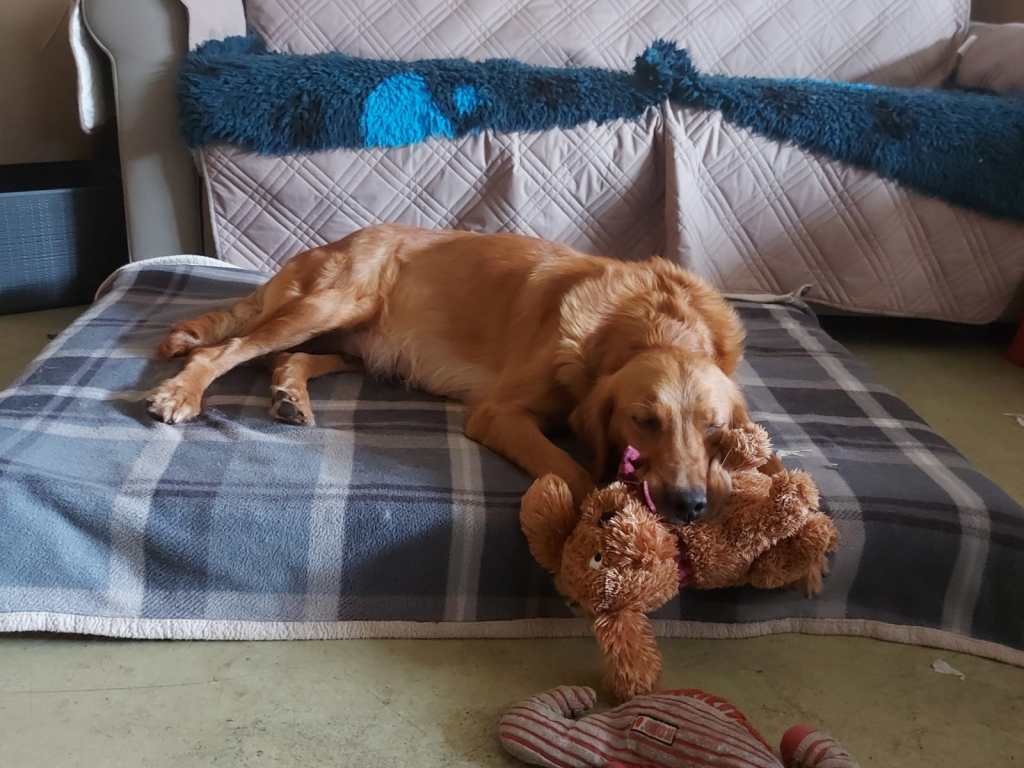
Nessie is a loyal companion, very affectionate and eager to please with us. She loves her daily walks around the farm with the other goldens and gets excited for car rides. She enjoys the training we do with her, but she’s equally happy curled up on her dog bed with her chin resting on her favourite toy.
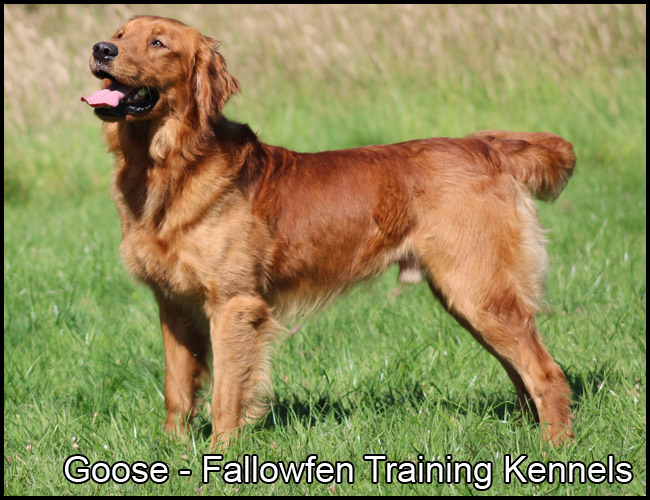
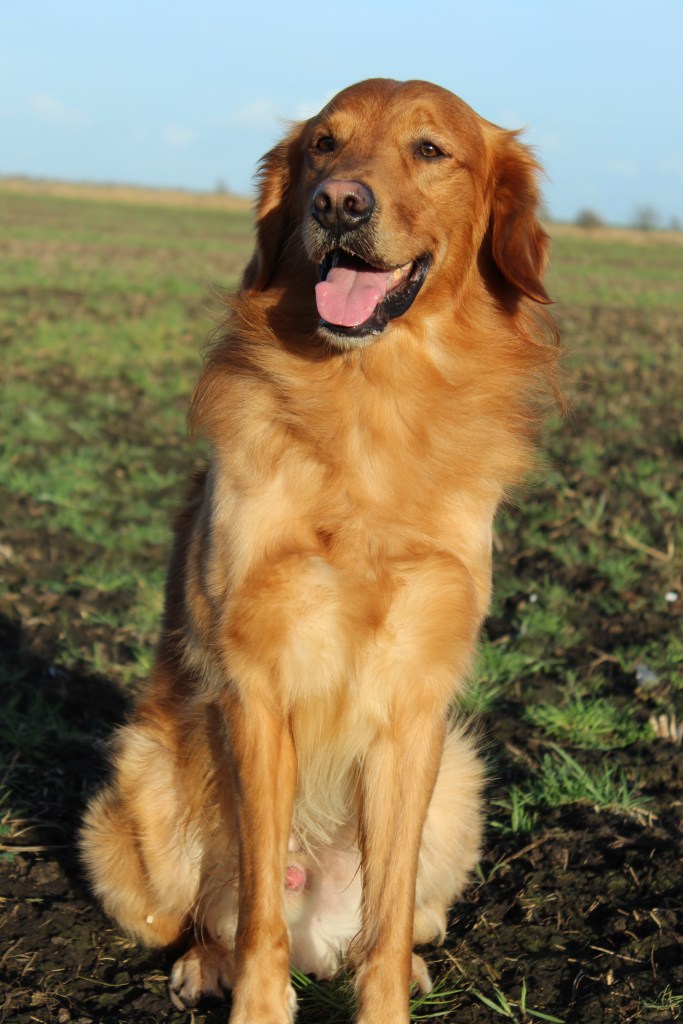
Woody is a playful, friendly dog who’s favourite activity is meeting new people and having a belly rub. He’s a pretty chilled out dog, he’s been quick to learn but he’s not a very motivated student as he’d much rather receive some fuss instead of chasing balls and training dummy’s around! He’s sired a few litters now and he tends to produce affectionate and playful pups.
Both parents are DNA clear of GR_PRA1 and 2, and Woody is clear of others such as ICT_A and ICT-A2, prcd-PRA and others. Both have Clear and up to date BVA eye checks and their Gonioscopy’s are both Grade 0. Nessie’s hips are 3/3=6 and Woodys are 3/4=7, both really good hips scores. Both have Elbow scores of 0, which is perfect. There are also loads of excellent hip and elbow scores in the line, which reduces the risk of Hip and Elbow dysplasia.
Please note: These are Working type Golden Retrievers, not show type.

The beginning – days 0-21
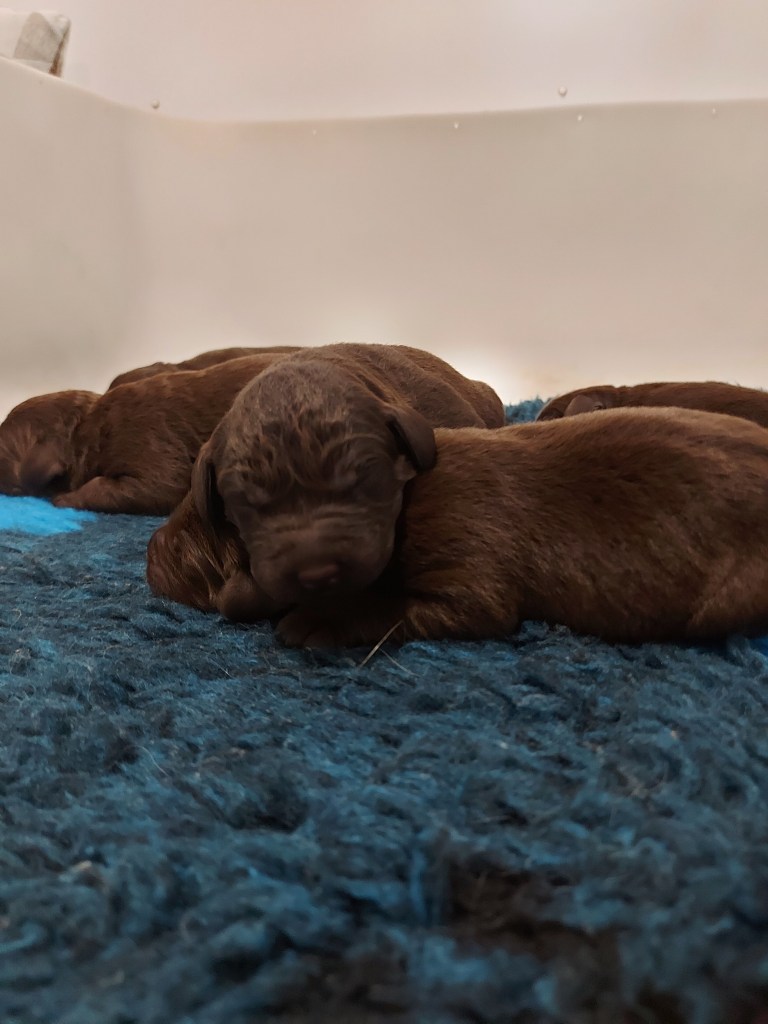
Nessie whelped without any drama on Friday evening, it was a nice easy whelp, pups all a good even size and healthy. Our goal for the 1st week of their lives is to keep them clean and check them over daily for any health problems , but mostly our job is to support Nessie in anyway possible to aid her recovery and help her care for the pups.
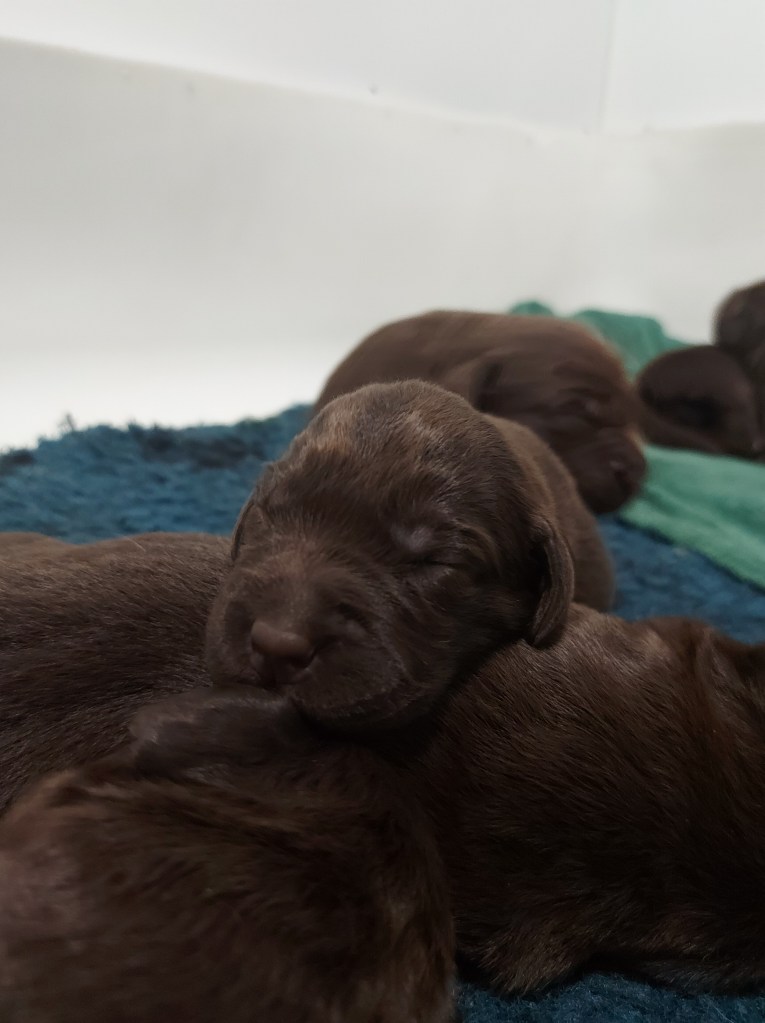
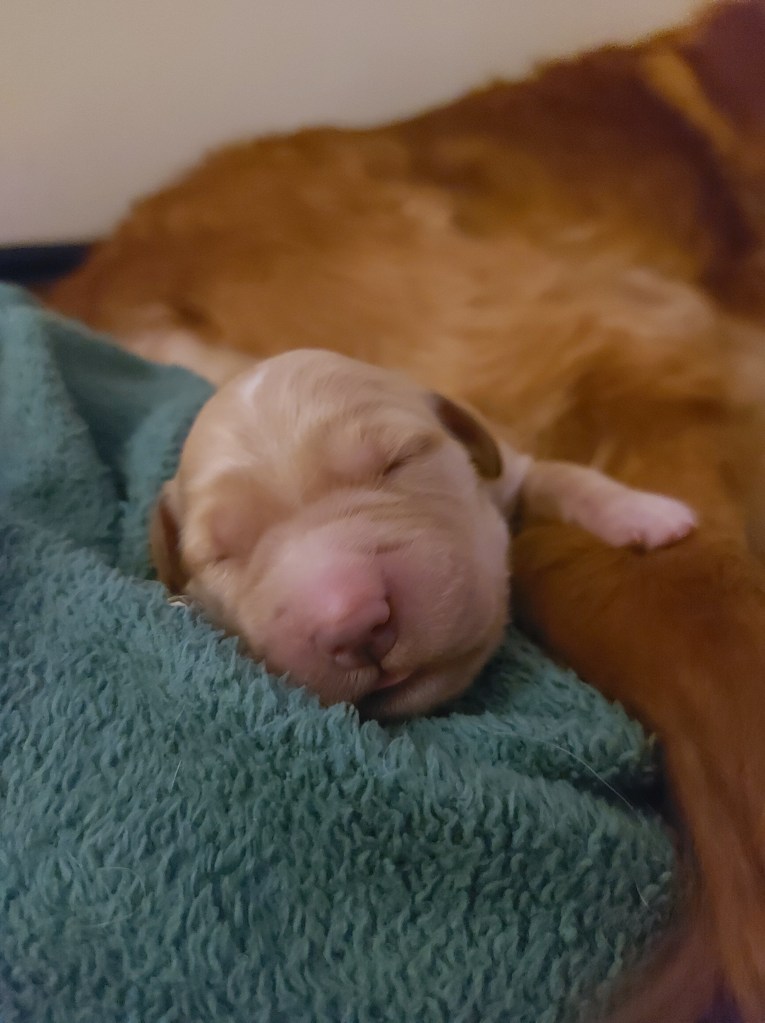
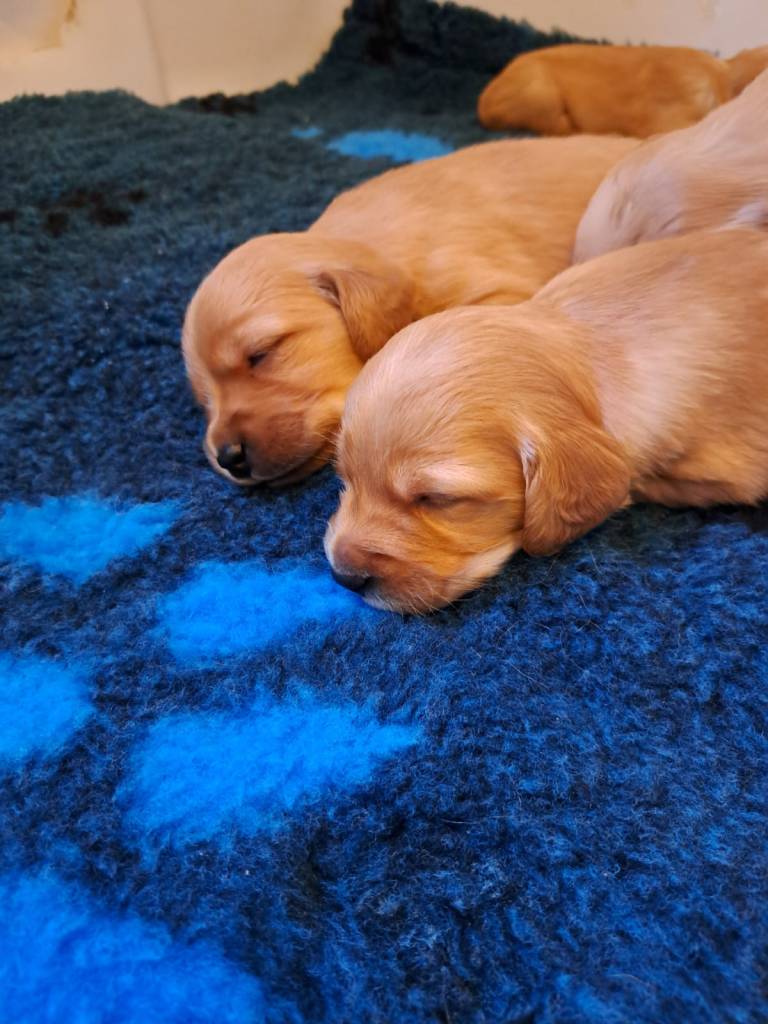
The pups are born blind, deaf and unable to walk properly for the first 3 weeks, their only way of finding their mum is through their heat sensors and their sense of smell. So we keep the floor as flat as possible at this stage, and we try not to use very strong smells near them so as to not confuse them.
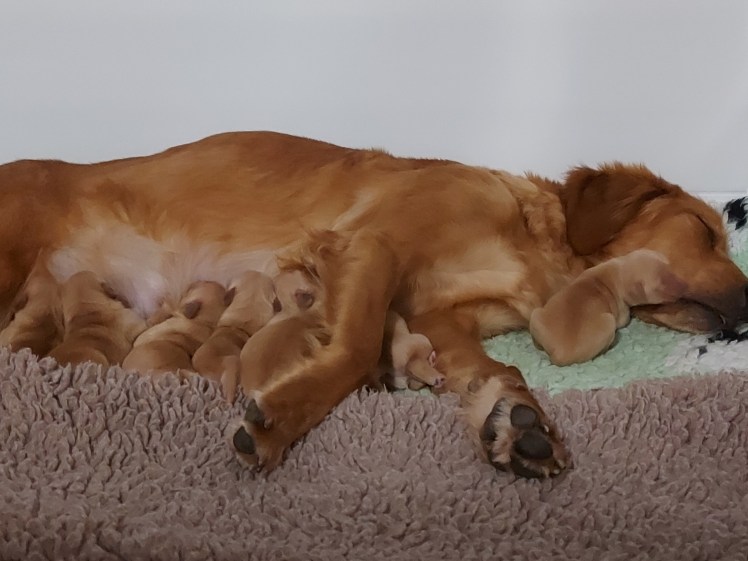
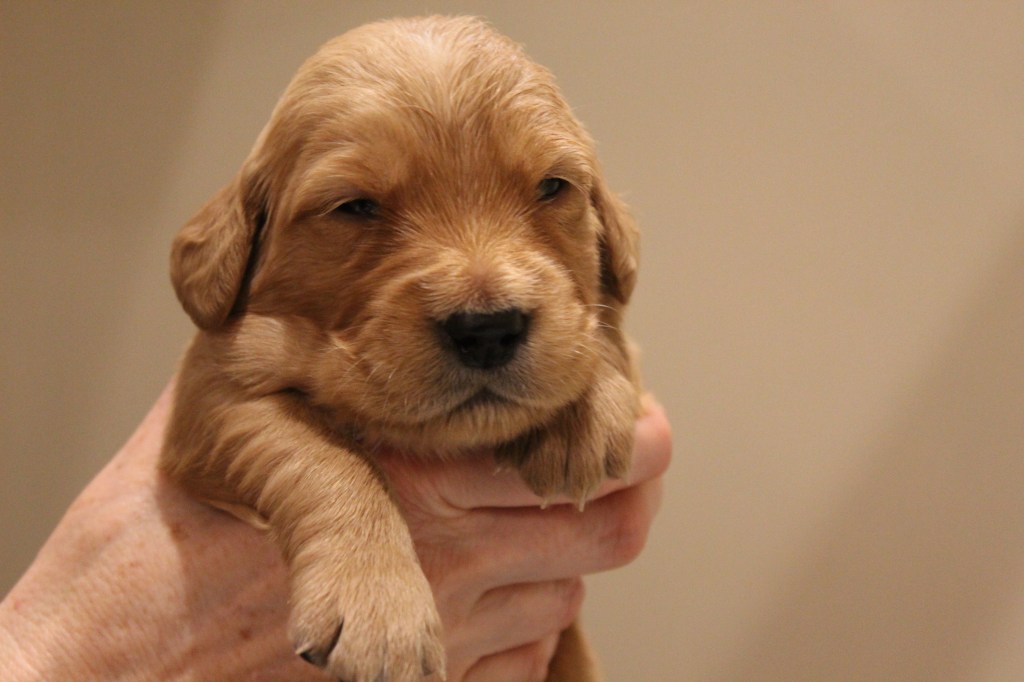
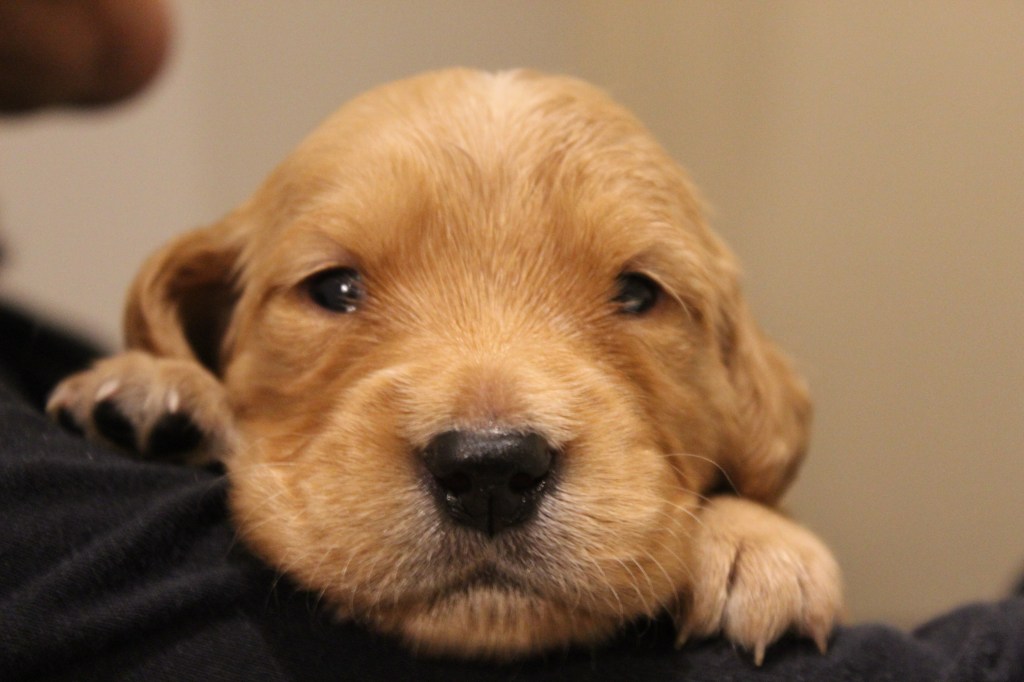
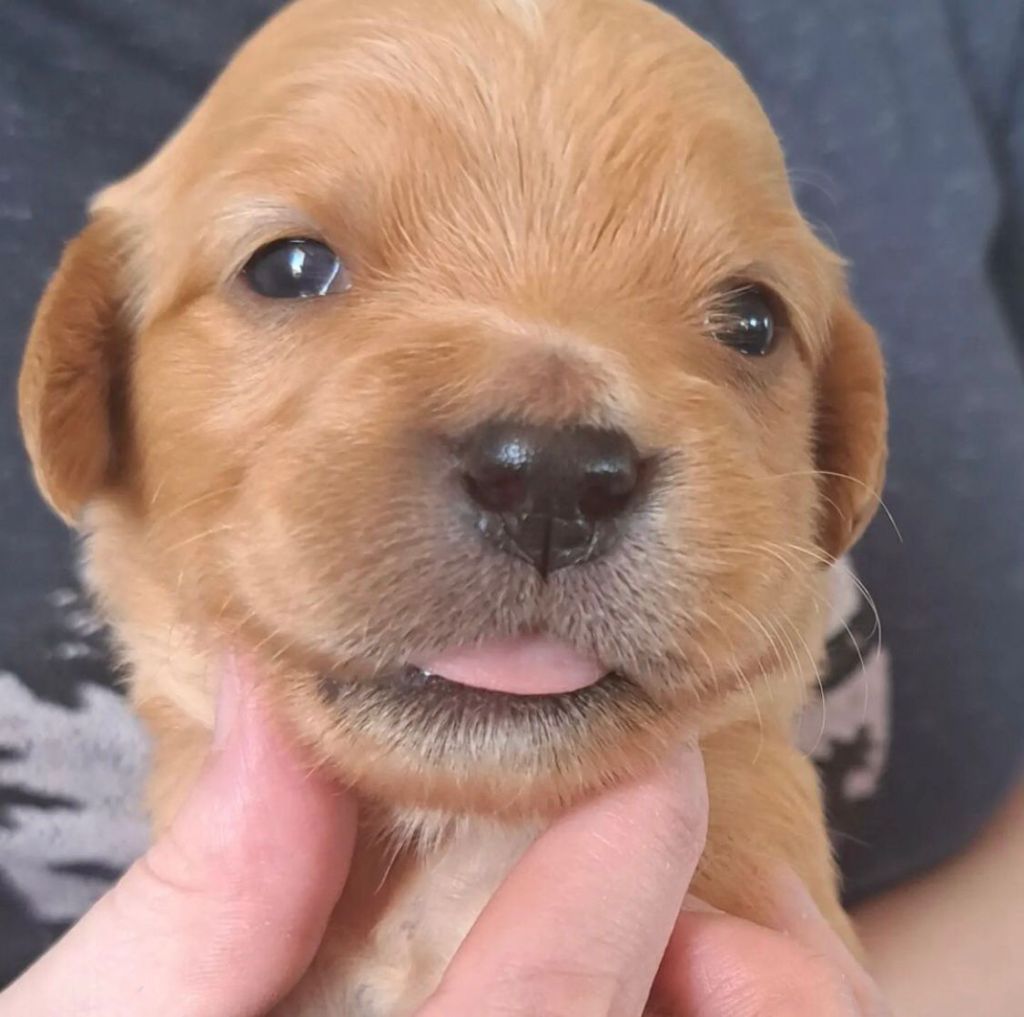
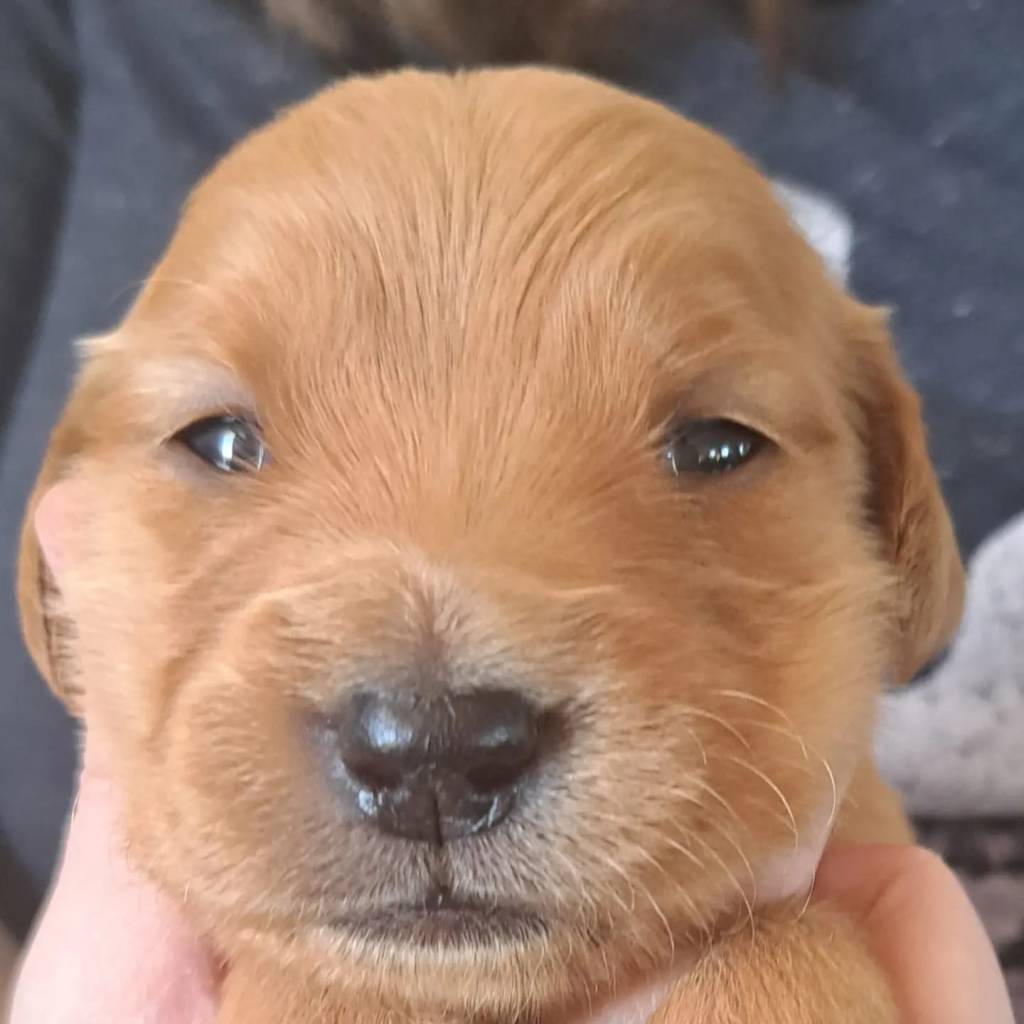
7-14 days old is an interesting time for the pups, they begin to develop in several different ways. They’re more mobile, able to (for a very brief time) stand on wobbly legs, and they can really shift around the pen when they want to! They’re eyes start to open this week and the ear canal starts to develop, though they can’t hear or see much at all currently. They had their 1st nail clip this week and they are handled and checked over everyday. Nessie is doing really well, in fact I think she’s rather enjoying the extra attention!
14-21 days old they’re able to walk around the pen and are reacting to noises, for example they have a startle response when something loud is dropped. We occasionally drop things at a distance from them to get them used to random loud noises, and they’re all recovering from the surprise very quickly which is a good sign of a confident pup.
3 Weeks old
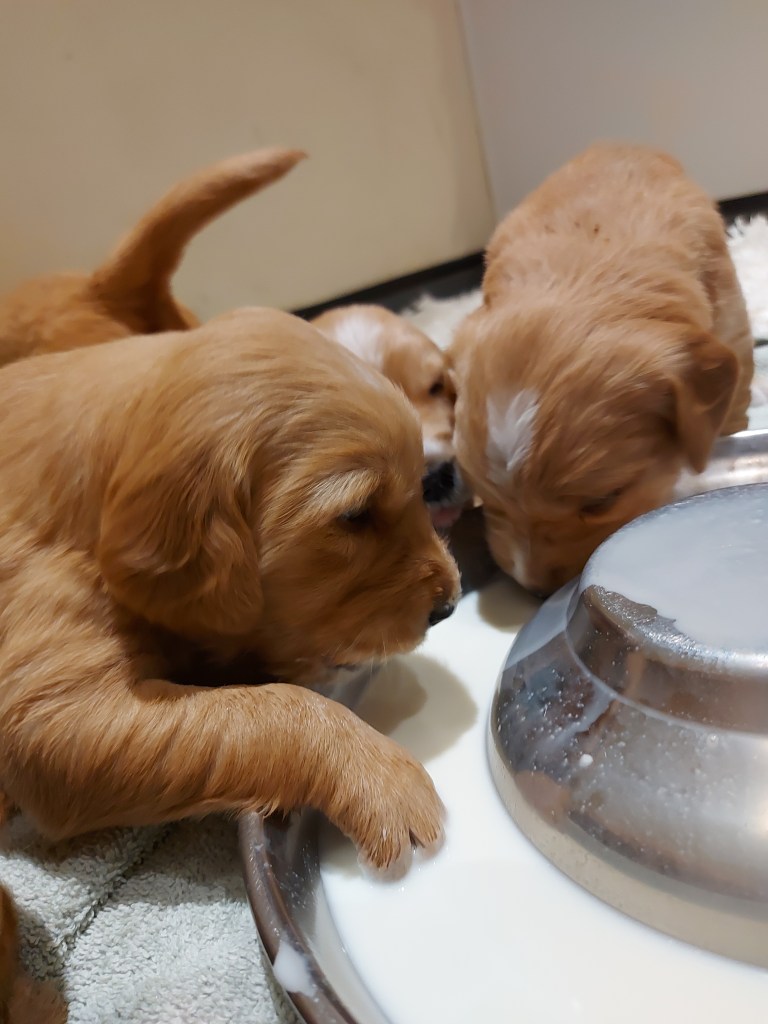
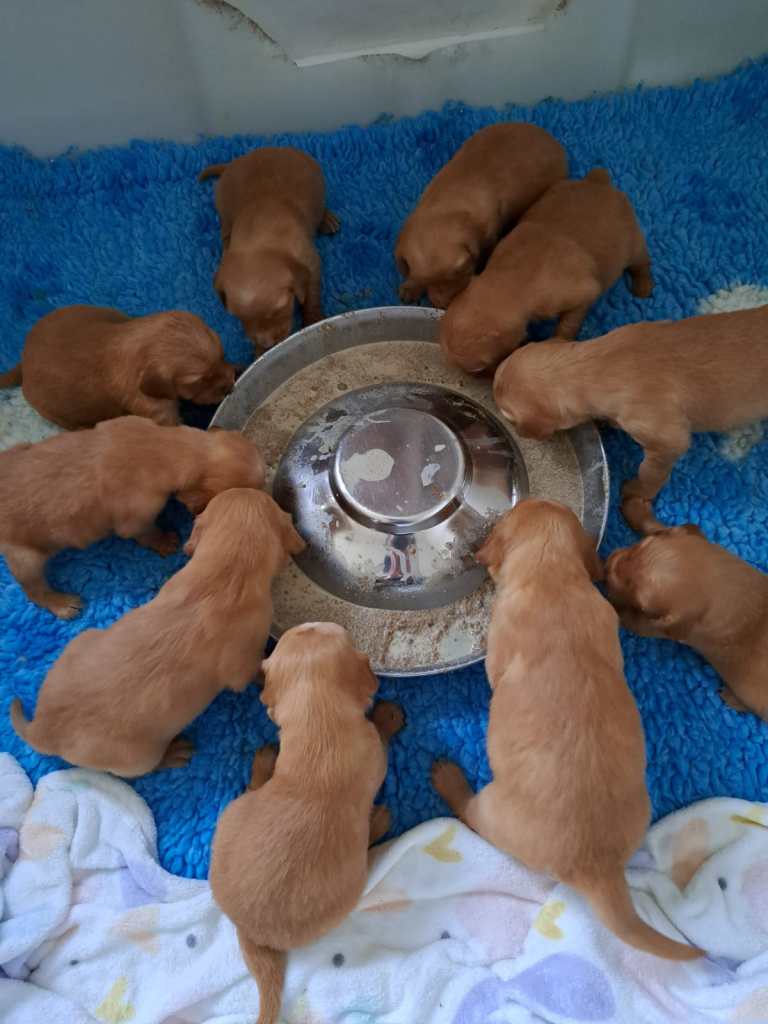
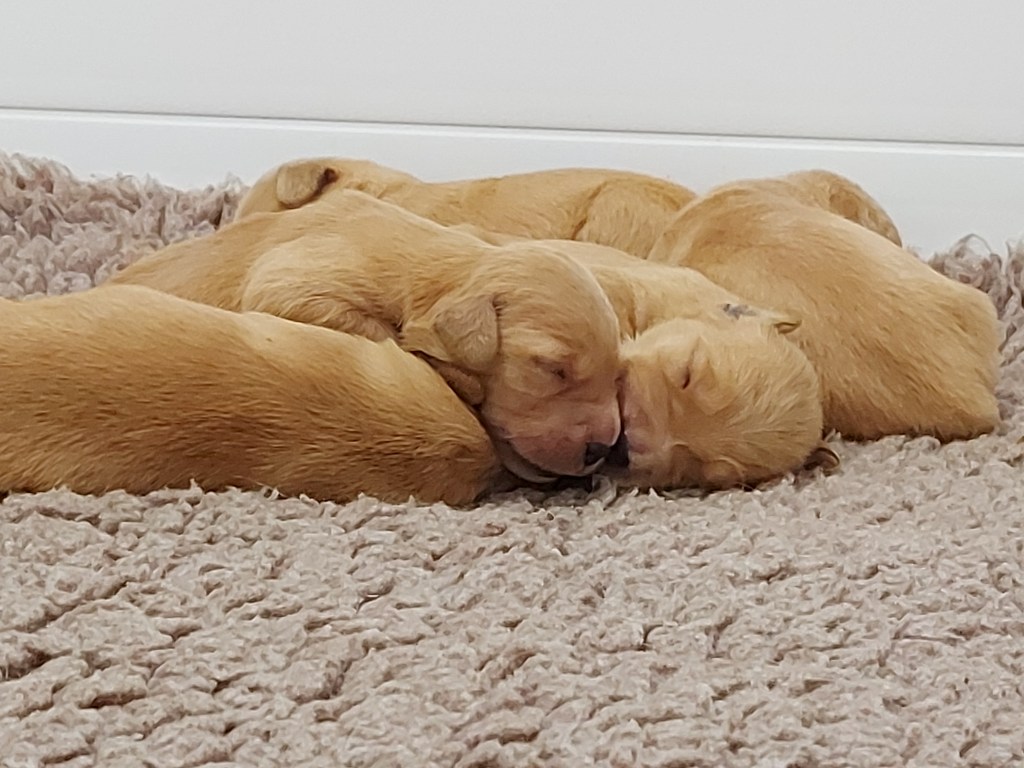
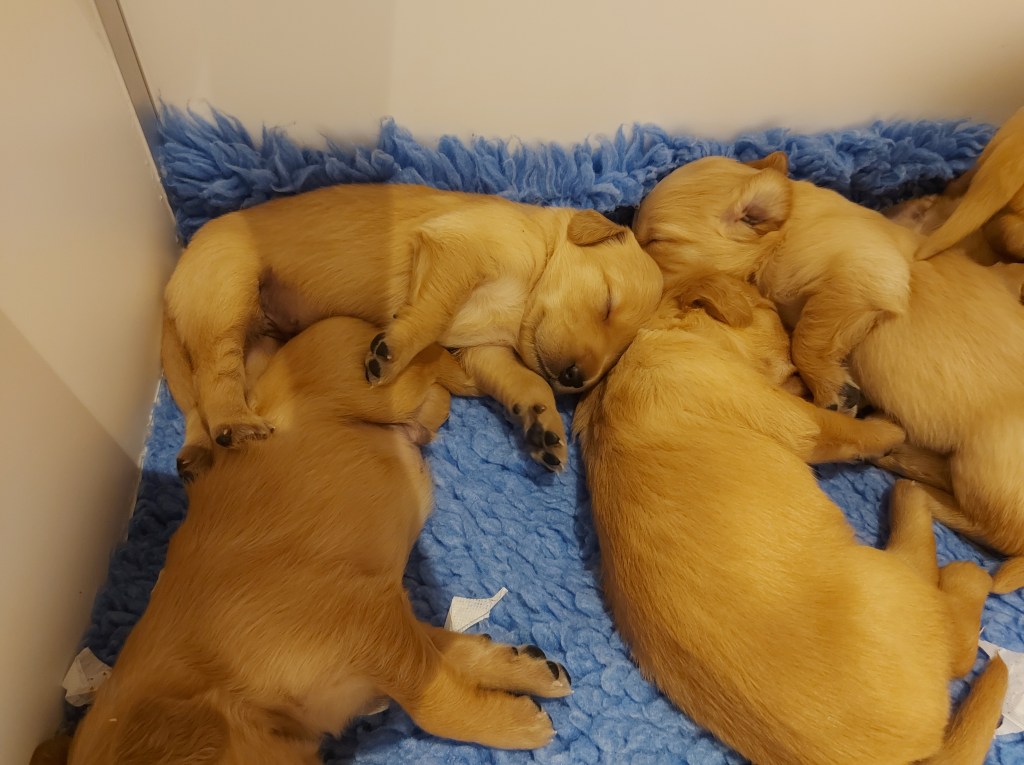
Now that the pups are 3 weeks old we began to wean them onto puppy food. At this age they do have teeth but they can’t chew much at all so their puppy kibble is soaked in water or puppy milk to soften it into a mush. This was a roaring success, they ate it all and licked the bowl clean after. They had their first course of Panacur wormer this week, and of course the weekly nail trim. They didn’t fidget much this time, they’re getting used to it now thankfully.
We’ve noticed that when they wake up they walk away from where they’ve been sleeping to go to the toilet, which is the sign we’ve been waiting for to start the very first step of toilet training. We’ve split the whelping box in half, so half is the vet fleece and half is the toilet area. When we see a pup getting in position to toilet, we move the pup to the toilet area so it does it’s business there. After a while hopefully the pups will start to use the right side to toilet and sleep on the bed area, but that will take a few weeks at least.
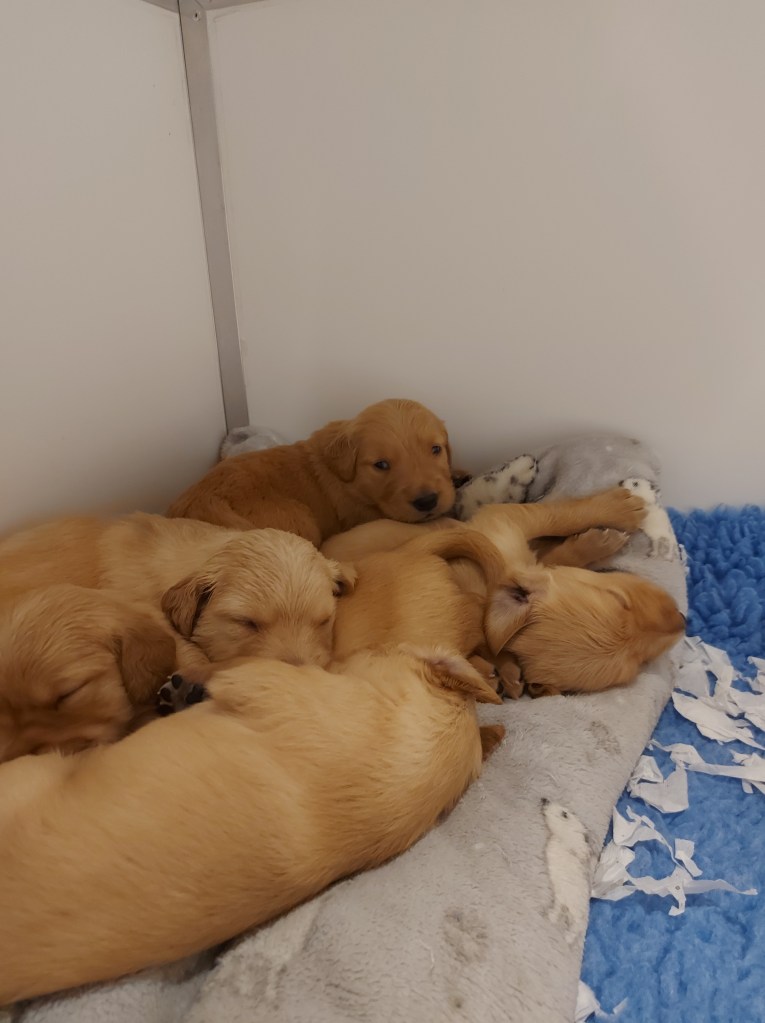
4 Weeks old
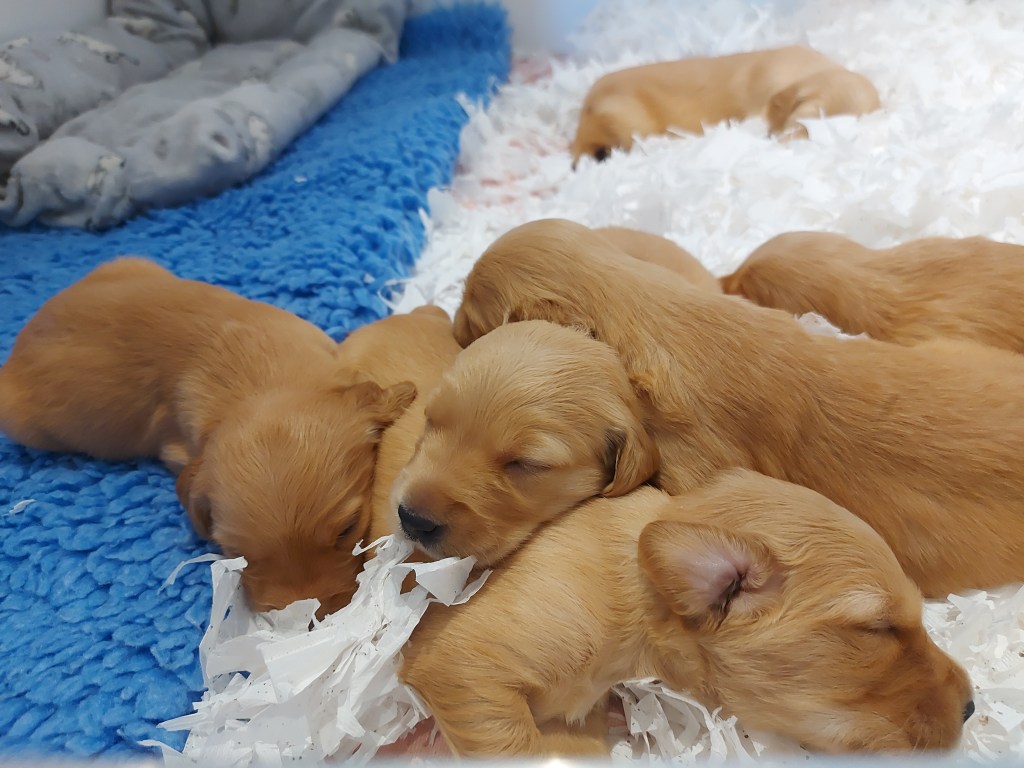
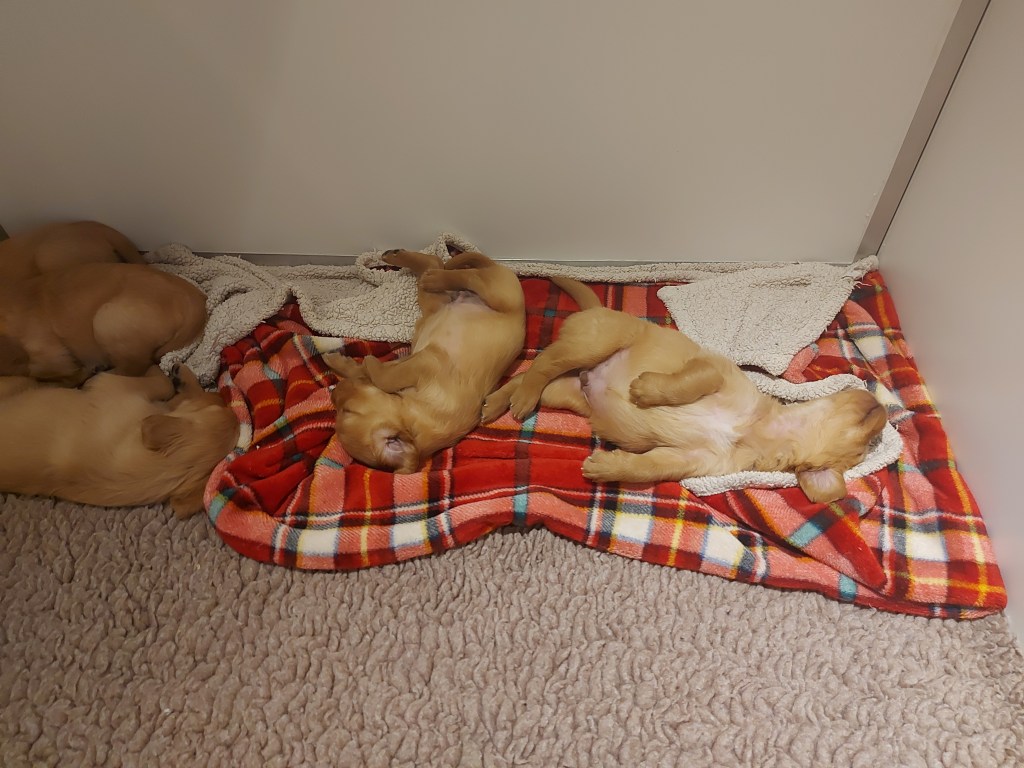
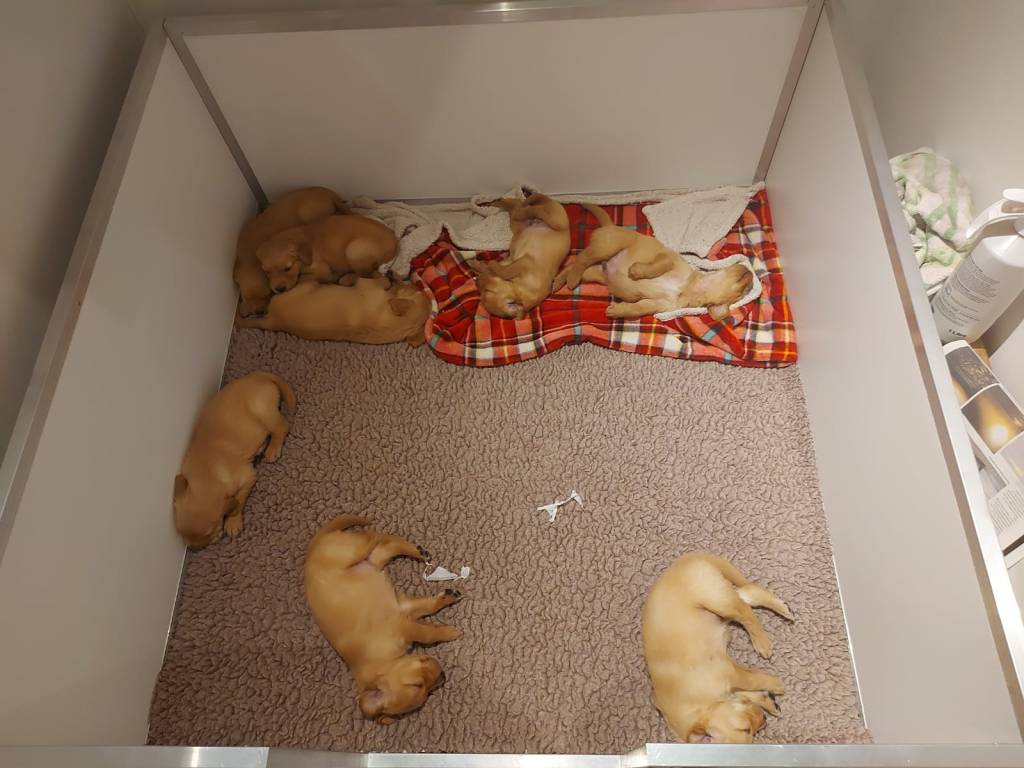
This week we’ve expanded the pups area, so the Whelping box is now their bed area, and outside of that is the toilet. The toilet area is comprised of newspaper, reusable pee mats and tissue paper. This usually works quite well, they have a totally different texture/feel to the bed area so its easier for them to tell the two areas apart. It’s early days but so far all the poos are in the right area and most of the wees as well, so we’re off to a great start! We’ve added toys to the pen this week, and they’ve enjoyed some strawberry’s as well.
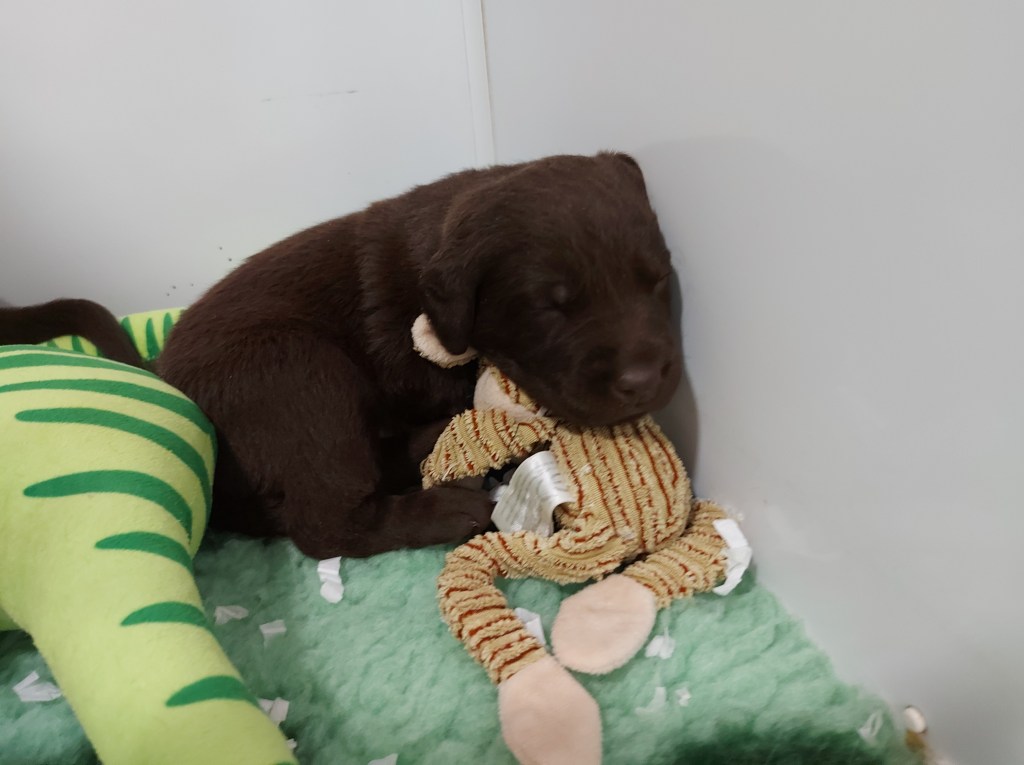
Nessie having a well earned nap with her favourite toy
5 Weeks old
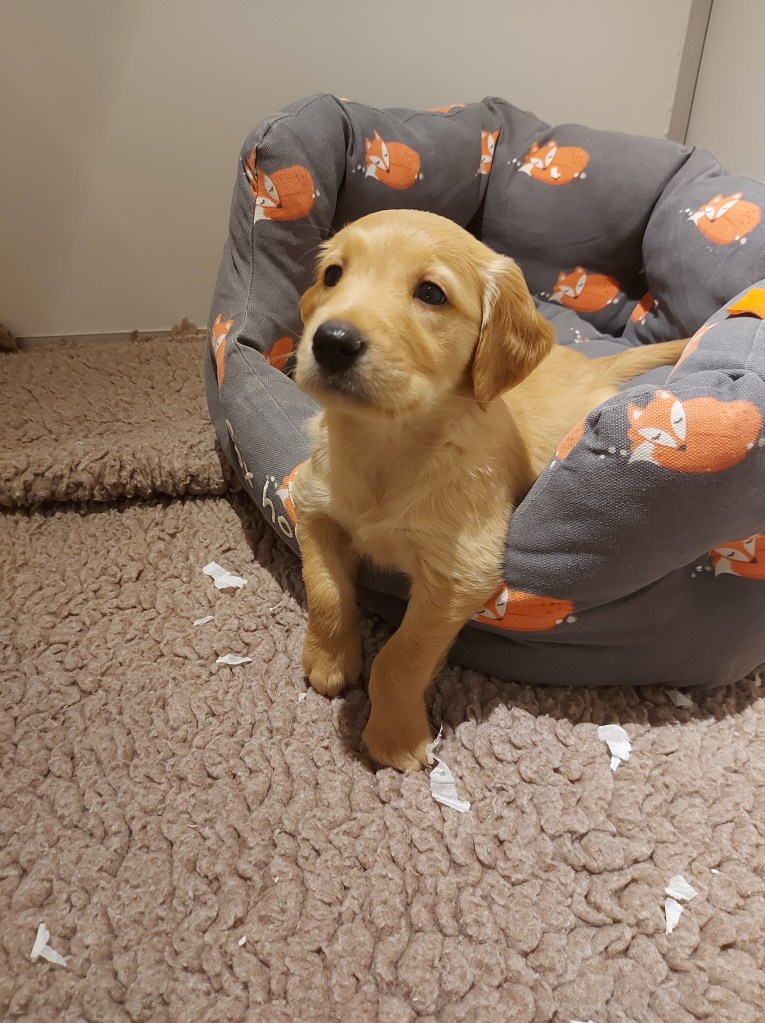
This week the pups have had their 2nd round of Wormer and another nail trim, their food is semi firm now and they have daily sessions running around the office. We open a hatch to the side of their pen and encourage them to come out, this encourages problem solving skills as they have to break eye contact and find the exit. Some needed a little encouragement to find the exit but they all found their way out quite quickly really.
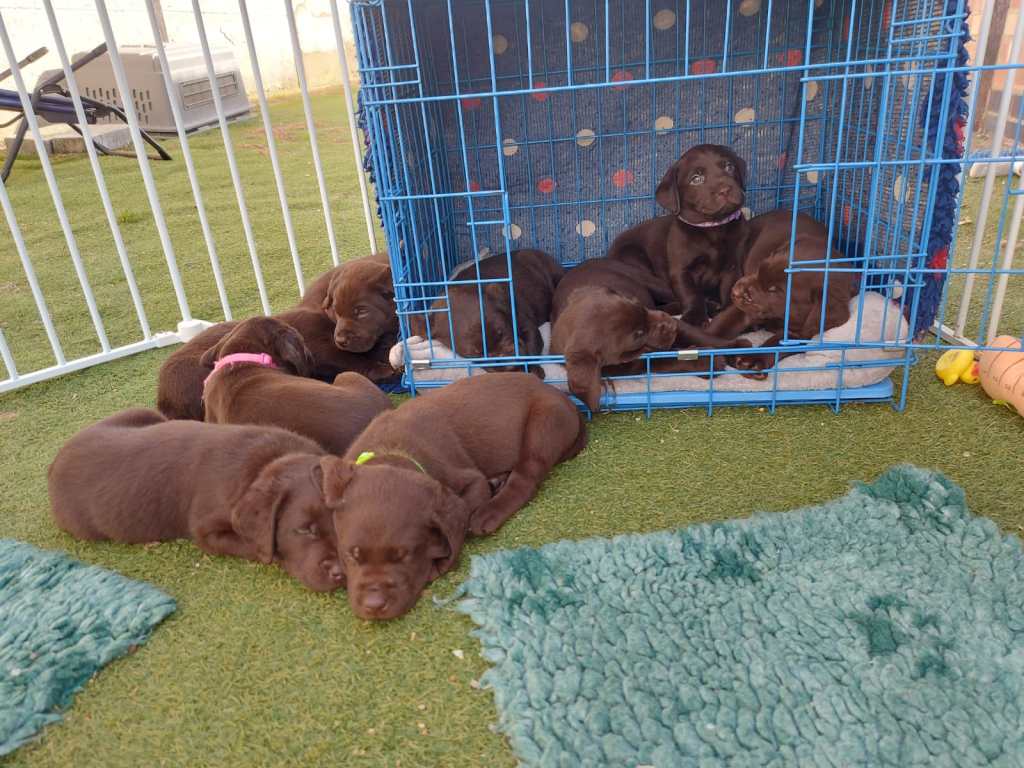
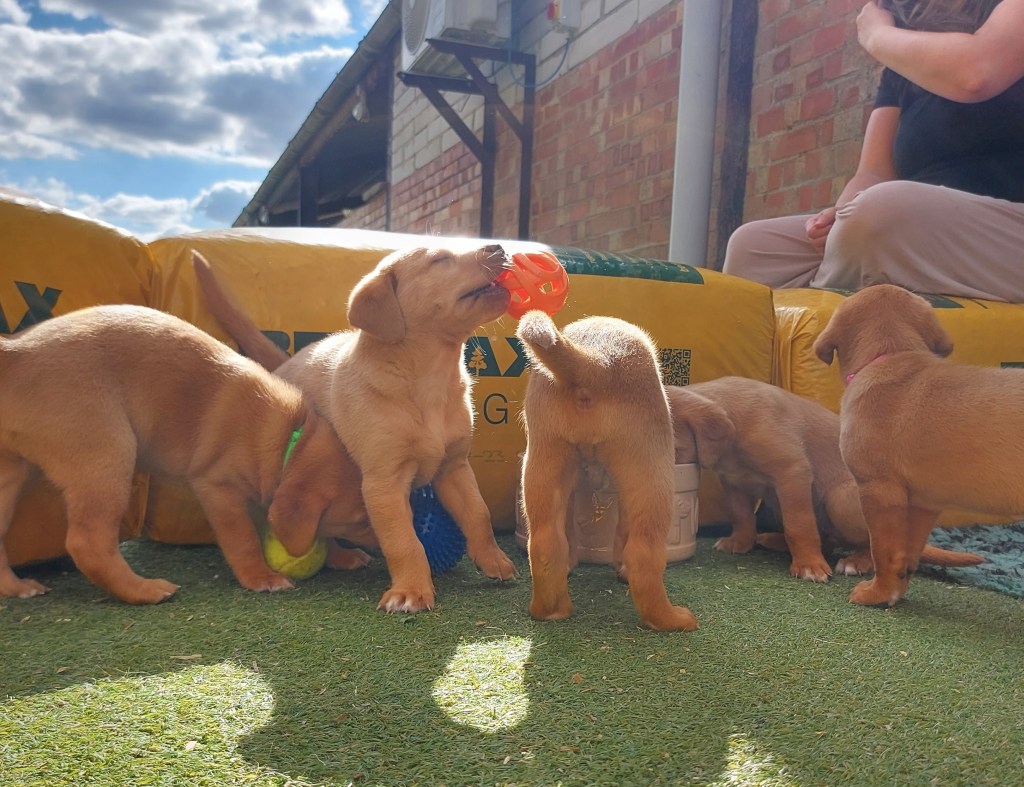
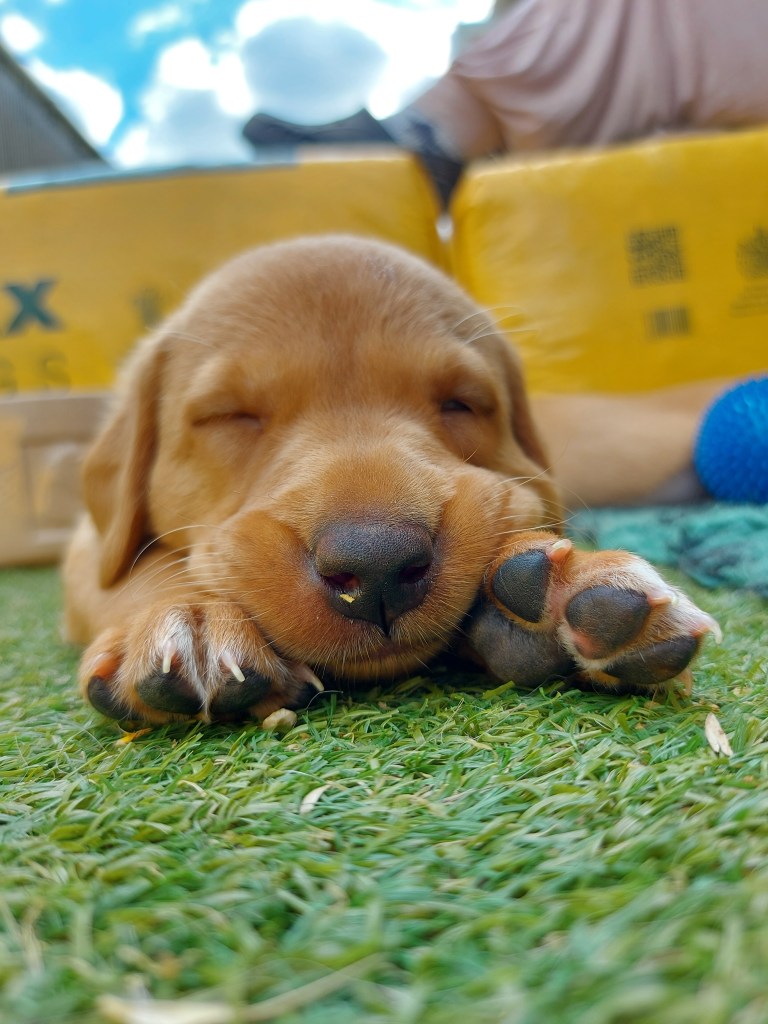
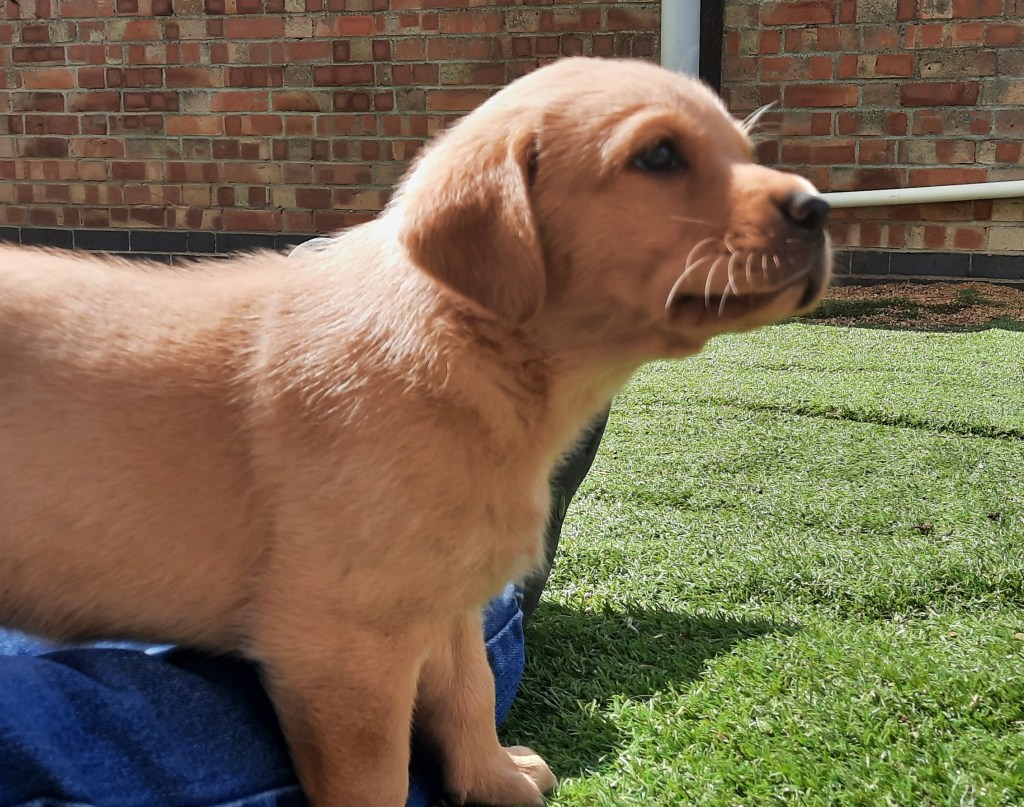
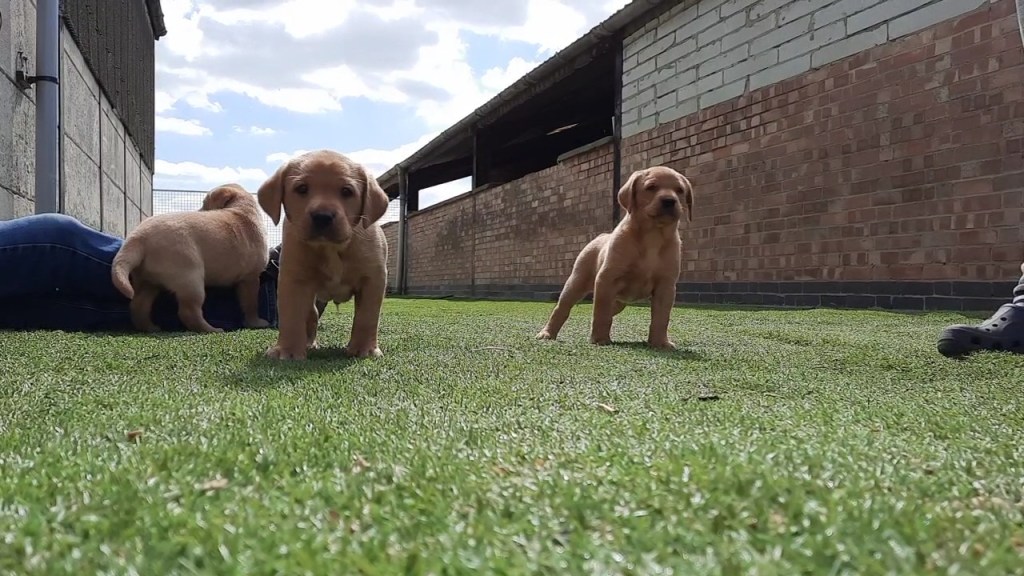
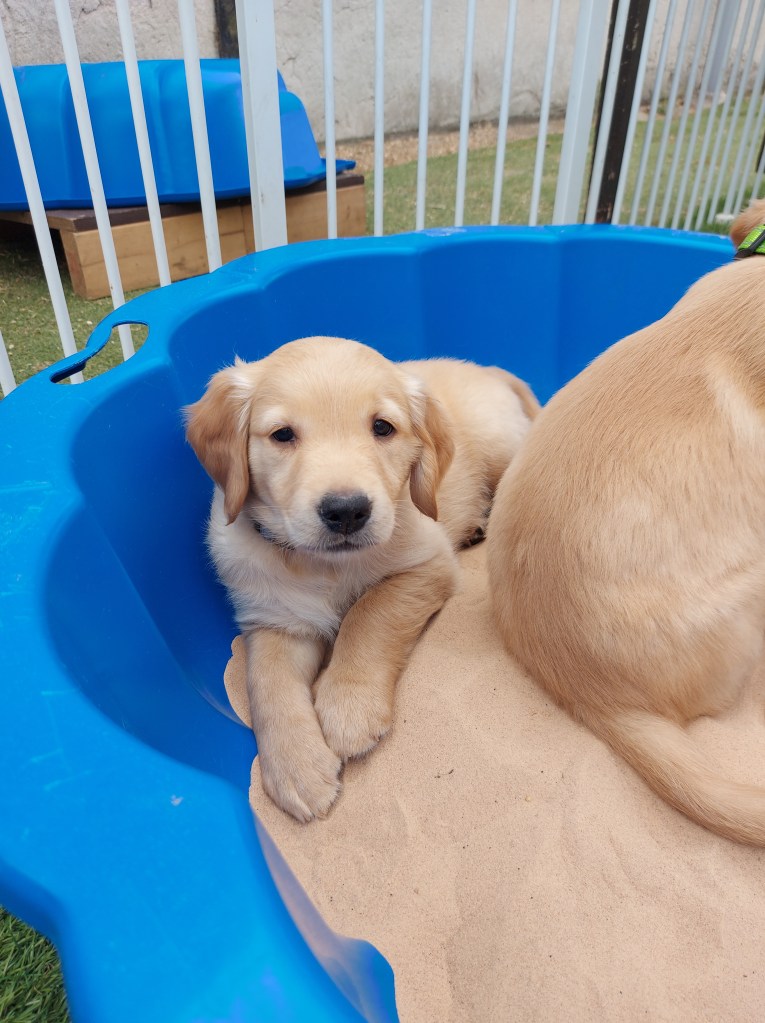
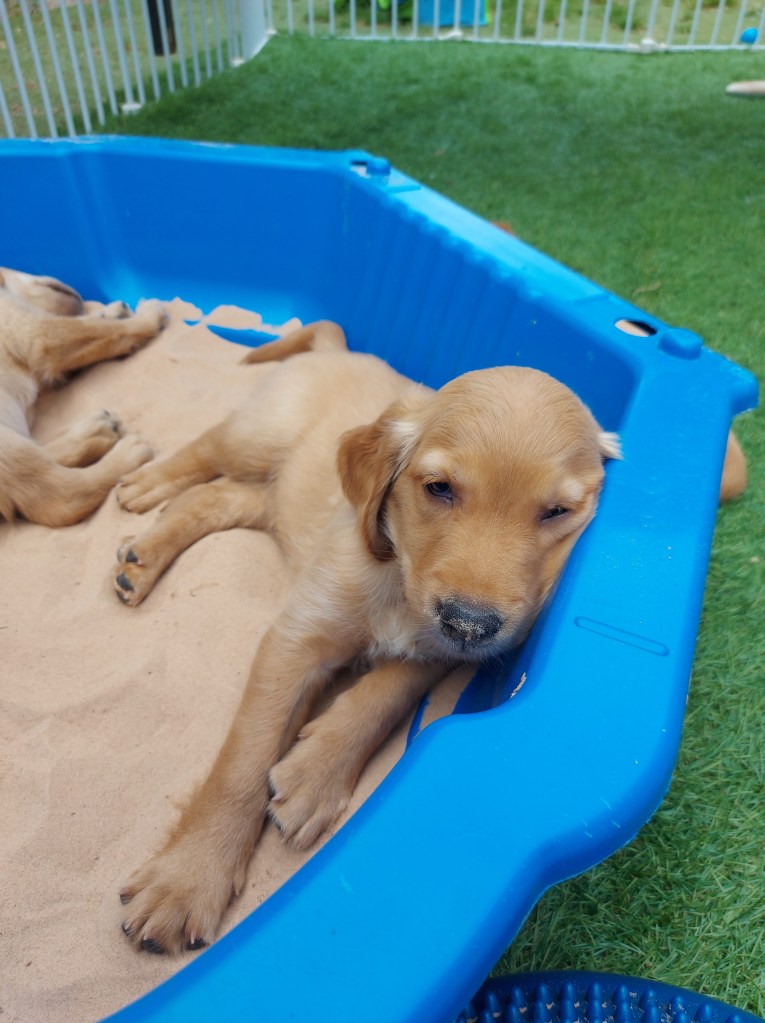
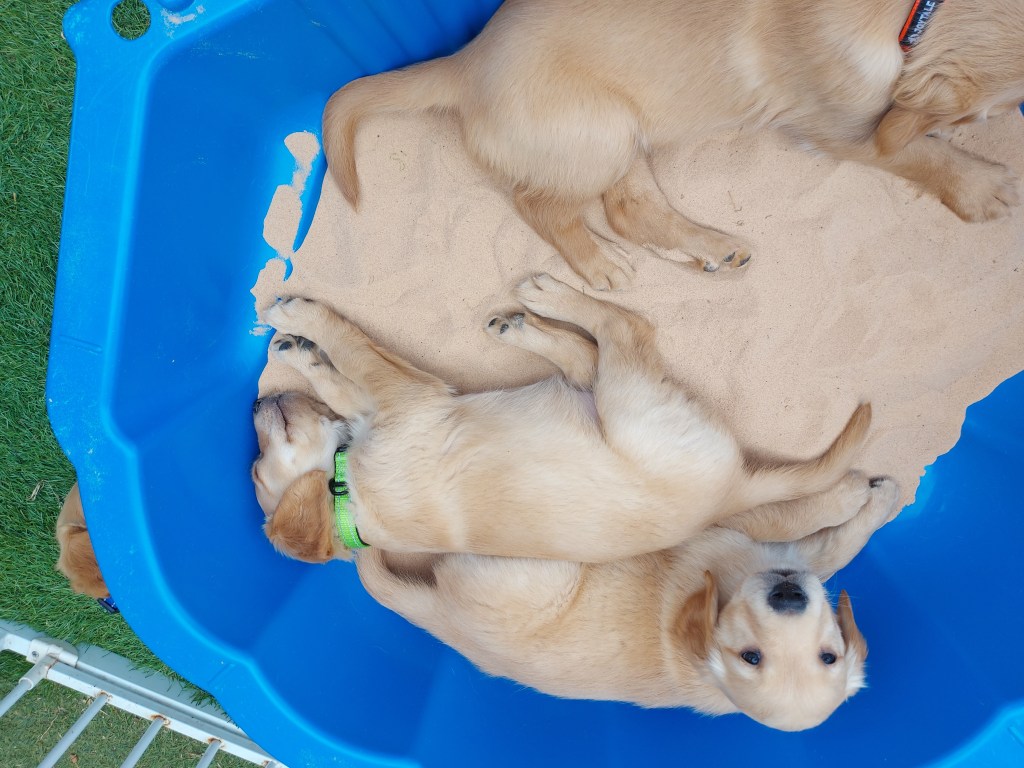
As they approached the 6 week mark the heatwave finally ended and we had a few days with reasonable weather, so we took the pups outside on our astroturf area. The pups showed no fear or hesitation, they loved exploring and having zoomies outside despite the loud farm machinery in the yard just a short distance away.
6 Weeks old
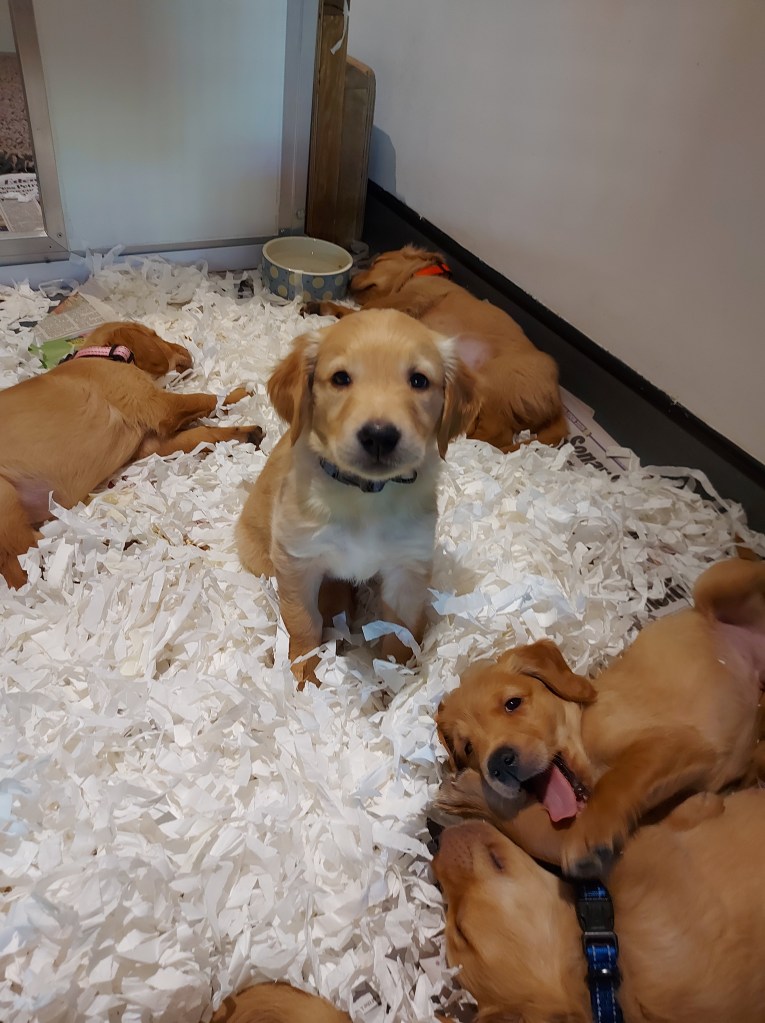
So far this week we’ve been hand feeding the pups wet puppy food and bits of apple. Hand feeding at this age can encourage the pups to be softer mouthed and to take treats gently, which seems to be working so far. we’ve been giving them these bits of food when they’re sitting down nicely and not jumping up, to teach them good manners. They’ve only had a few sessions so far but we can already see an improvement, and even when there is no food out they’re starting to sit down when they want fuss now. Taking their age into account, we’re thrilled with how quickly they’re learning!
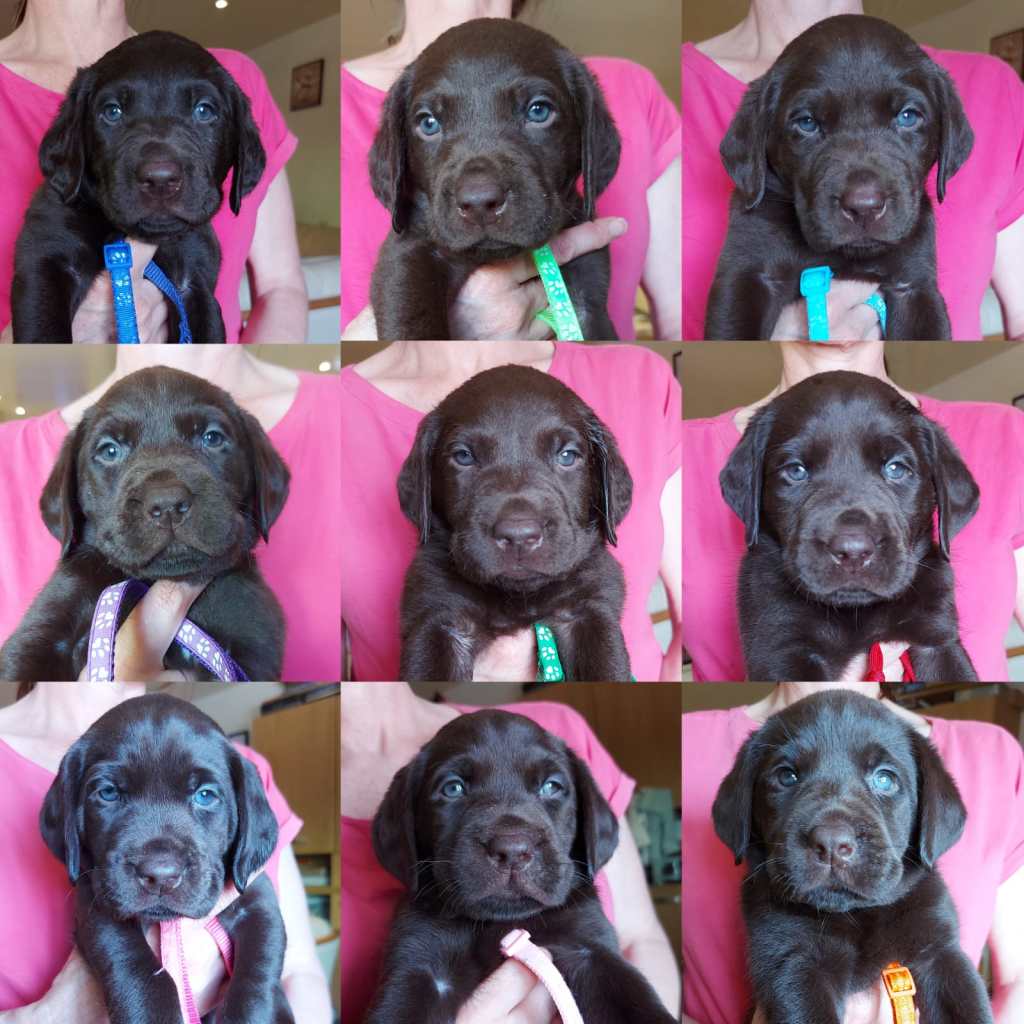
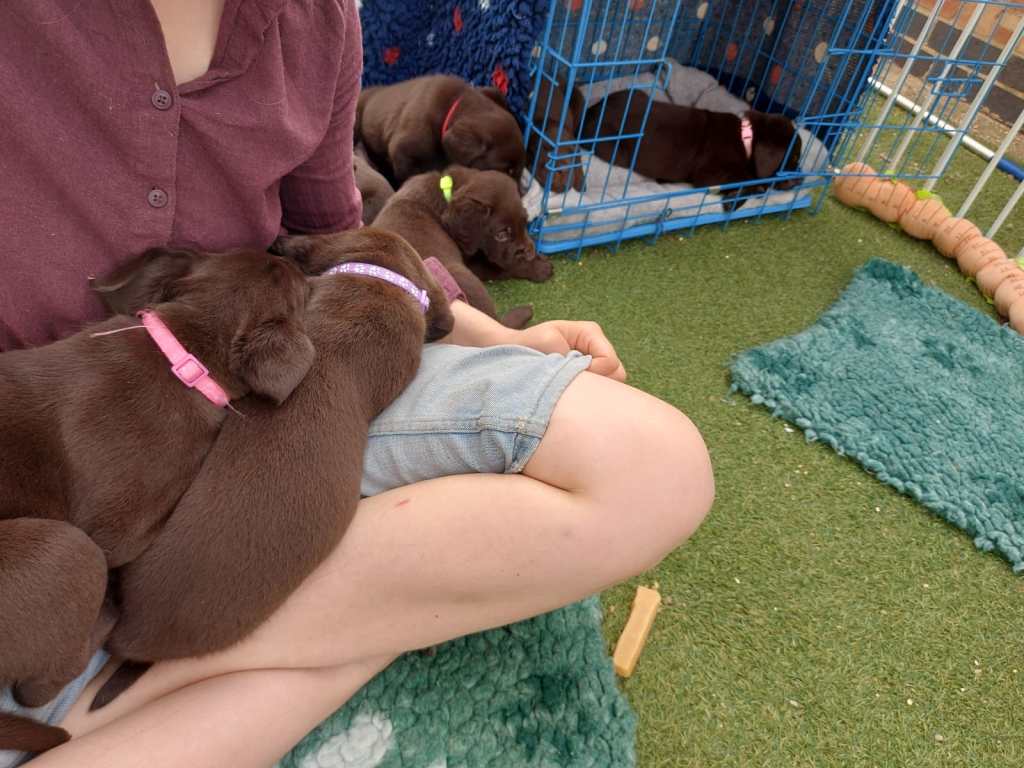
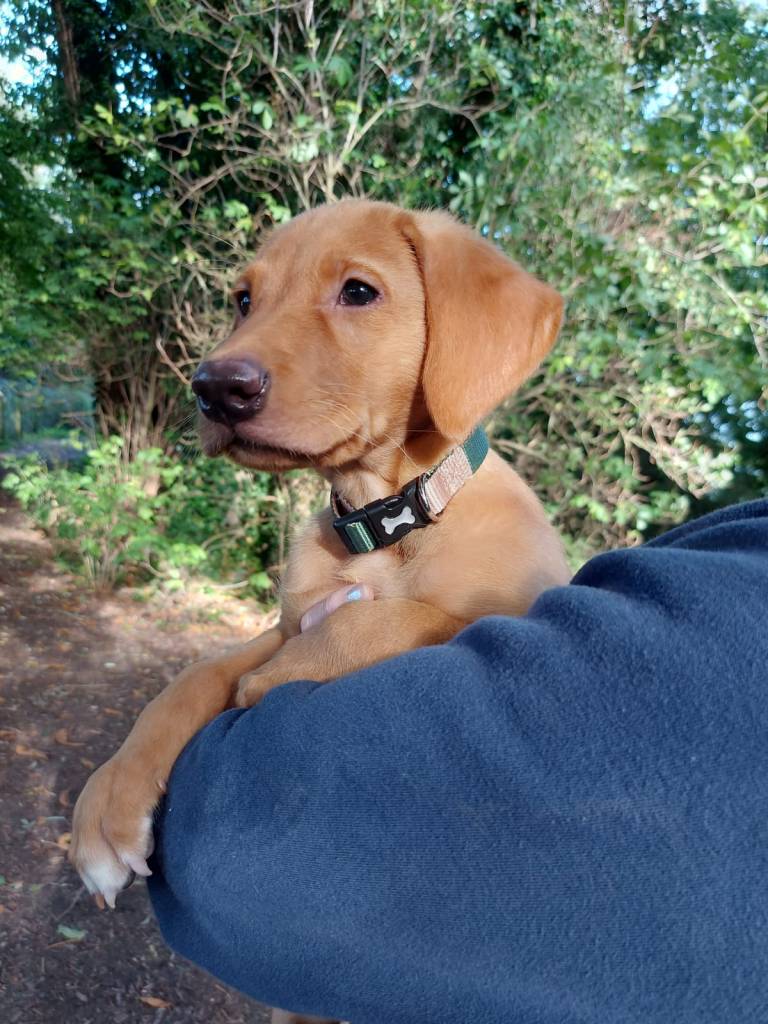
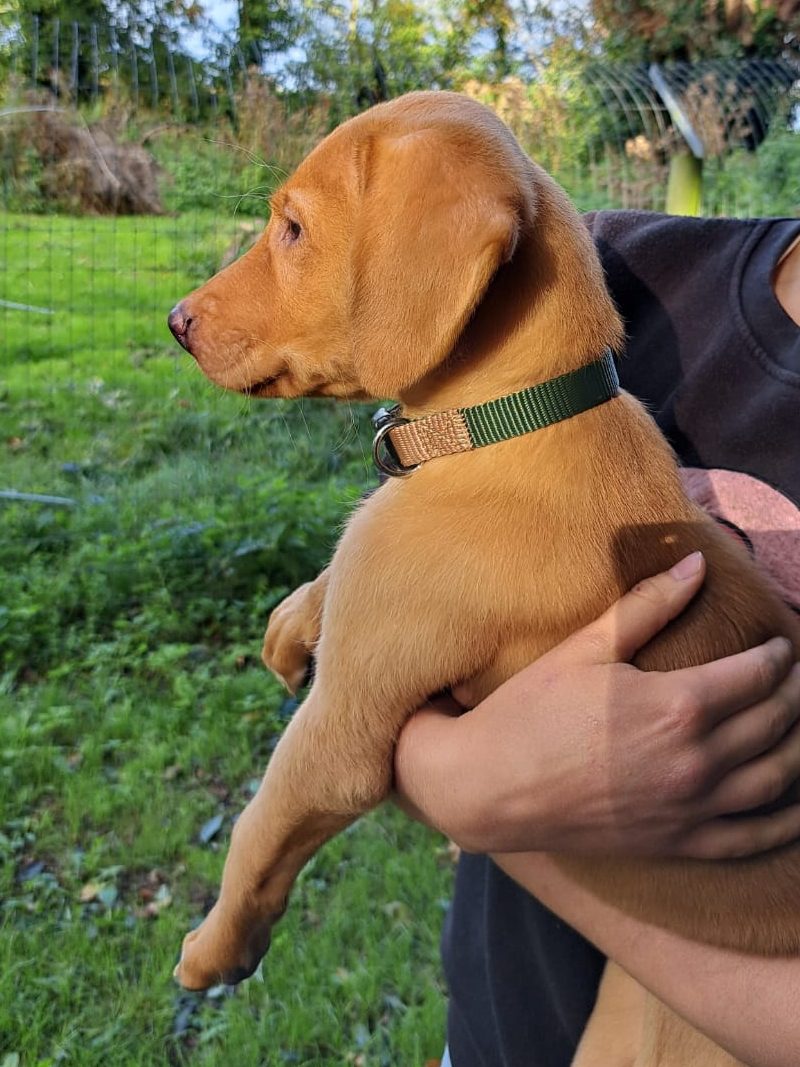
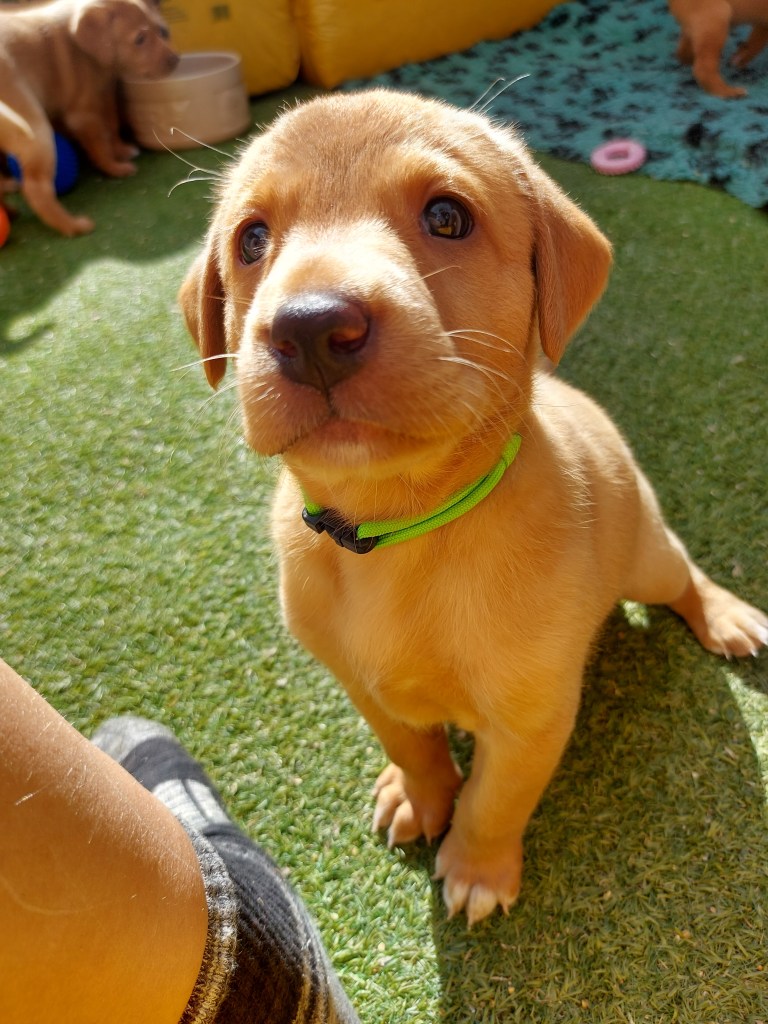
We’ve put collars on them this week so it’s easier to identify them. The girls are Green, Orange, Pink, Red, and Purple, while the boys are Grey, Light Blue and Dark Blue.
We’ve also applied for the Kennel Club registration, so hopefully by the end of the week they’ll all be KC registered.
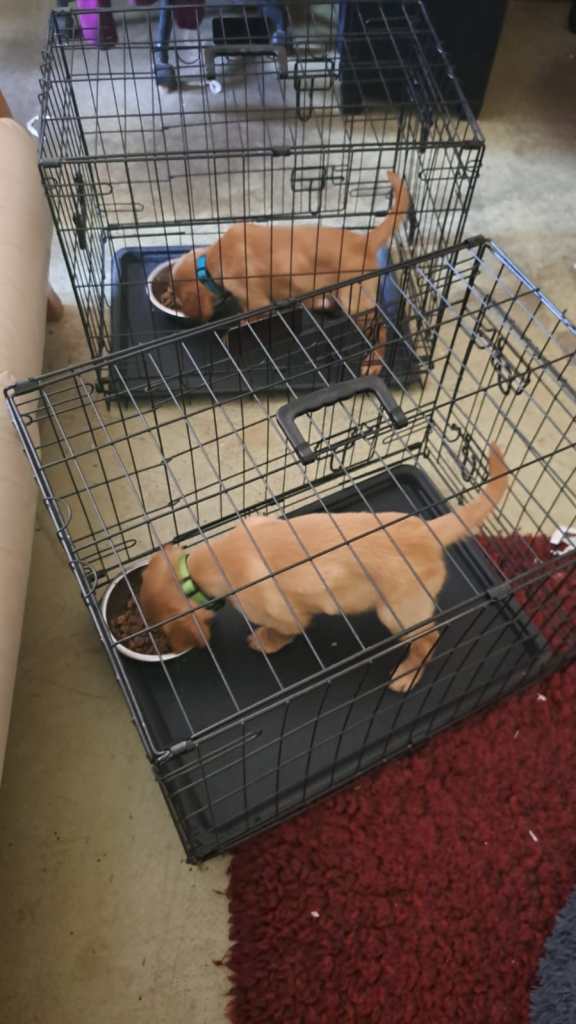
We want the pups to be happy or at least okay with being in the crate for a short while and we believe feeding them in the crate is the best way to start their introduction to it. We begin by leaving the crate door open, and shutting it when the pup is happily tucking into its food. If we think the pup is about to become anxious we open the door. Otherwise we leave it shut until a few seconds after they’ve eaten when they typically look around and realise they’re locked in, and then we open the door before they begin to worry about it.
We’ve had a few people over several times this week and we’ve been pleased to see that every single puppy has been friendly and outgoing. They’re more than happy to engage with anyone calling them or interacting with them, but when left they are happy to amuse themselves with toys and playing with each other.
Week 7
We’ve moved them into a bigger pen now as they’d well and truly outgrown the previous pen! This pen is by our front door so the pups will see all sorts of comings and goings: people, dogs, vans/cars/farm machinery and our cat to name a few.
The pups are being fed individually in crates still, they follow me from the new pen into the office where the crates are set up, eat their food and wait patiently for me to release them and walk them back. They’ve also been eating fish chews in the crates as well. Great Grandma Sienna and Great Aunt Summer are often in the office, the pups are used to walking past them and giving them a quick chin lick on their way to the food.
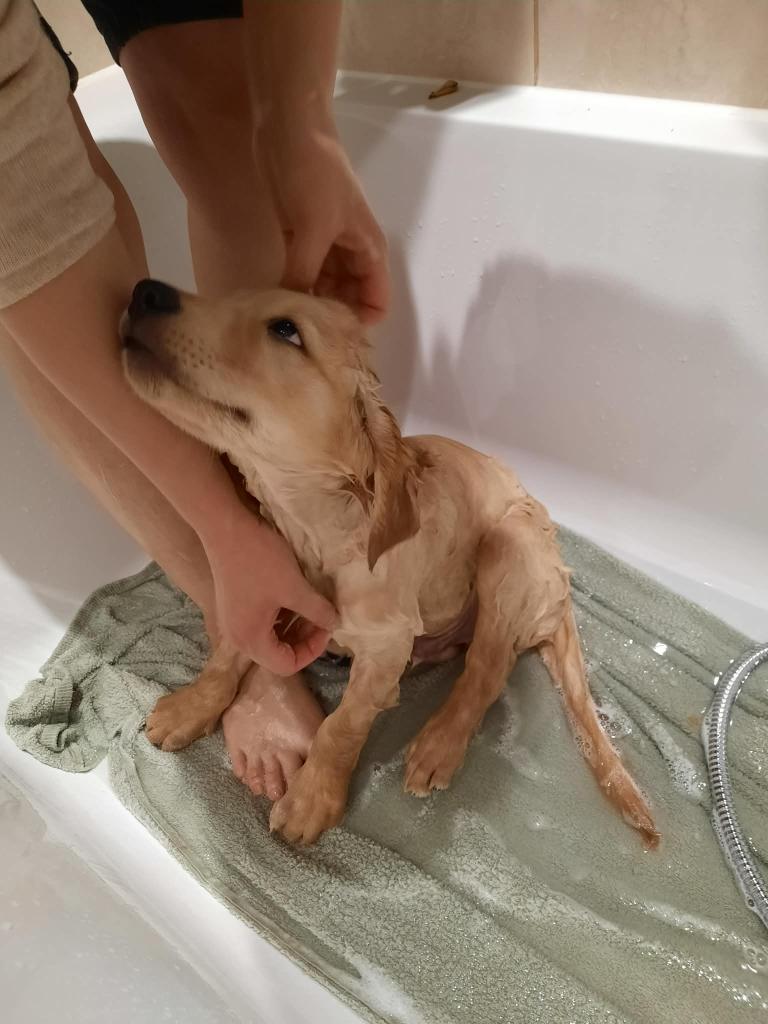
They’ve also had a bath this week. They weren’t big fans of the experience but they handled it really well, after an initial protest they just stood there good as gold. Once out of the bath they had a shake and set off to explore, tail wagging, the whole thing forgotten about already. It’s a good sign that they can shake off these things quickly, it shows confidence and adaptability.
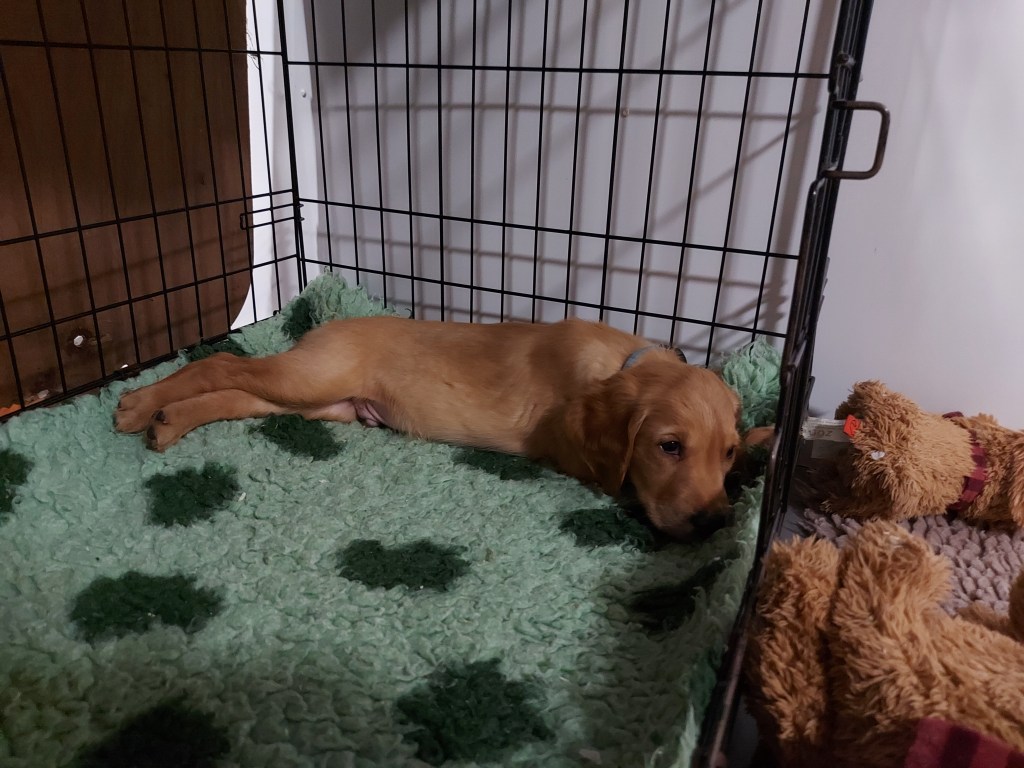
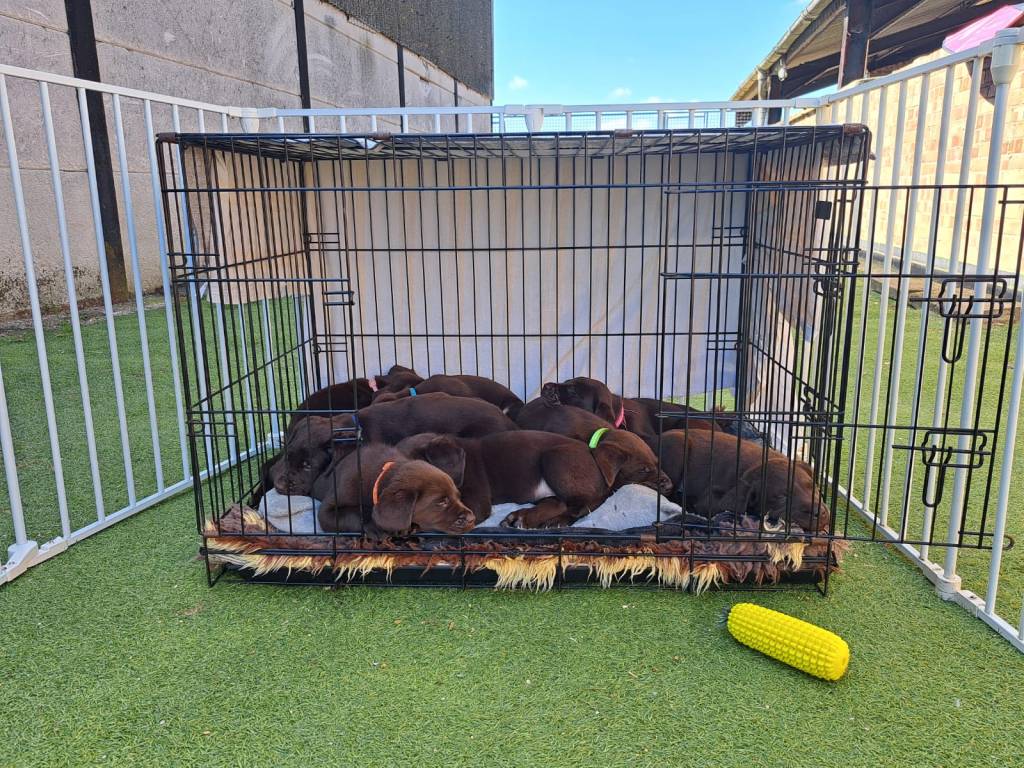
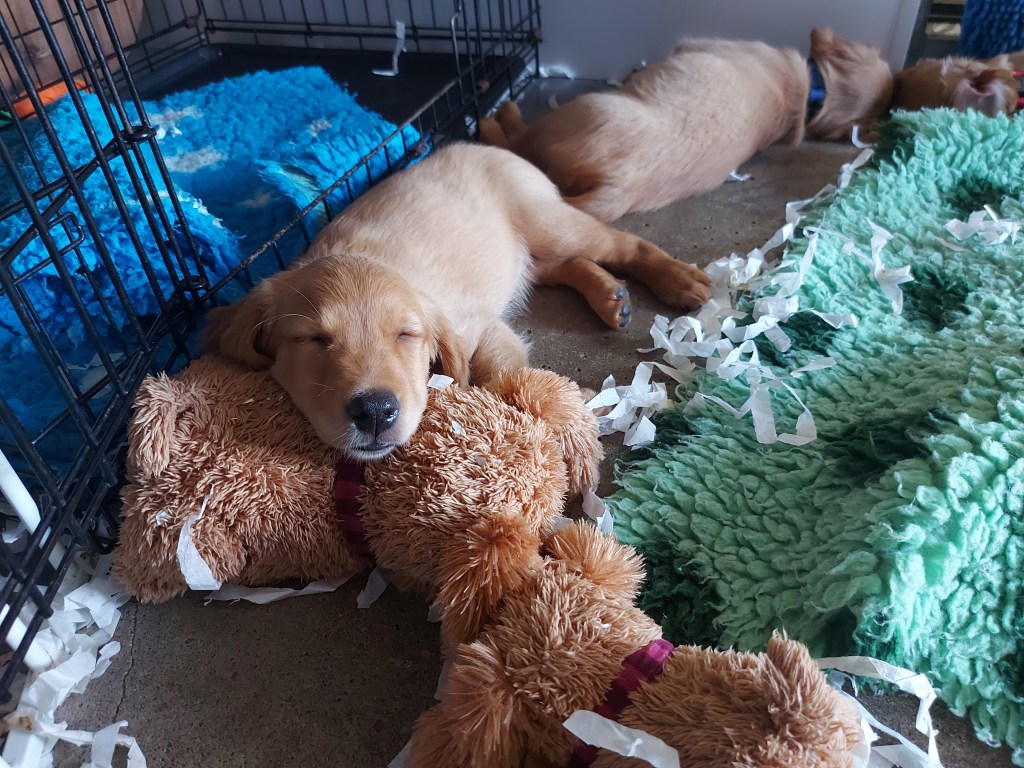
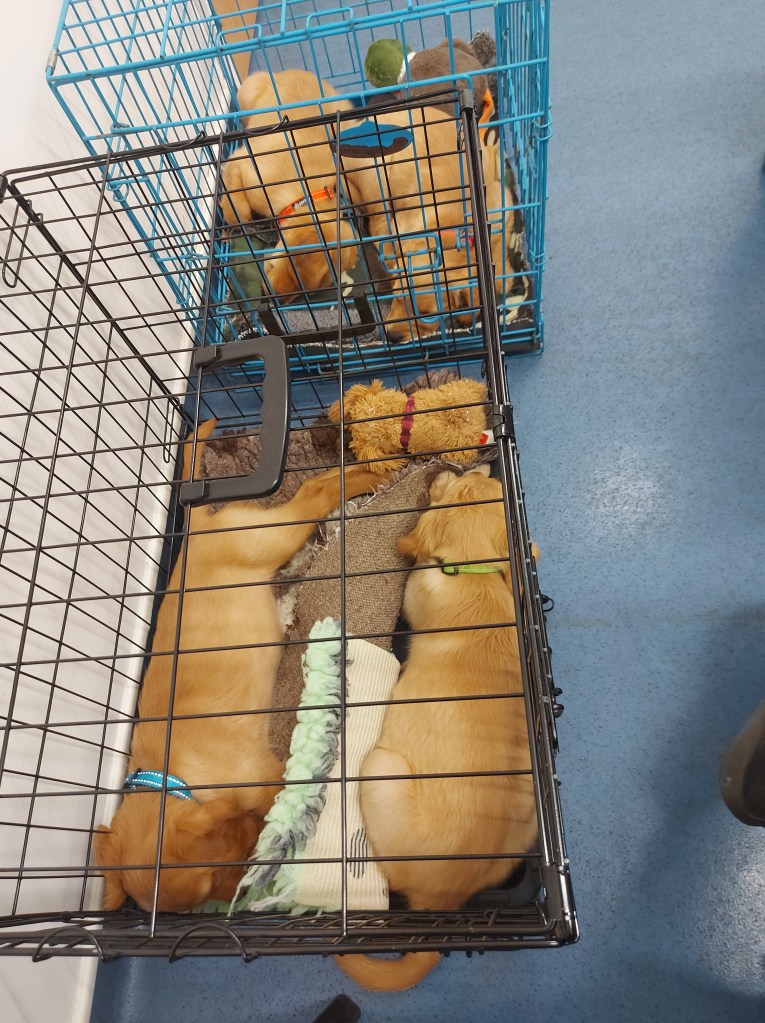
A few pups have been choosing to sleep in the crate, like Mr Light Blue shown above.
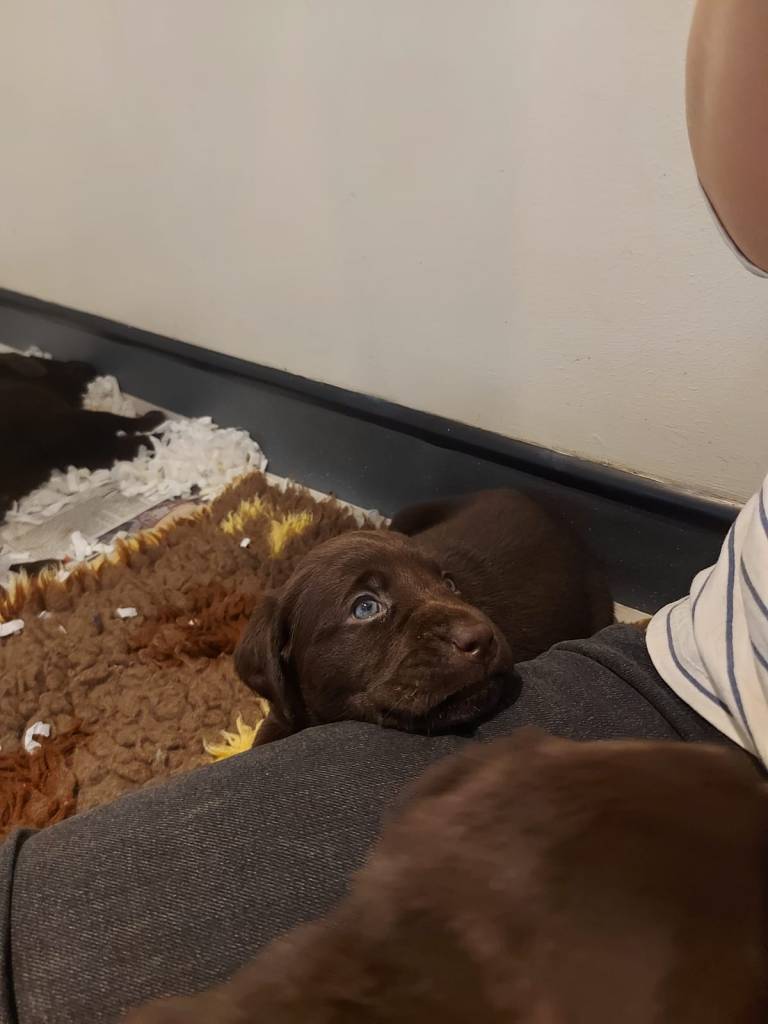
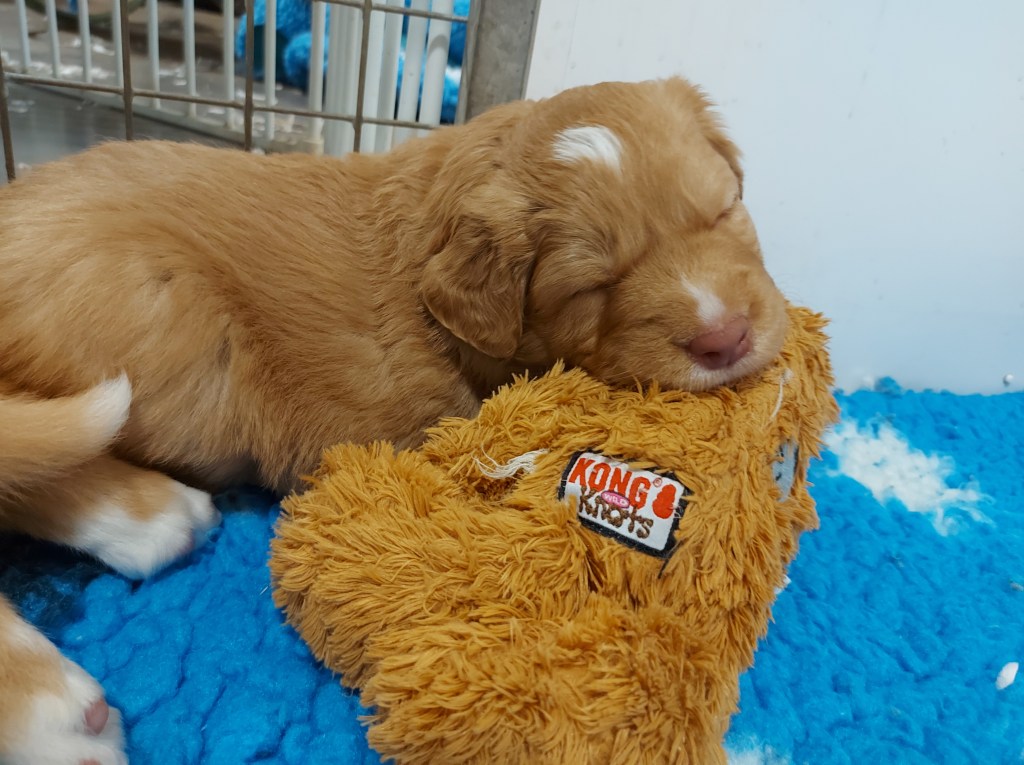
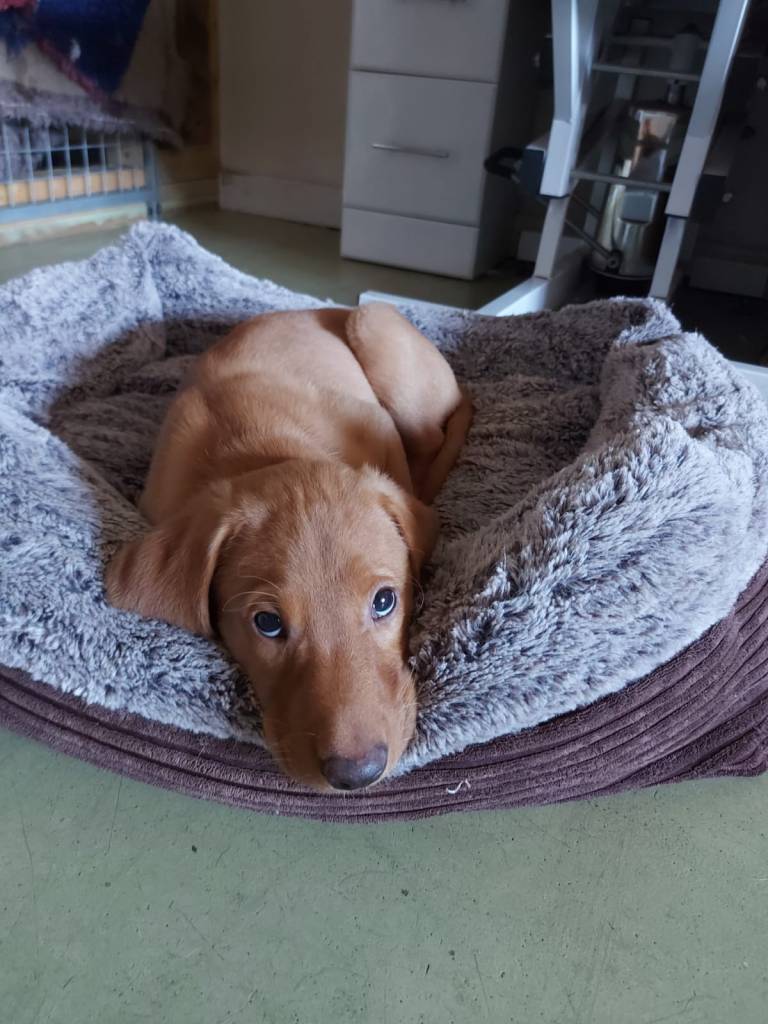
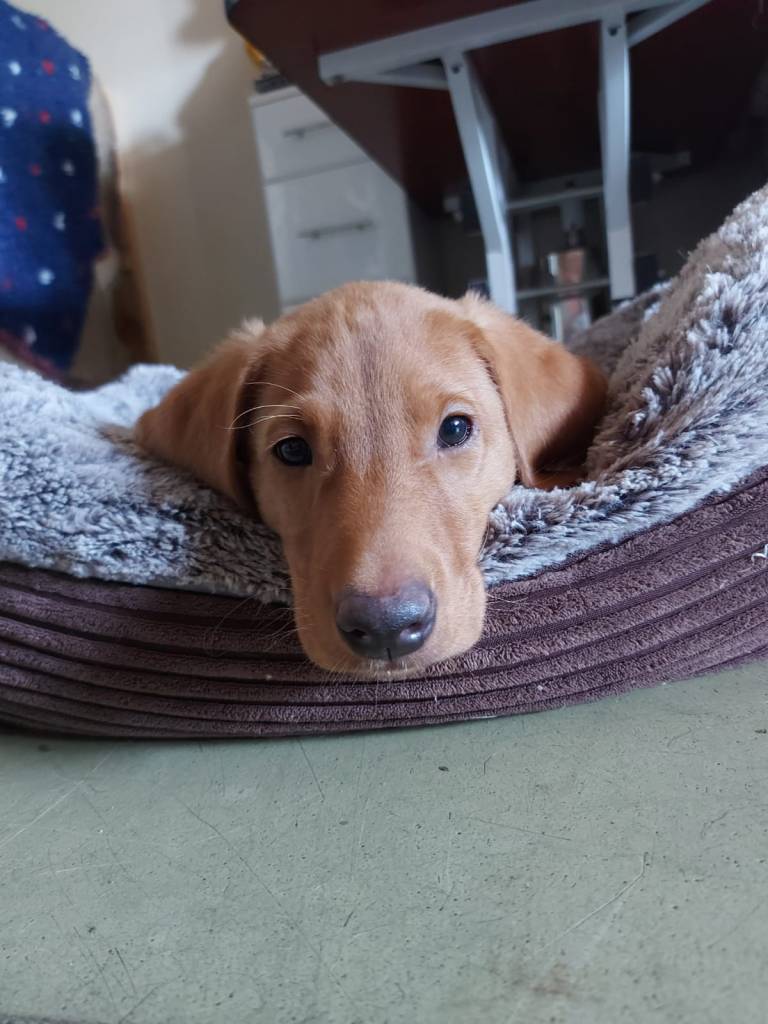
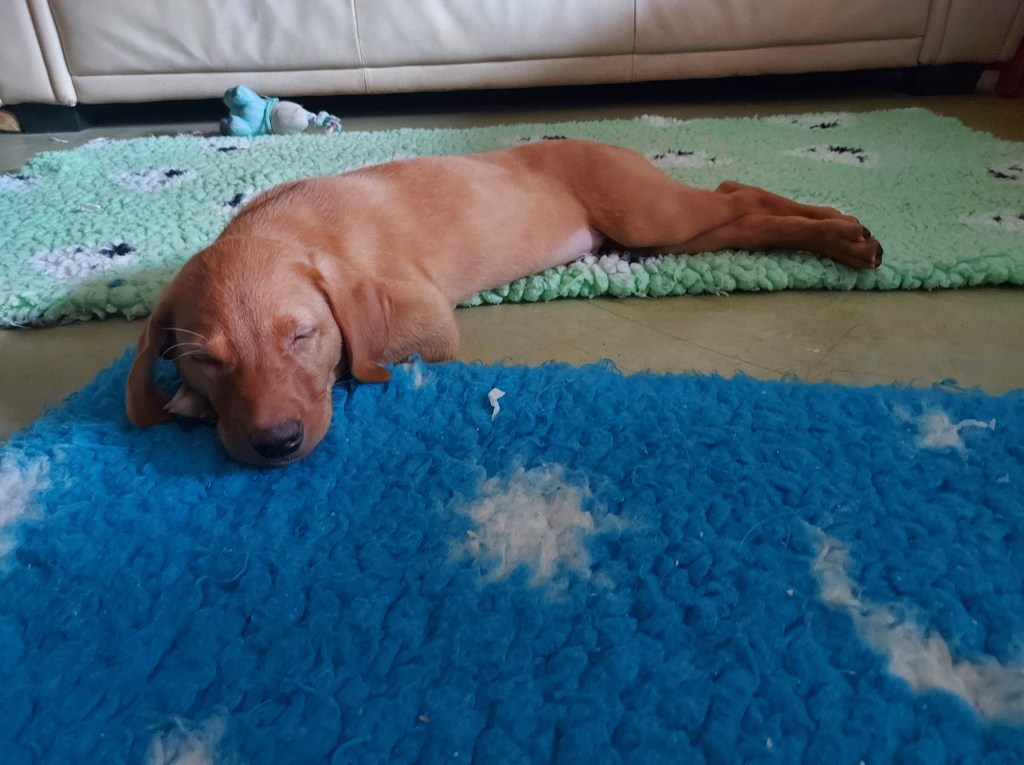
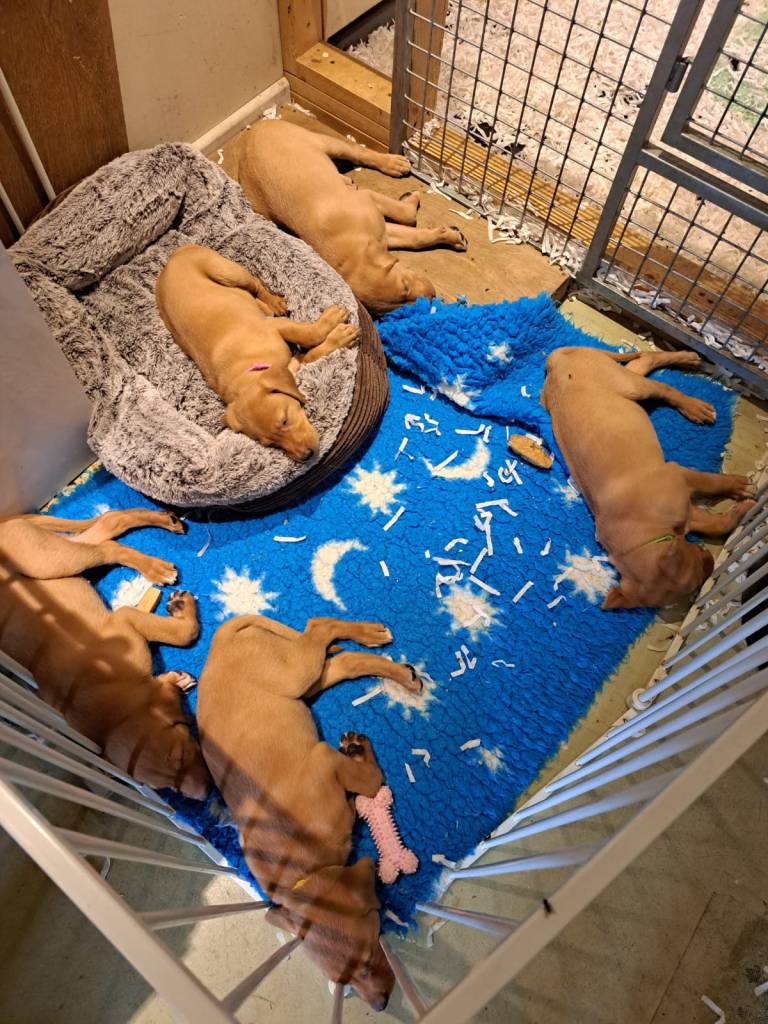
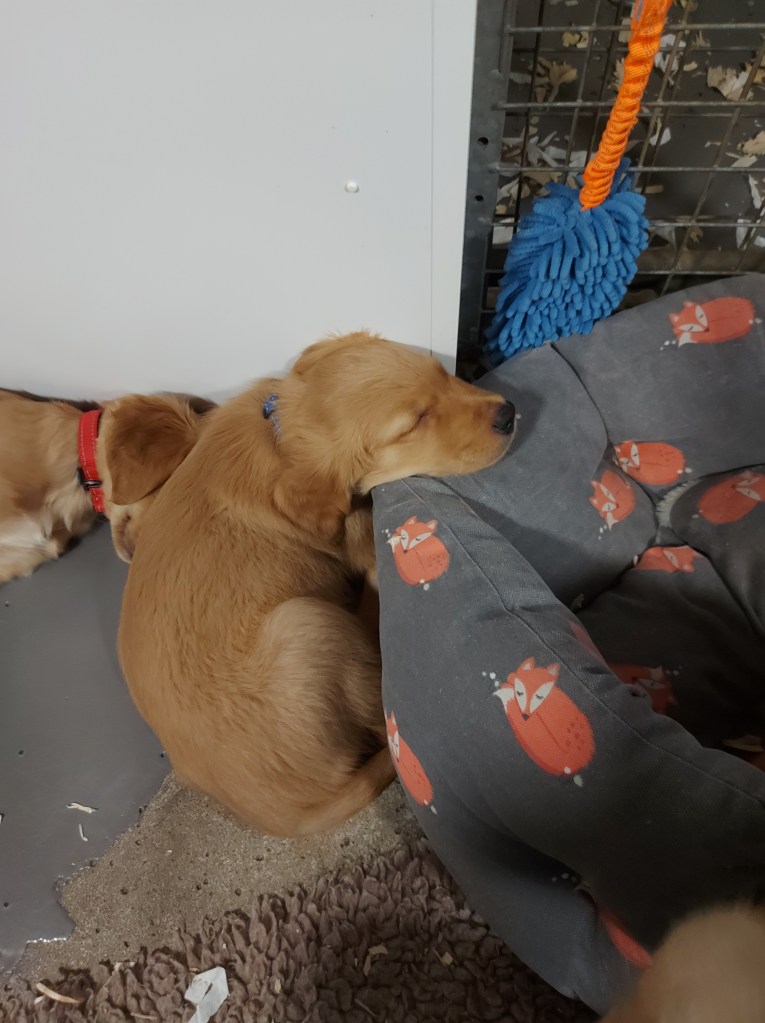
Mr blue using the bed as a chin rest. On hotter days the pups tend to prefer sleeping on the cooler floor, but come night time there is often a pup or 2 curled up in the bed.
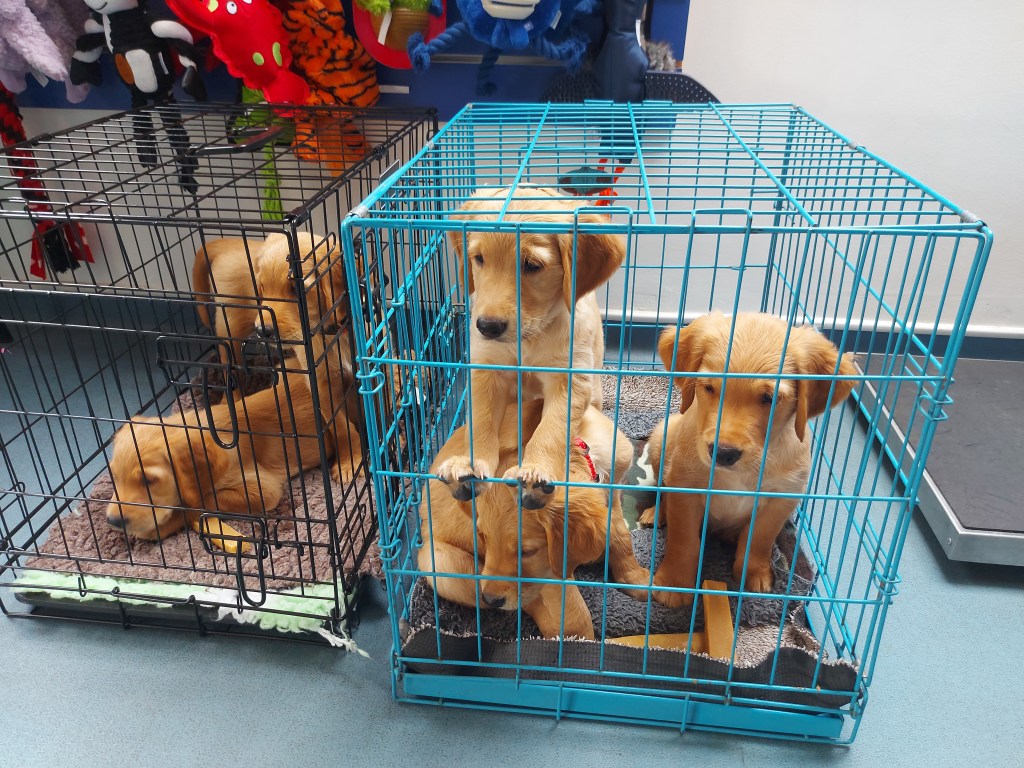
Vet checks for 5 of Nessie’s pups happened just shy of 8 weeks old for the 2 Blue boys, and Green, Orange and Red girls. During this appointment they’ll receive their microchip, 1st vaccine and have a health check. This time there was lots of people and dogs in the waiting room so they got lots of attention!
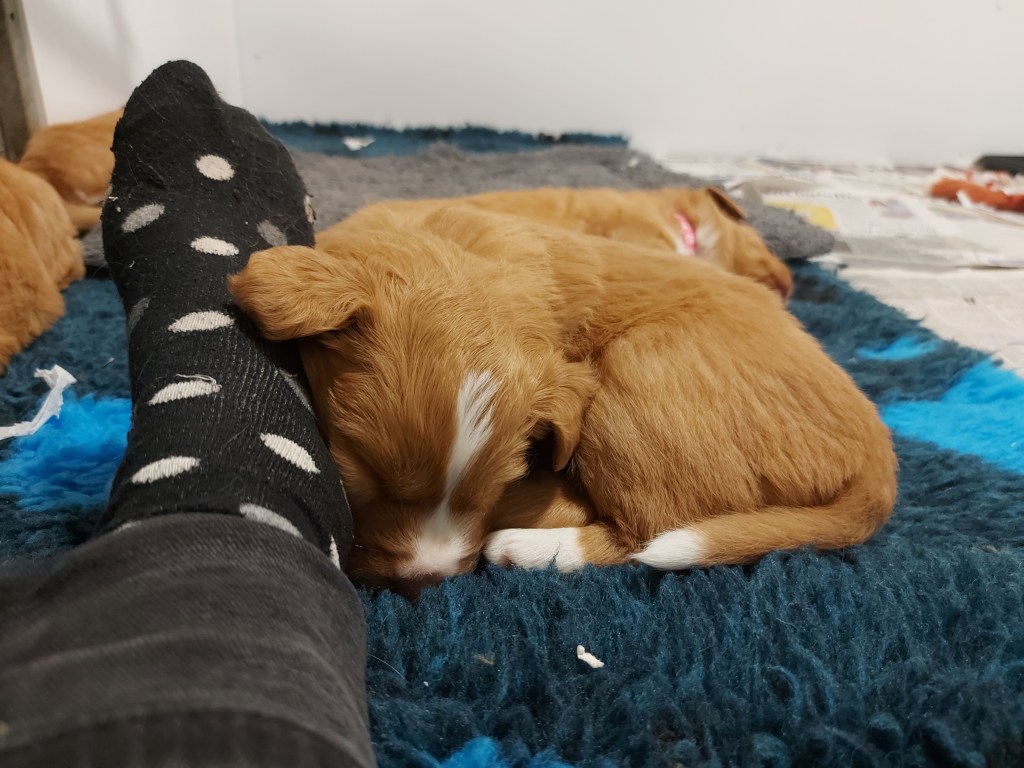
Once in the consultation room they quickly settled down for a sleep. During the exam their hearts, ears, eyes, stomachs, testes (where applicable) teeth, jaw alignment, skin etc were all checked and found to be perfectly healthy. The car ride there and back was fairly uneventful, they were quiet once we got moving and settled quickly.
Week 8
At 8 weeks old the pups are now old enough to go to their new homes, which is always a conflicting time for us. As much as we love them, they’re ready for more 1 on 1 time now. Mr Light Blue and Miss Green are off to their new homes this week to have lots of fun and love with their new families.
The Kennel Club finally registered the litter, so all the pups are KC registered now. Their KC names are based on butterflys.
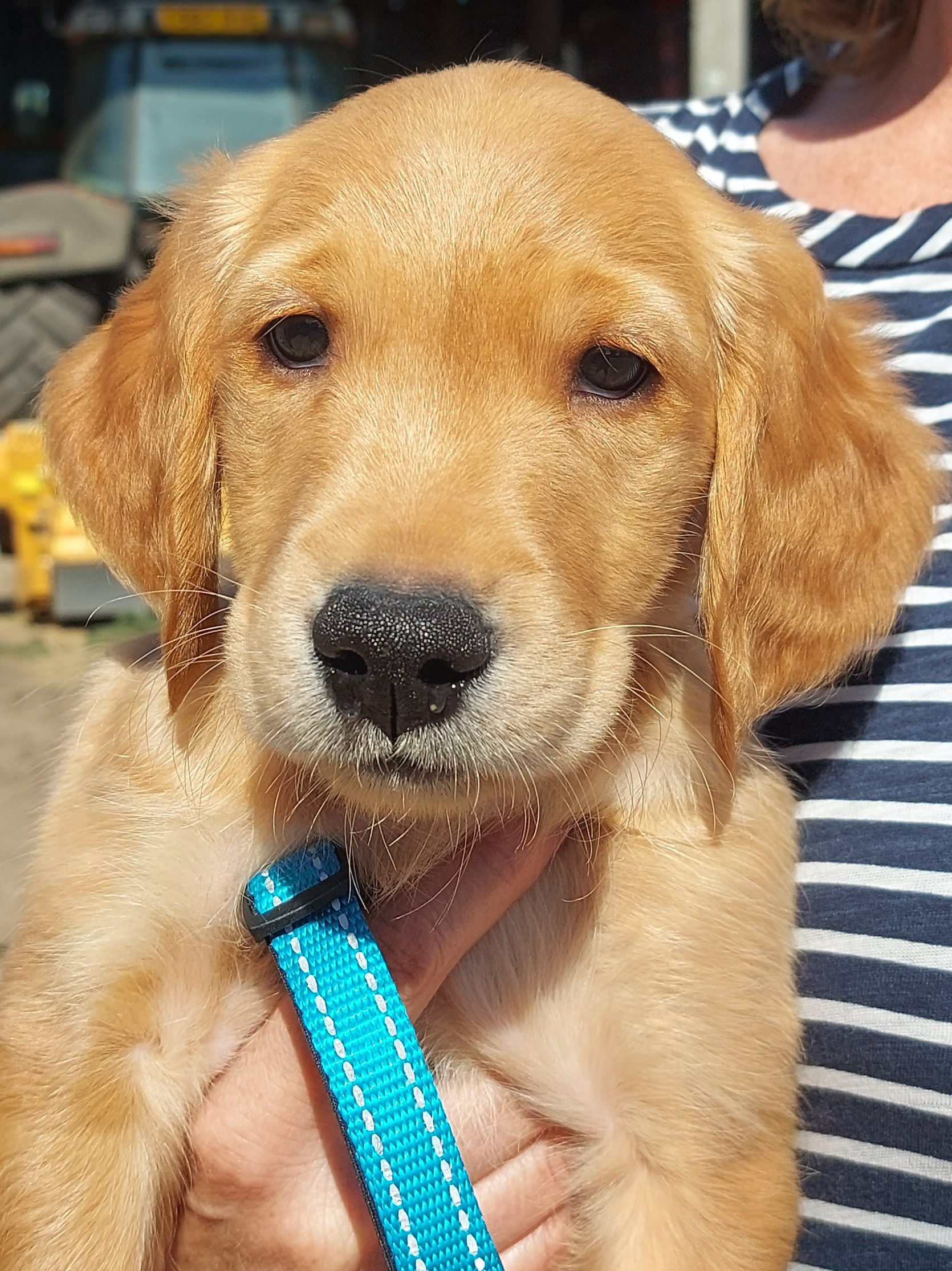
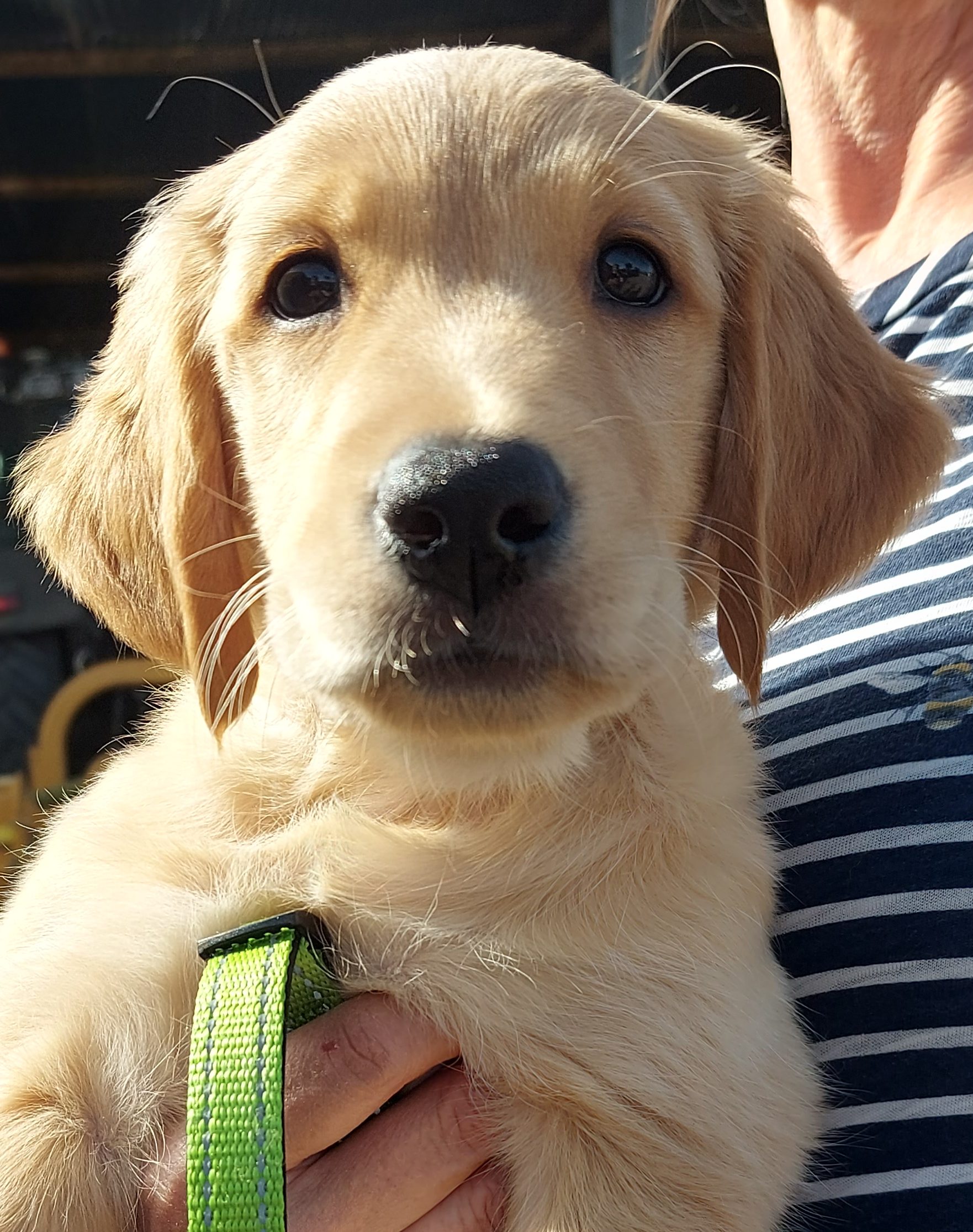
Mr Grey, Miss Purple and Pink collars had their vet check this week, all as healthy as the other 5. All were quiet on the drive and were really well behaved in the vets again.
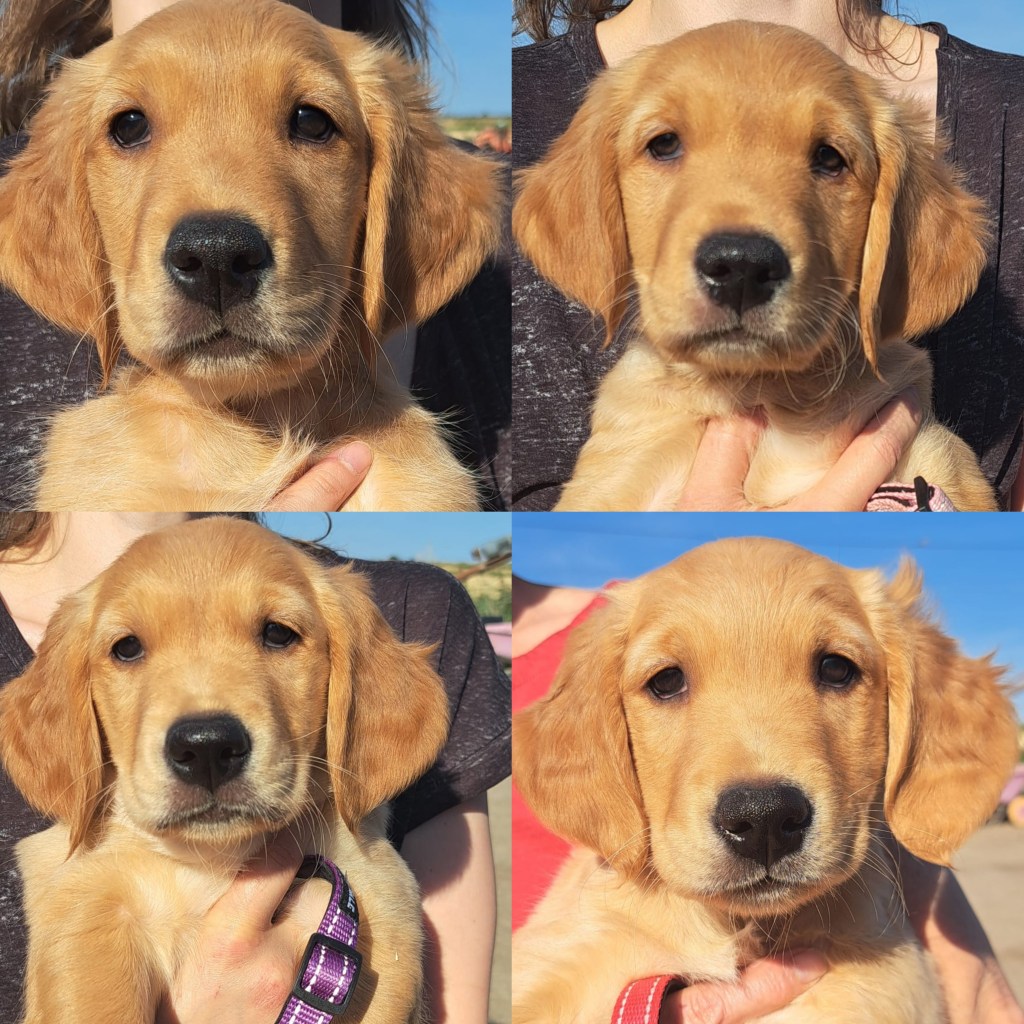
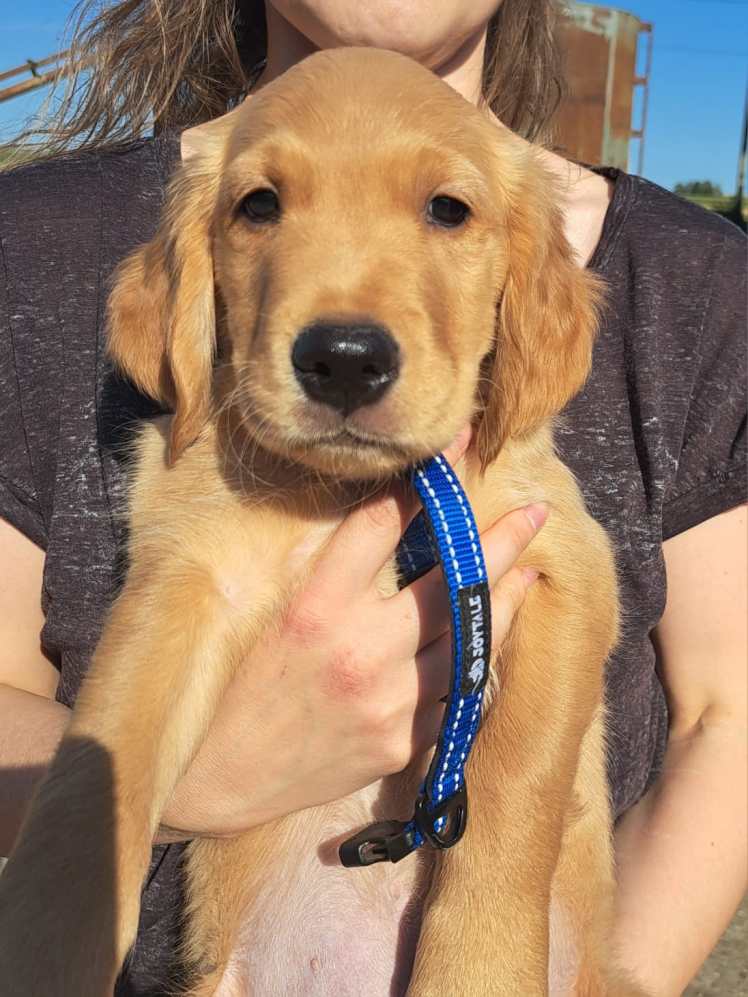
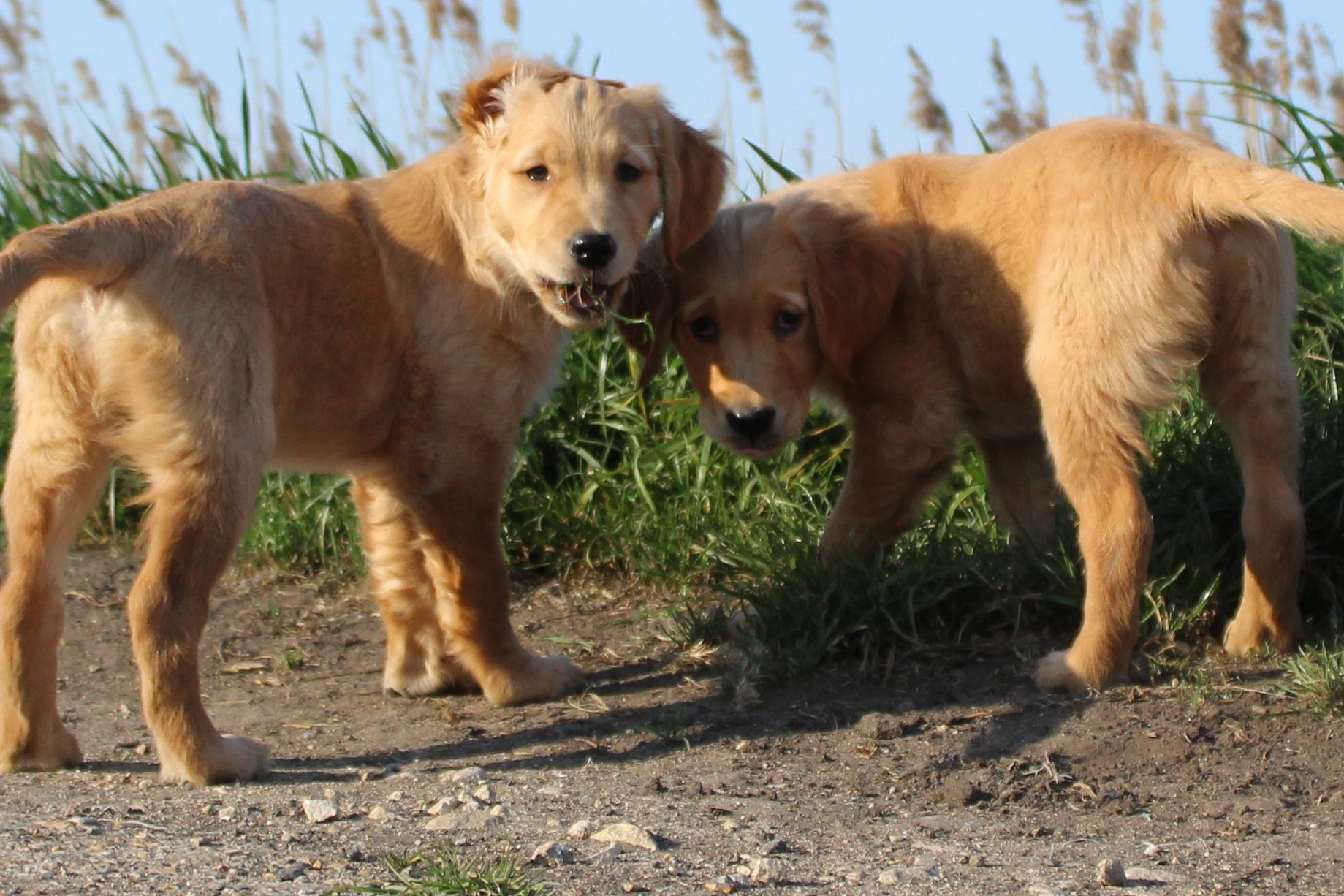
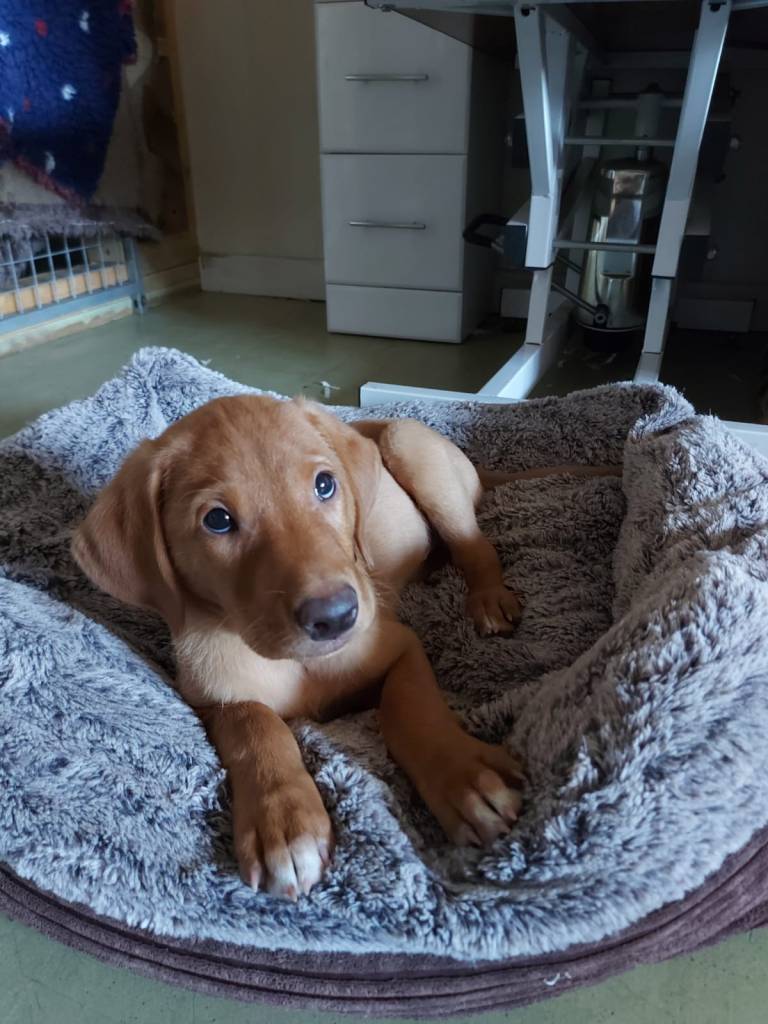
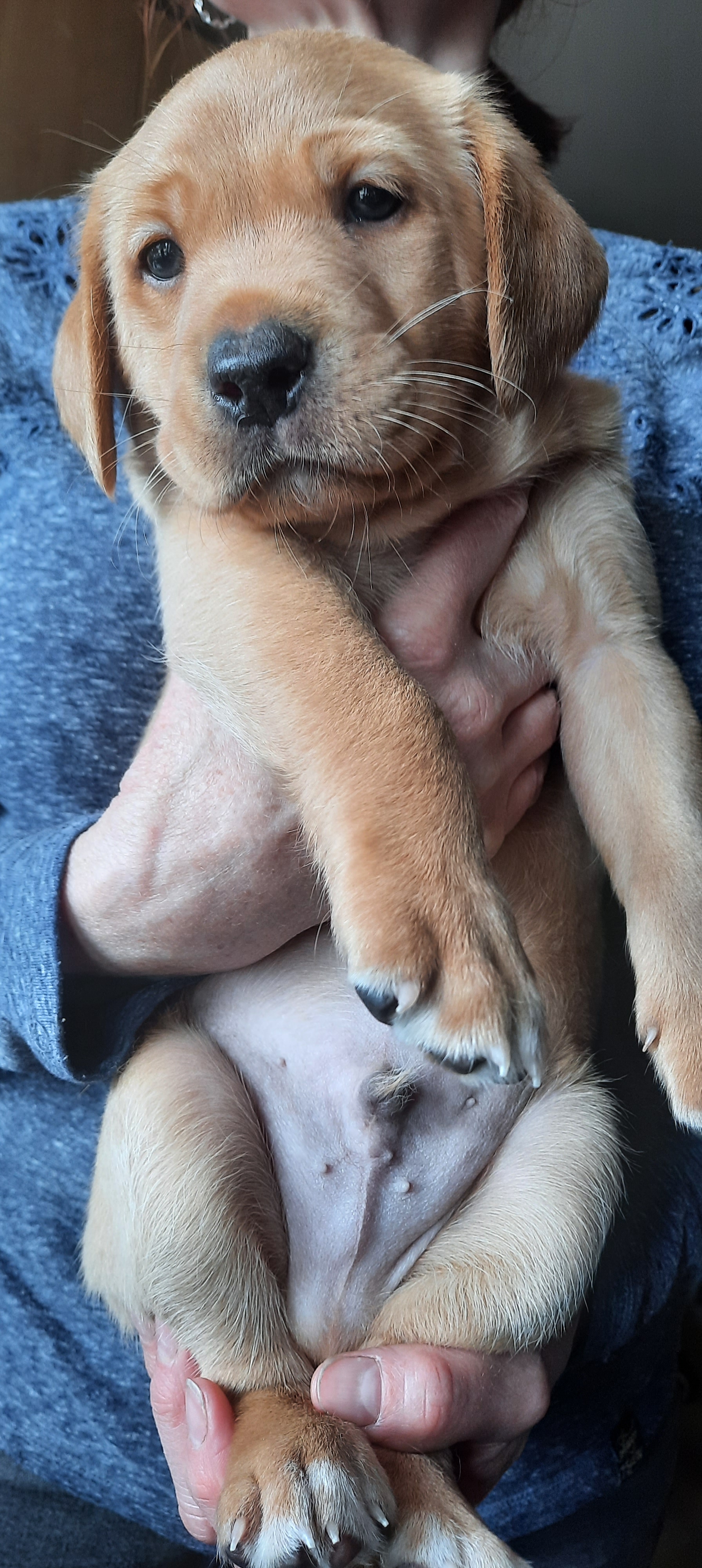
The available 4 girls above, the available boy to the left
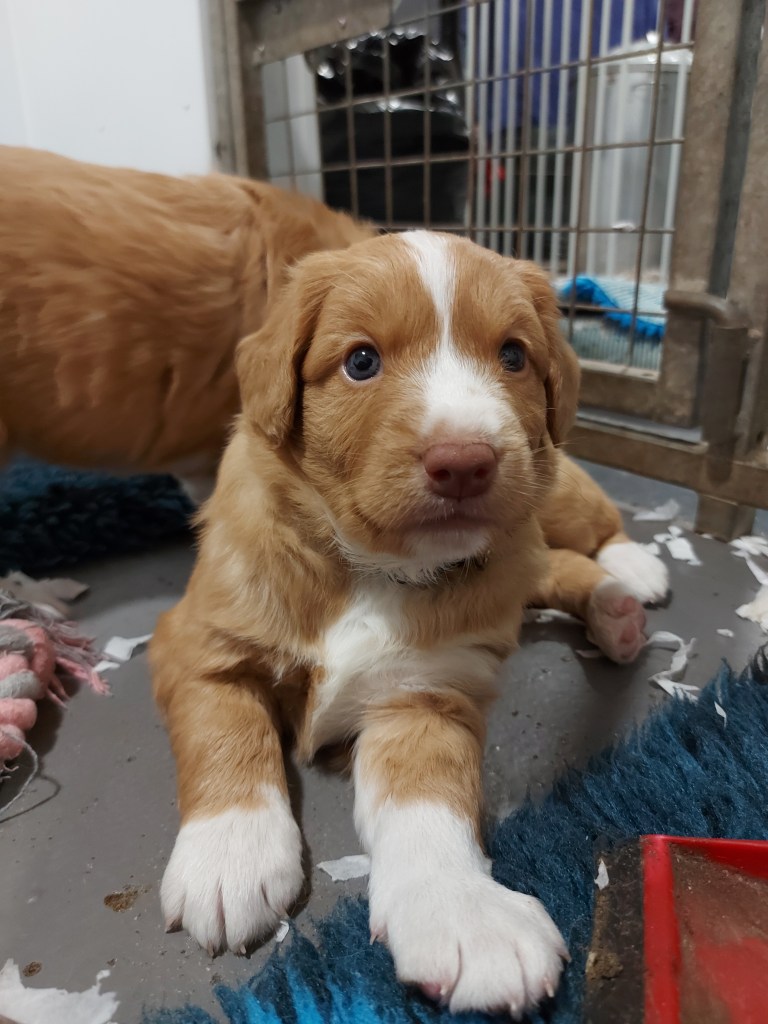
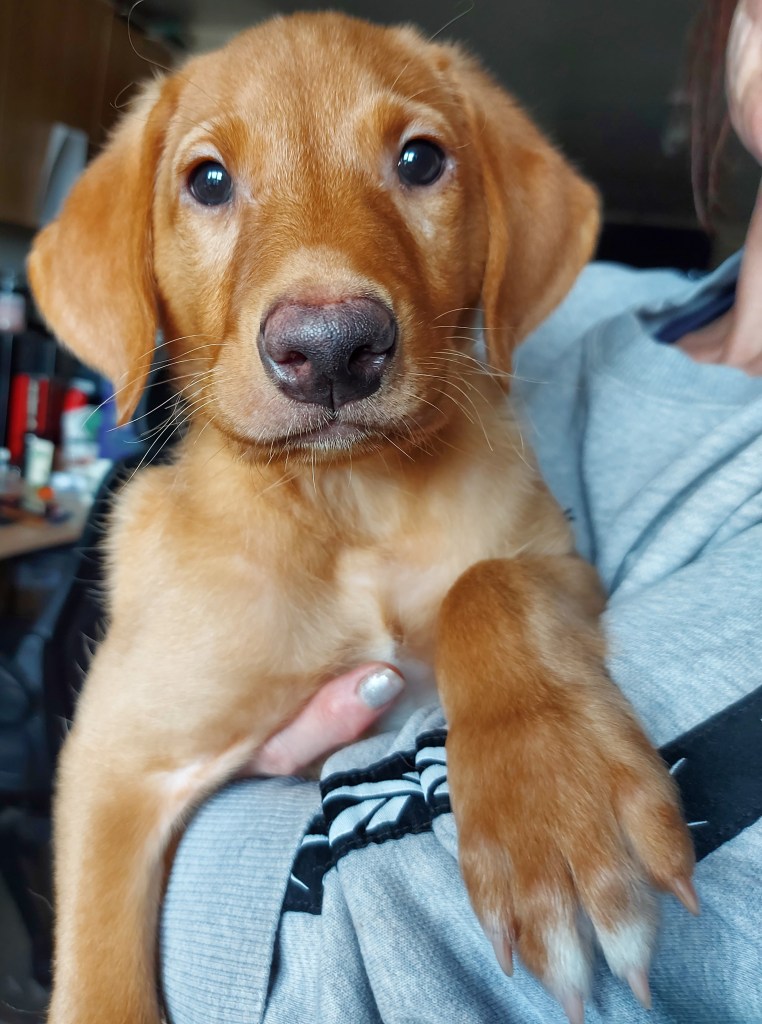
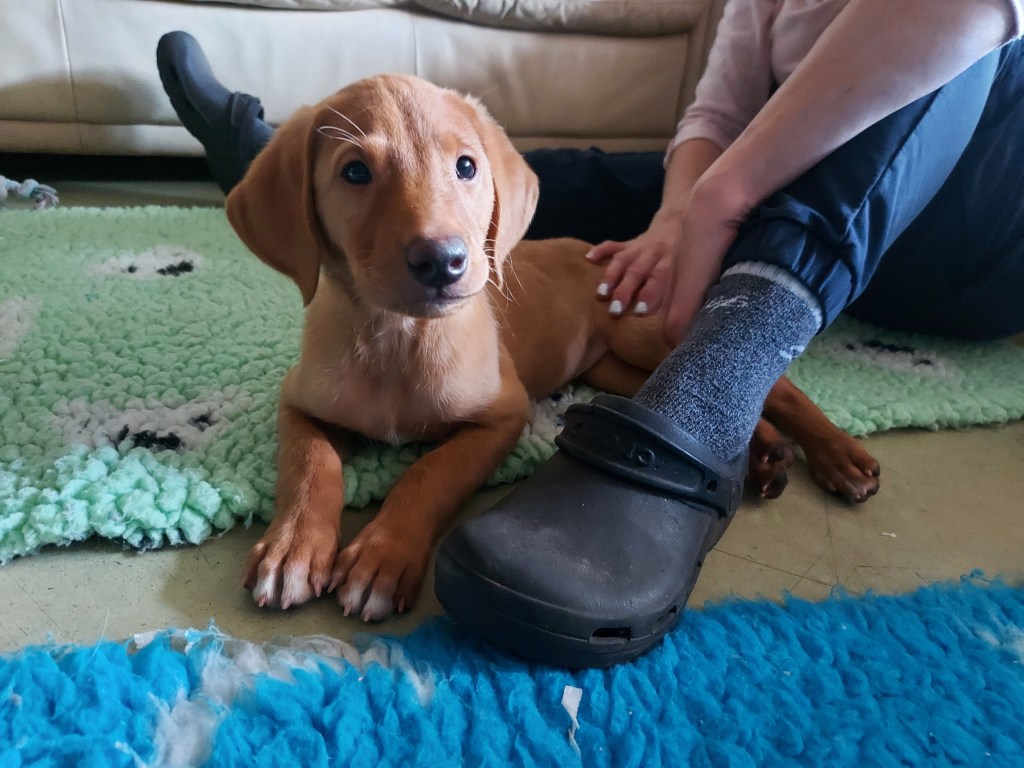
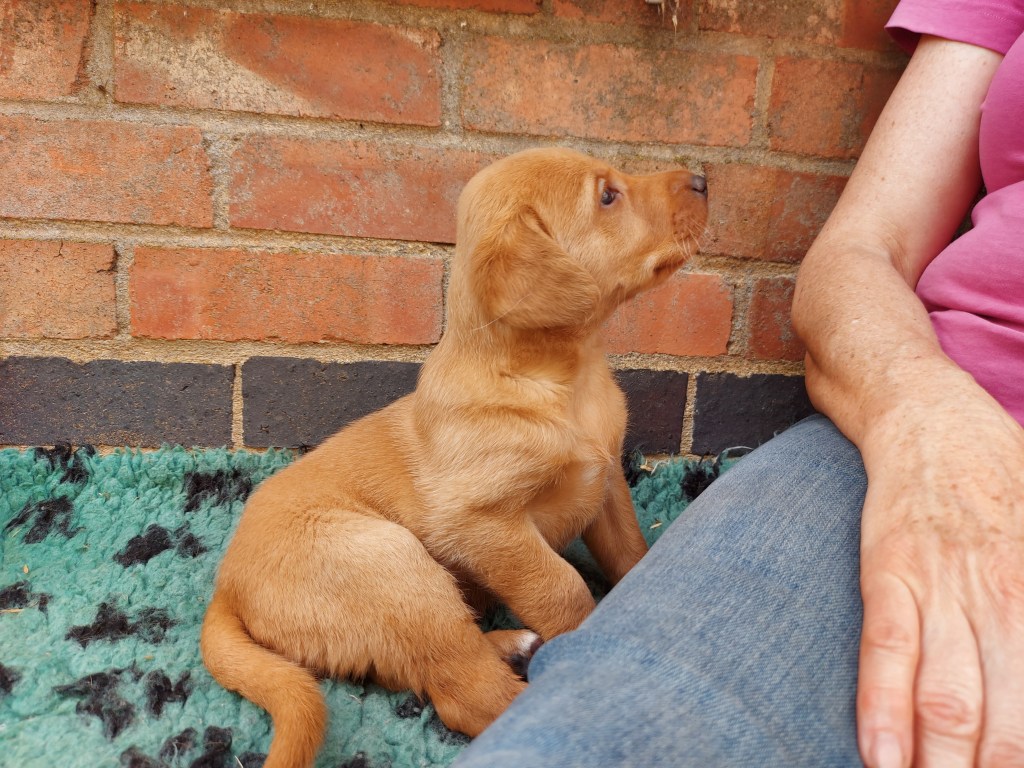
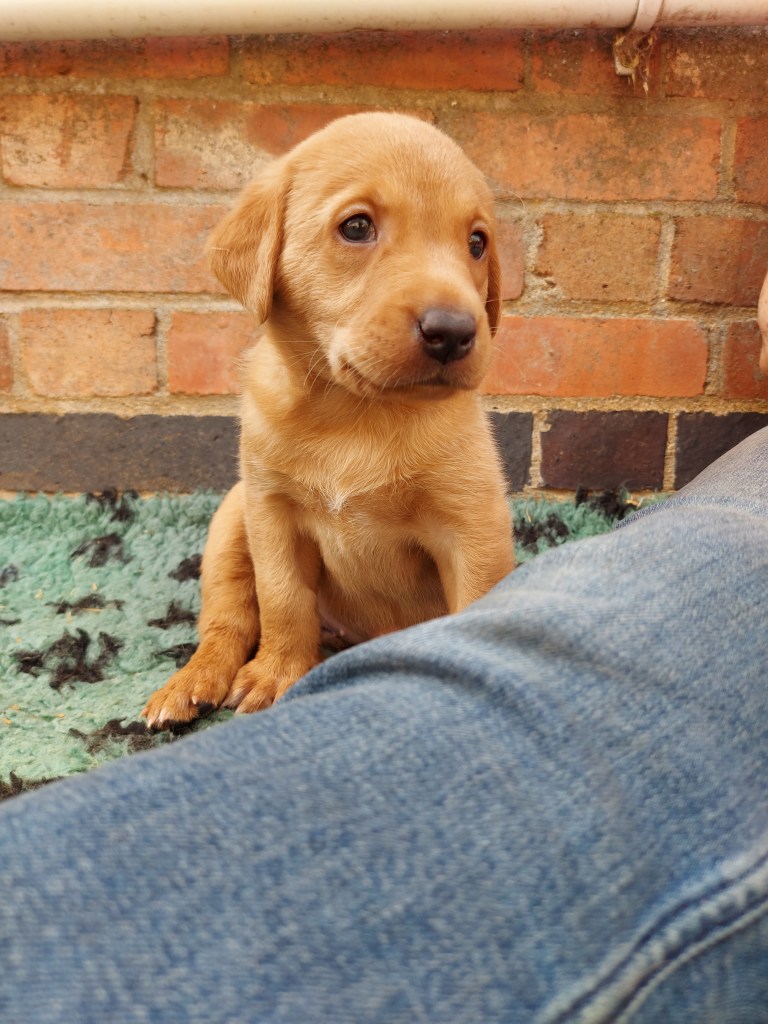
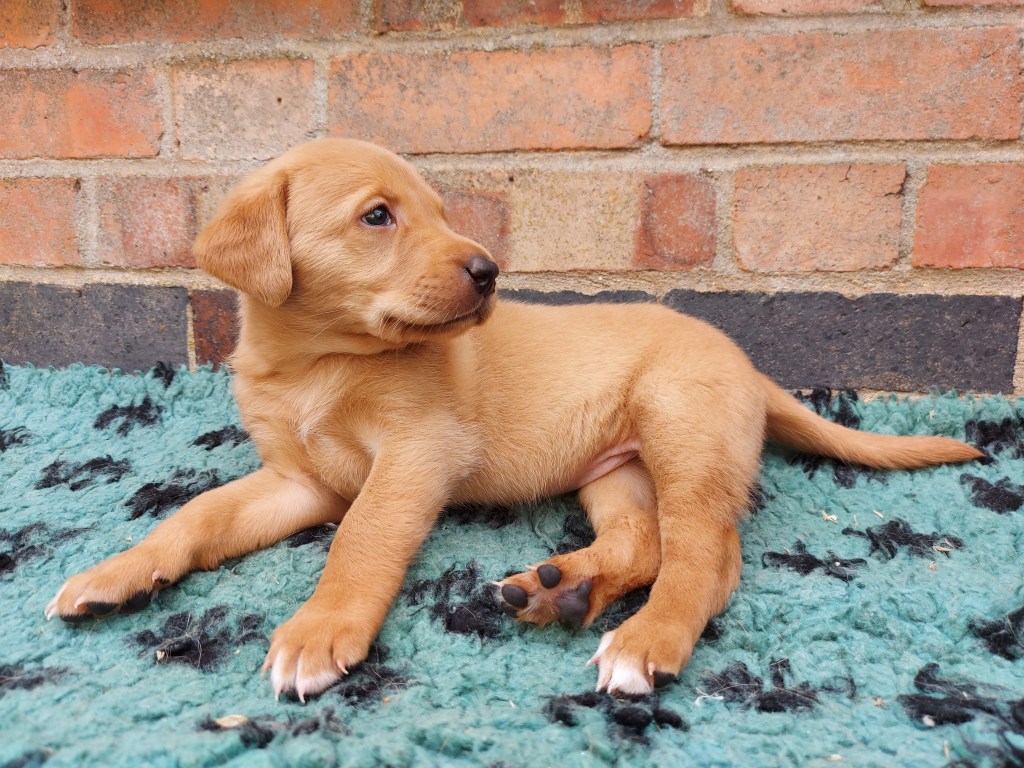
Pink and Red are definitely the most mischievous and active at the moment, but they’re really affectionate and happy pups. Mr Blue likes people but is happy to amuse himself with a toy once he’s had a bit of fuss. Purple is very affectionate.
Week 9 onwards
Mr Grey went to his new home this week. We’re going to miss his cheeky smile but he’s gone to a great home and it means we’ve got more time to spend with the remaining 5 pups. They’re going out for individual walks a short way down the farm track, just for a few minutes at a time so as to not over exercise them (which can be bad for their joints). We’re finding Mr Blue, Miss Pink and Purple to be lovely to walk, they stay close and keep checking in on us, recall is perfect etc. Miss Orange and Red don’t stray far from us and their recall is pretty good. They’re still being fed in the crates at least once a day, they’re happy to go into the crates and they’re in no hurry to leave when the foods done, which shows they’re comfortable in there. They’ve all had another bath this week.
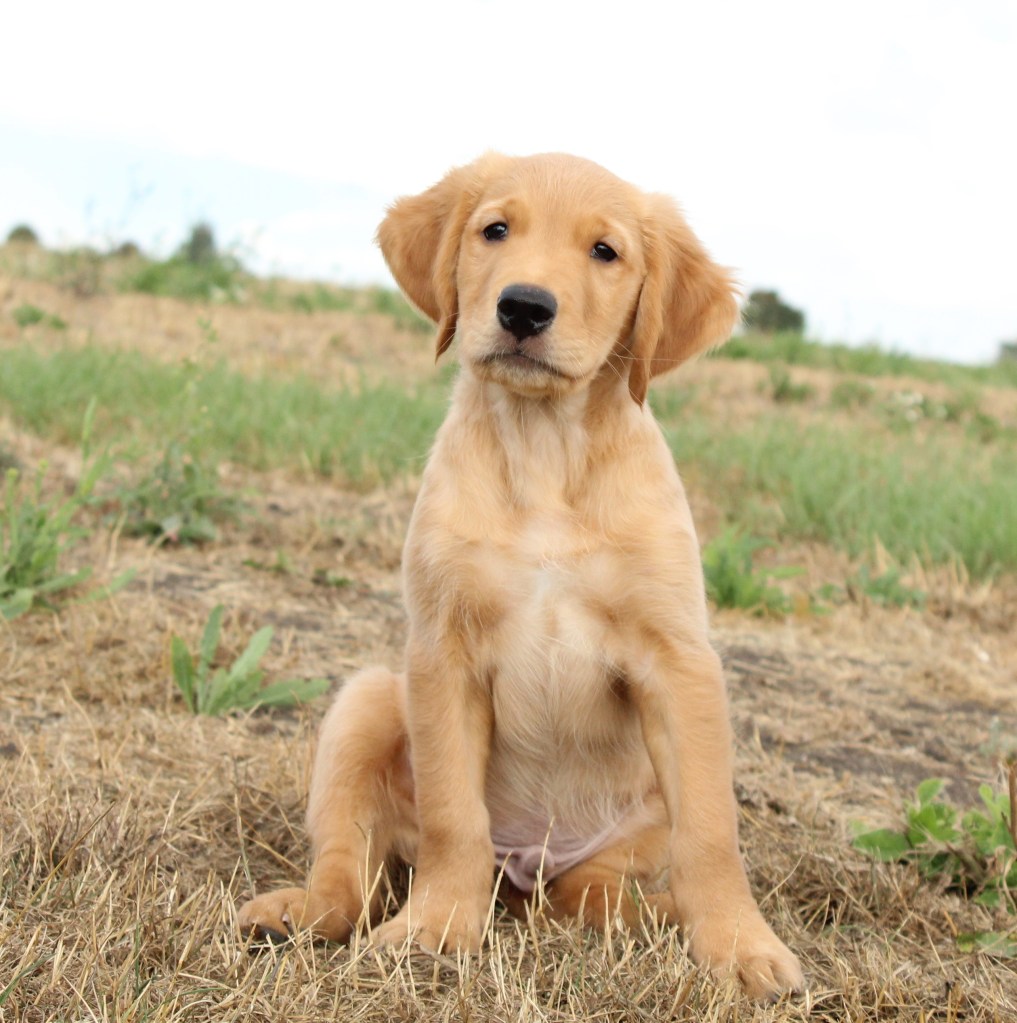
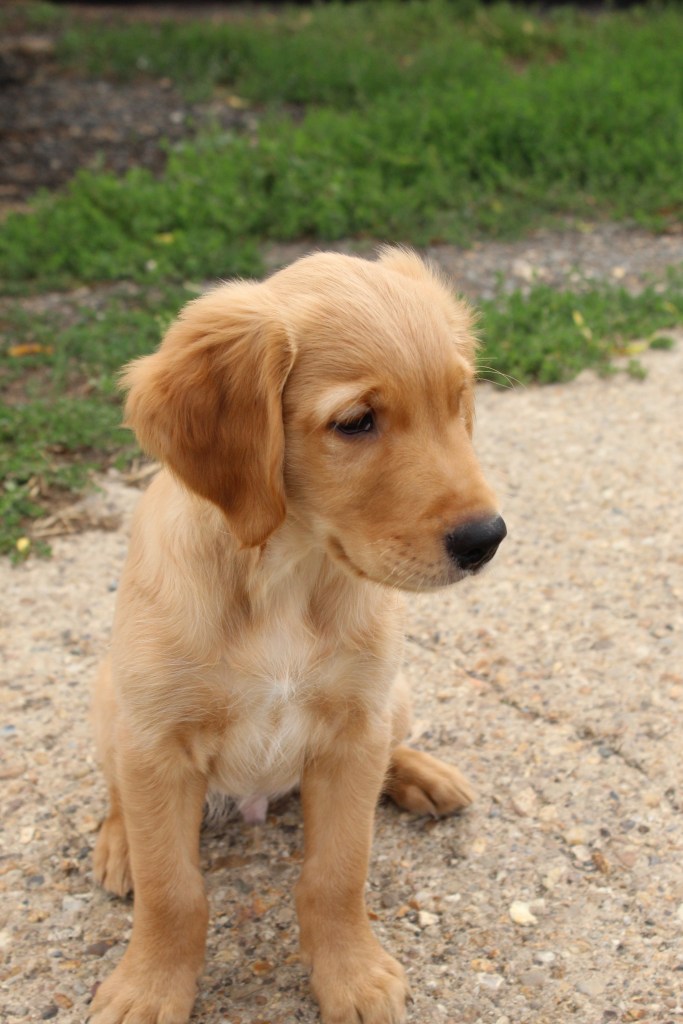
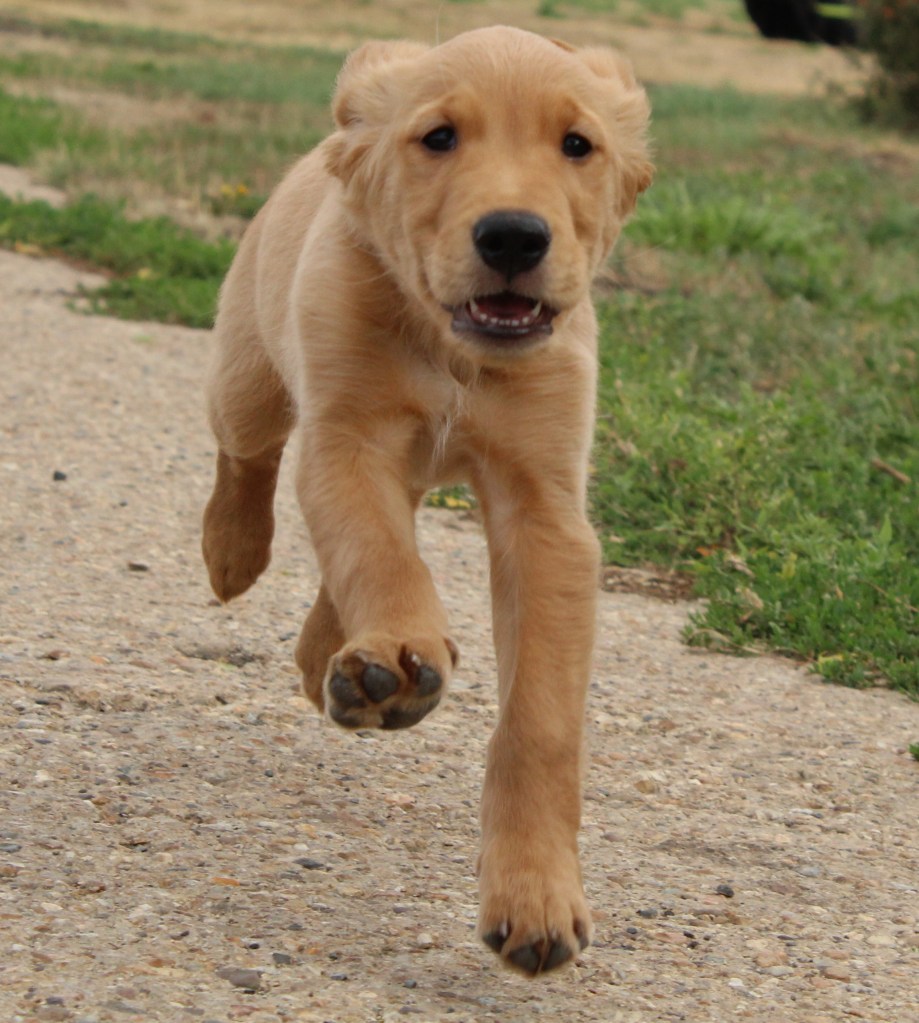
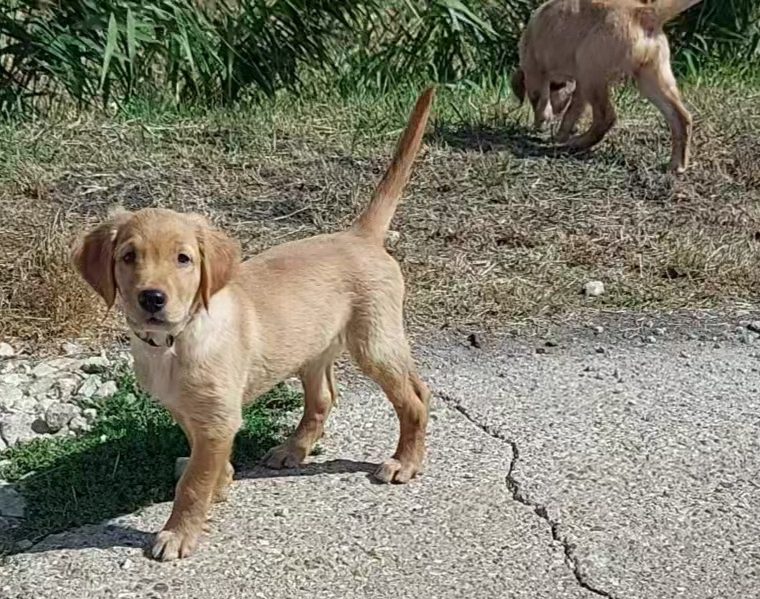
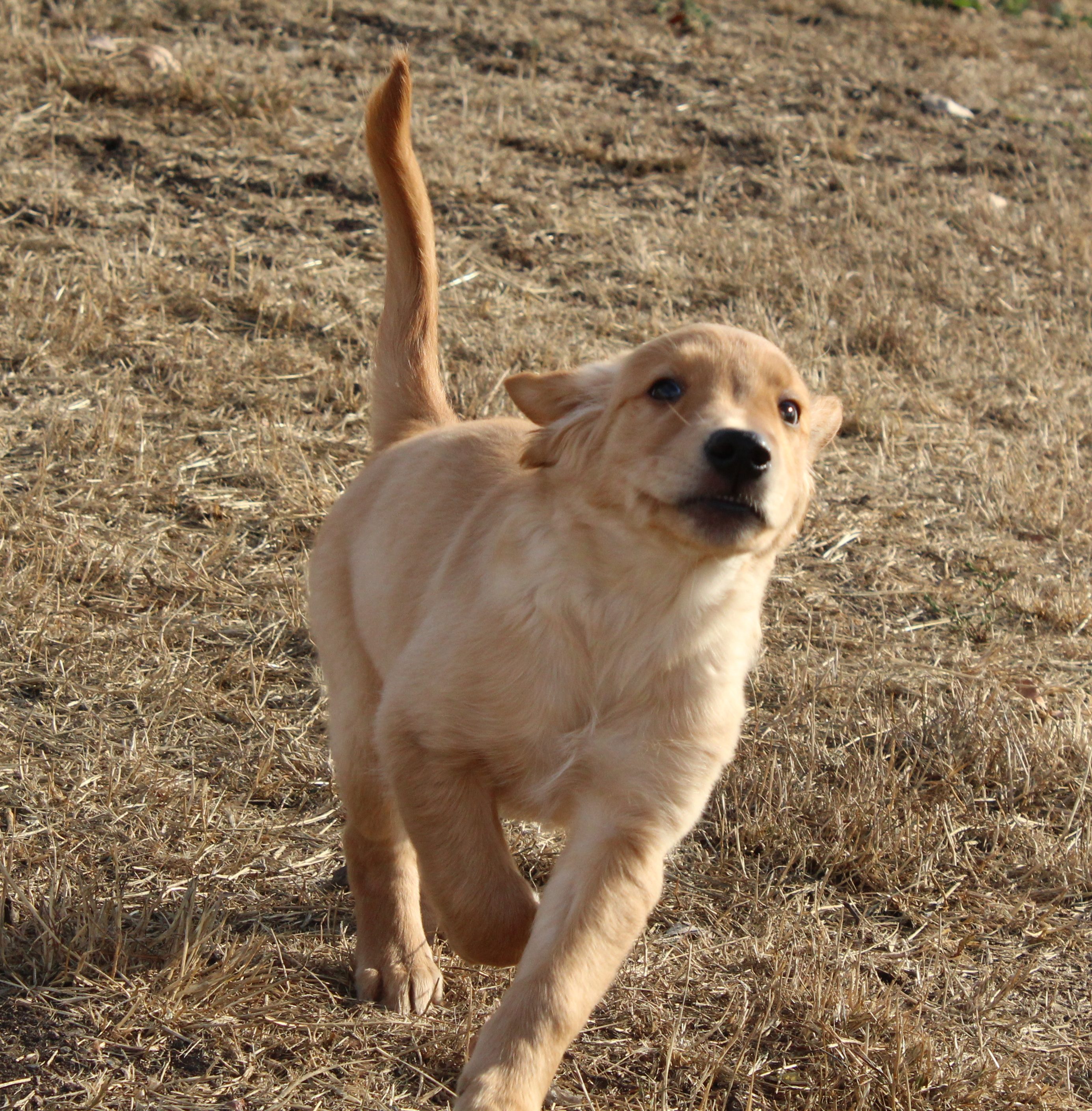
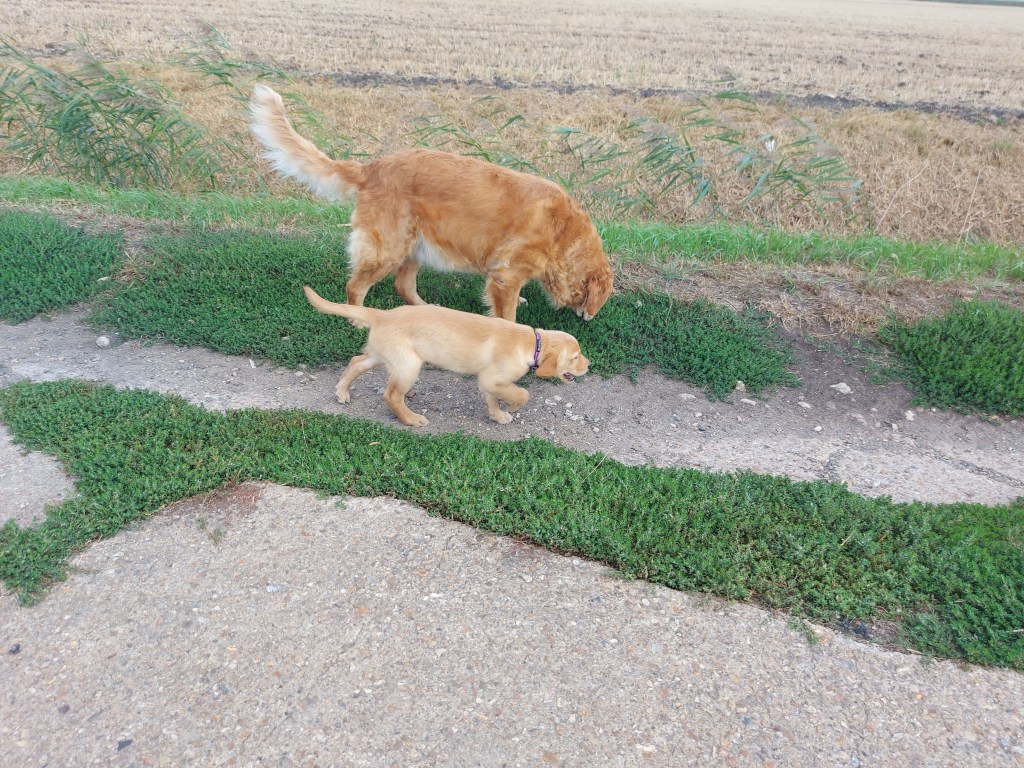
We’re focusing a lot this week on teaching them manners around older dogs with the help of great great grandmother Sienna and great aunt Summer who love pups but are also really good at setting boundaries and teaching respect in a gentle, puppy friendly way.
12 Weeks old
The pups are now 12 weeks old and they’re doing so well! Mr Blue had another bath before he went to his new home, he’s getting used to it now. He tried to hold the shower hose while we rinsed him, then he playfully snapped at the water coming from the shower head, and once he was towel dried he had the zoomies! Miss Red helped us cook dinner the other day, she explored gently for 15 minutes then followed me around the kitchen, sitting at my feet and eventually fell asleep after having a little nibble on a carrot. She’s mellowed out so much over the past two weeks, she’s adorable. Miss Purple loves fuss and cuddles, she’s so affectionate just like her father. Miss Orange is inquisitive and loves to explore, but is also pretty chill and loves a fuss. Miss Pink doesn’t miss a thing, she’s bright as a button. All but purple have gone to their new homes now, she heads off for her new adventure is just a few days. It already seems so much quieter and empty.